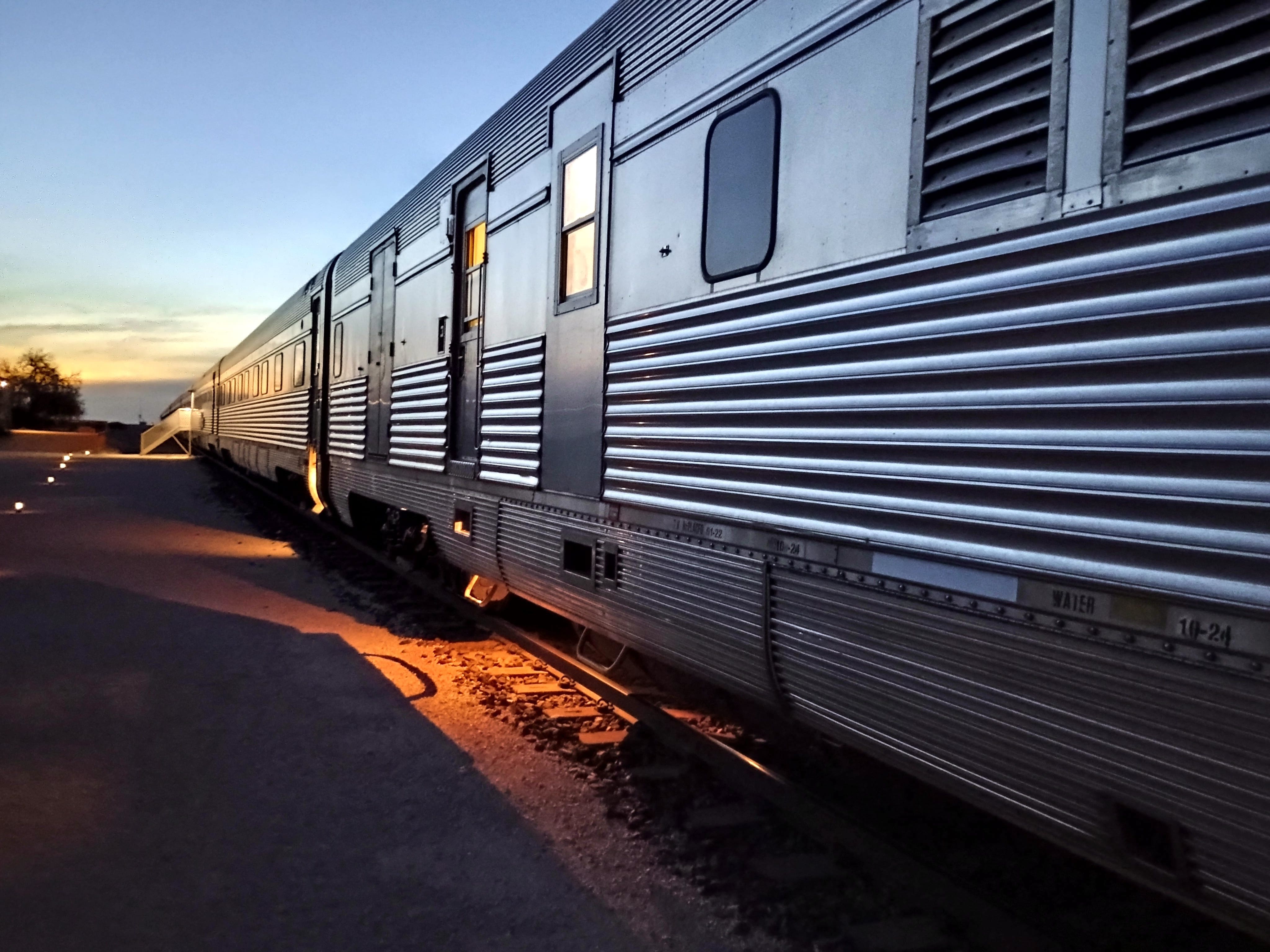
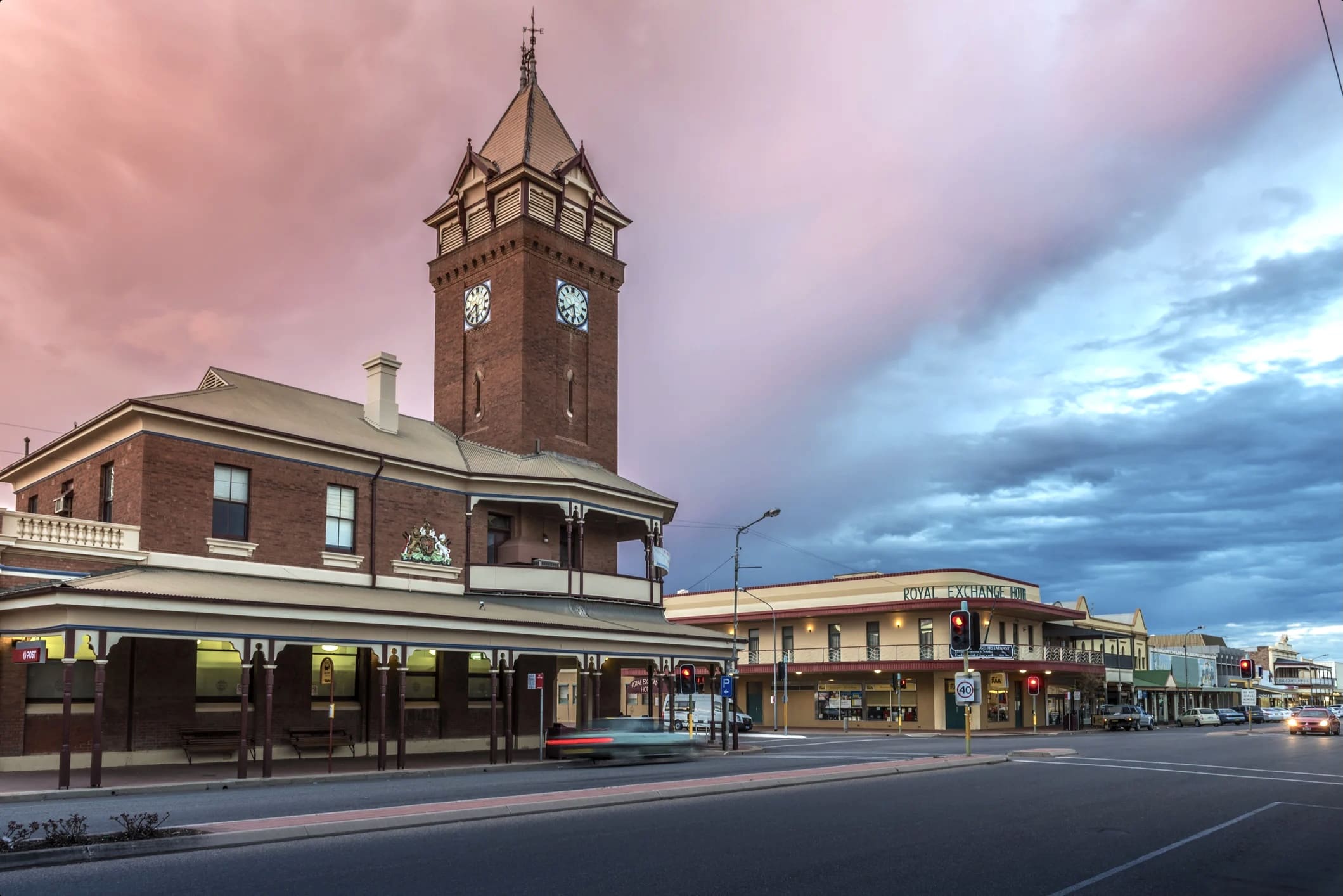
 Overnight the train departs the Barossa
Valley and passes into New South Wales, stopping at the Broken
Hill station. After a hearty breakfast (sorry, did not take a
photo of the menu) our group disembarked the train for the
off-train experiences. Tracy opted for the "Priscilla Queen of the
Desert" tour, while Dale chose the "Living Desert Sculptures"
tour. As there were overlaps in the two experiences, we will
present these first, as they offer good background information for
the two separate tours
Overnight the train departs the Barossa
Valley and passes into New South Wales, stopping at the Broken
Hill station. After a hearty breakfast (sorry, did not take a
photo of the menu) our group disembarked the train for the
off-train experiences. Tracy opted for the "Priscilla Queen of the
Desert" tour, while Dale chose the "Living Desert Sculptures"
tour. As there were overlaps in the two experiences, we will
present these first, as they offer good background information for
the two separate tours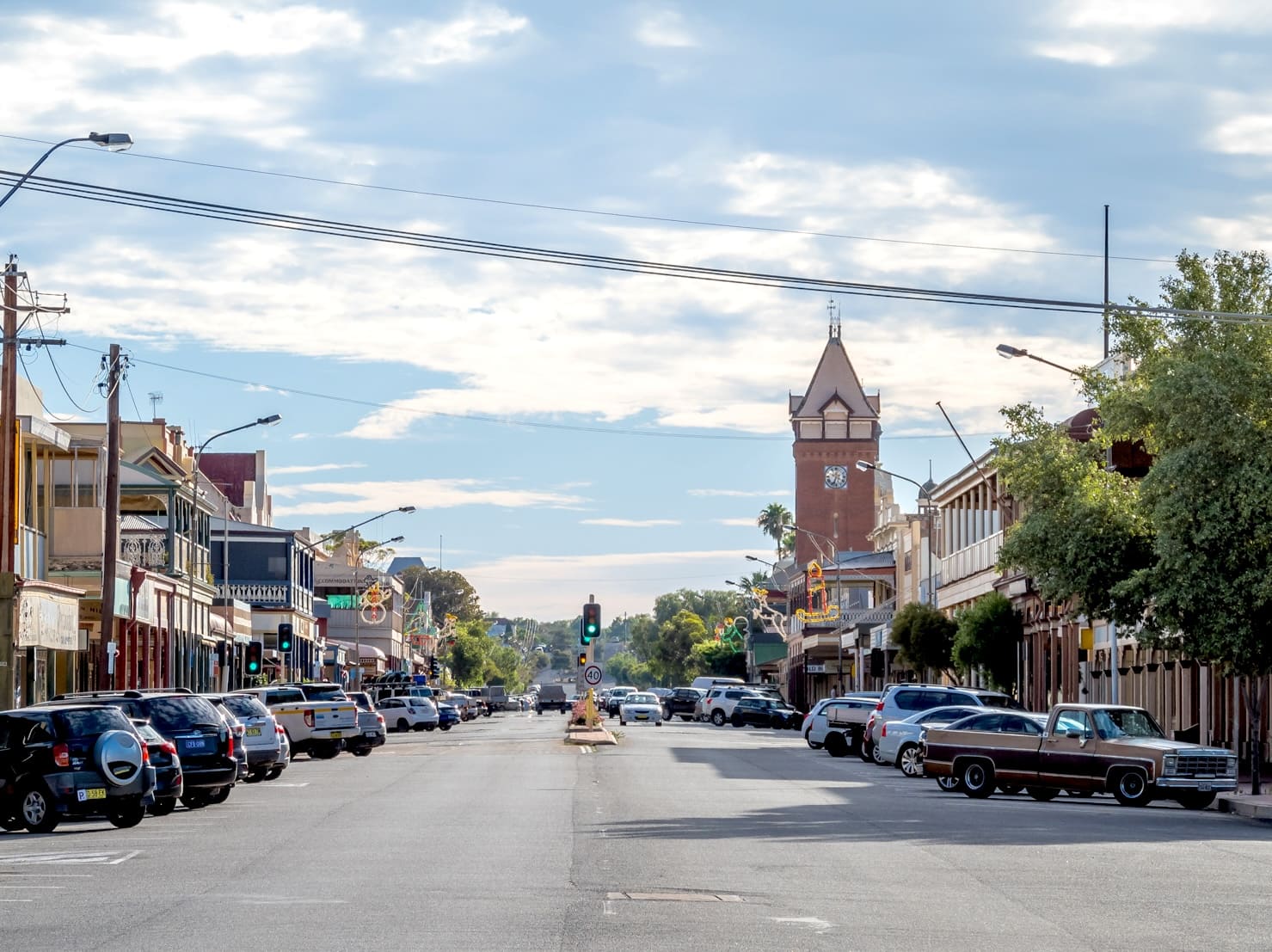
 All
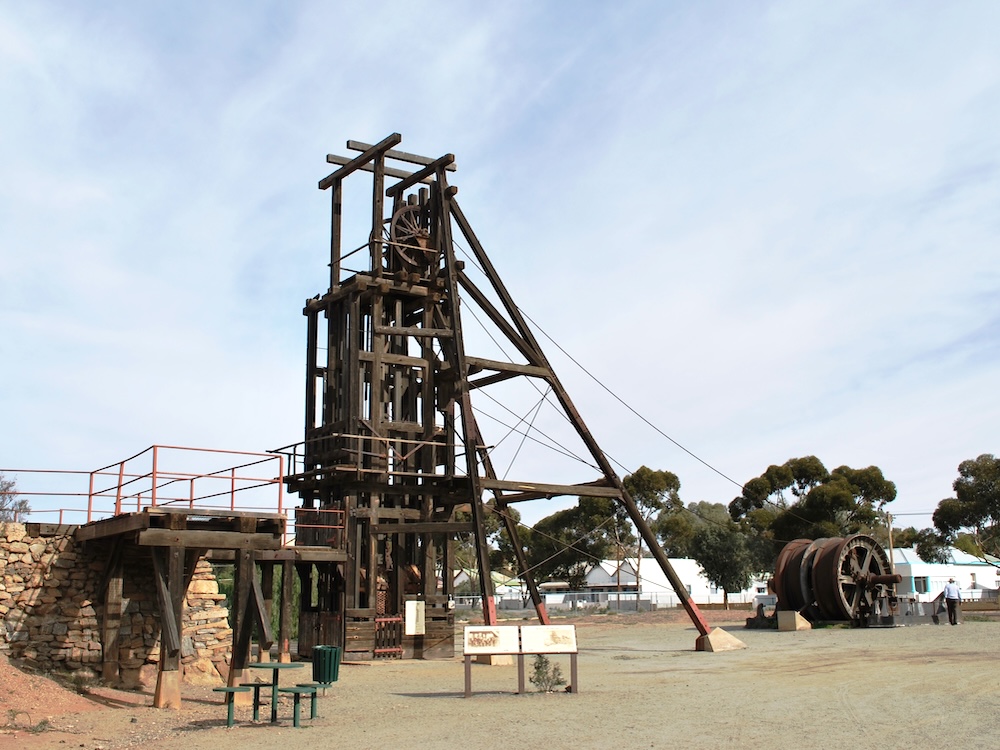
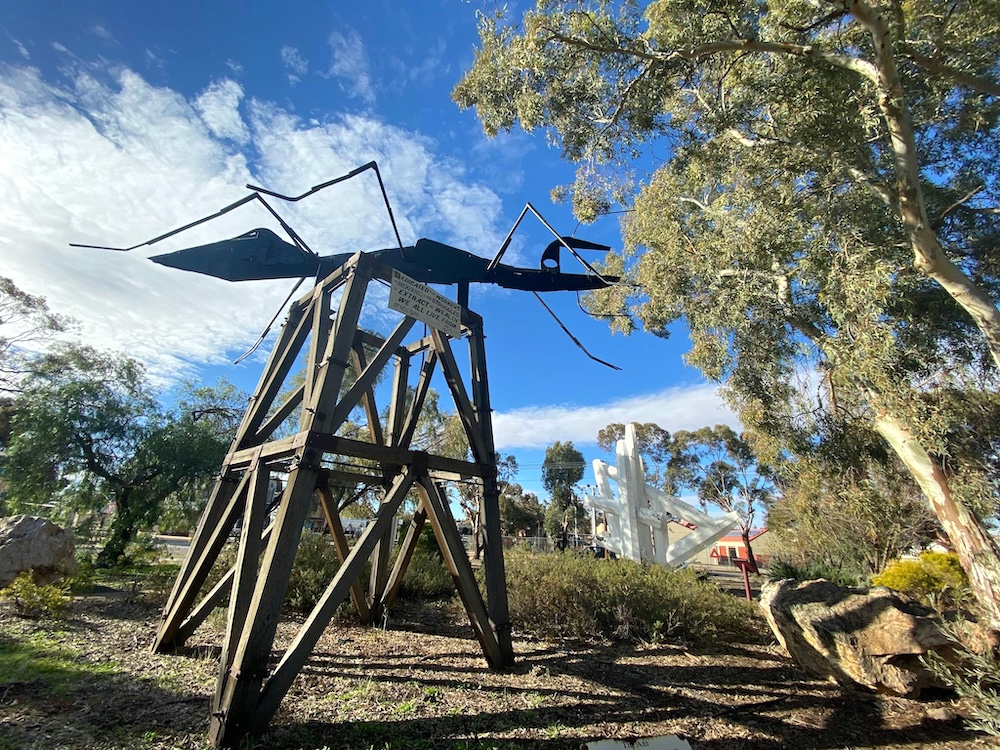
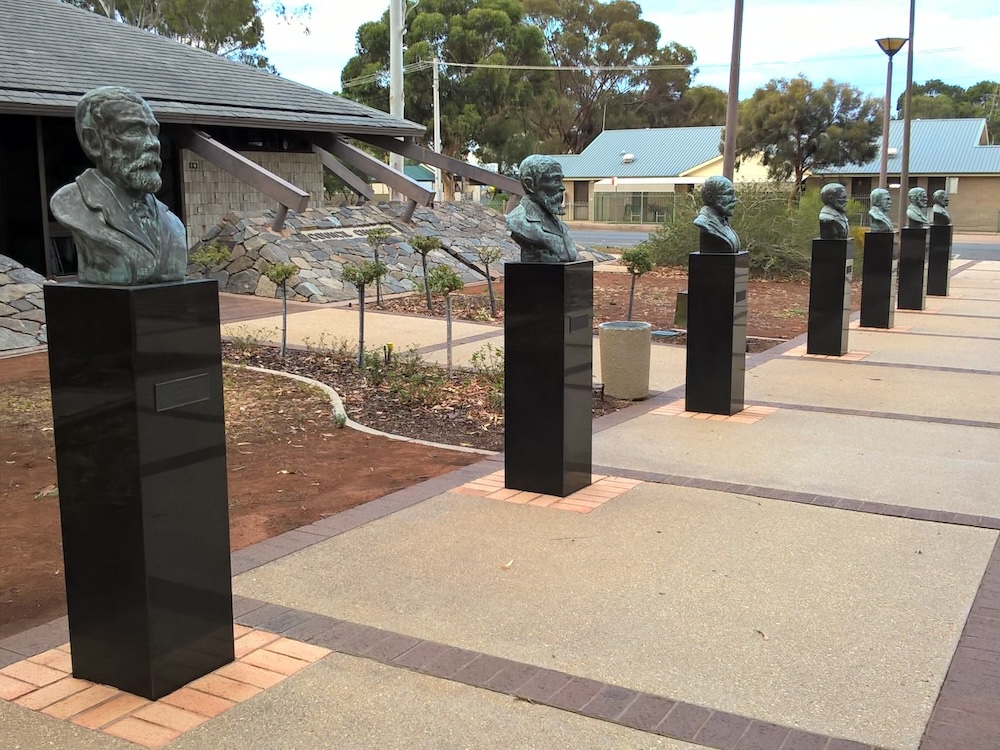
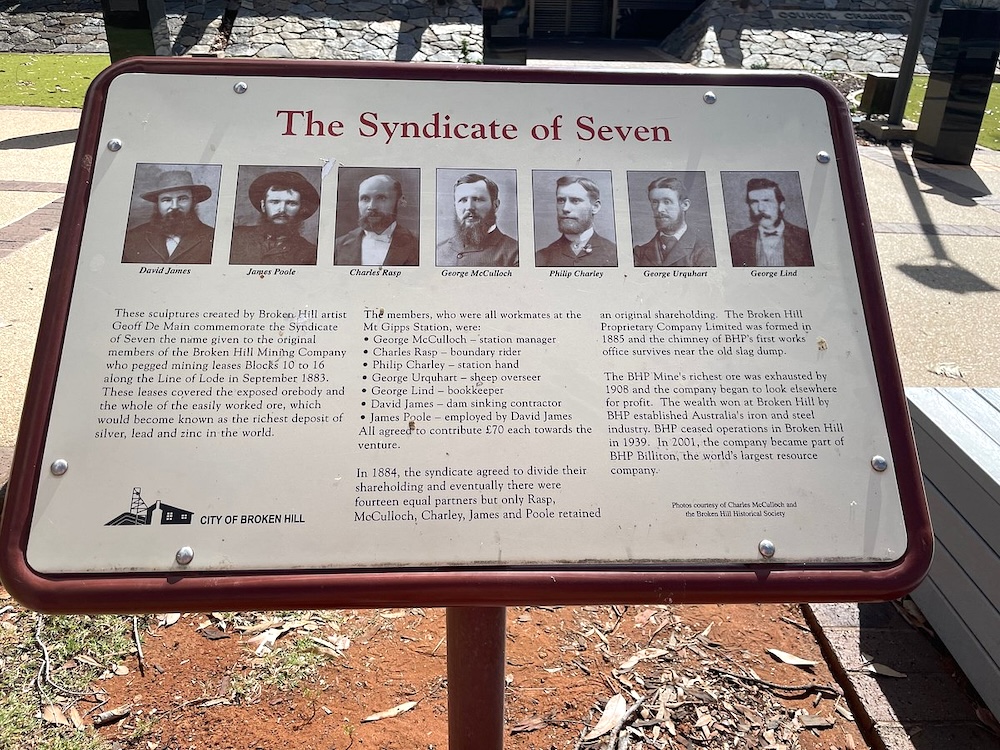
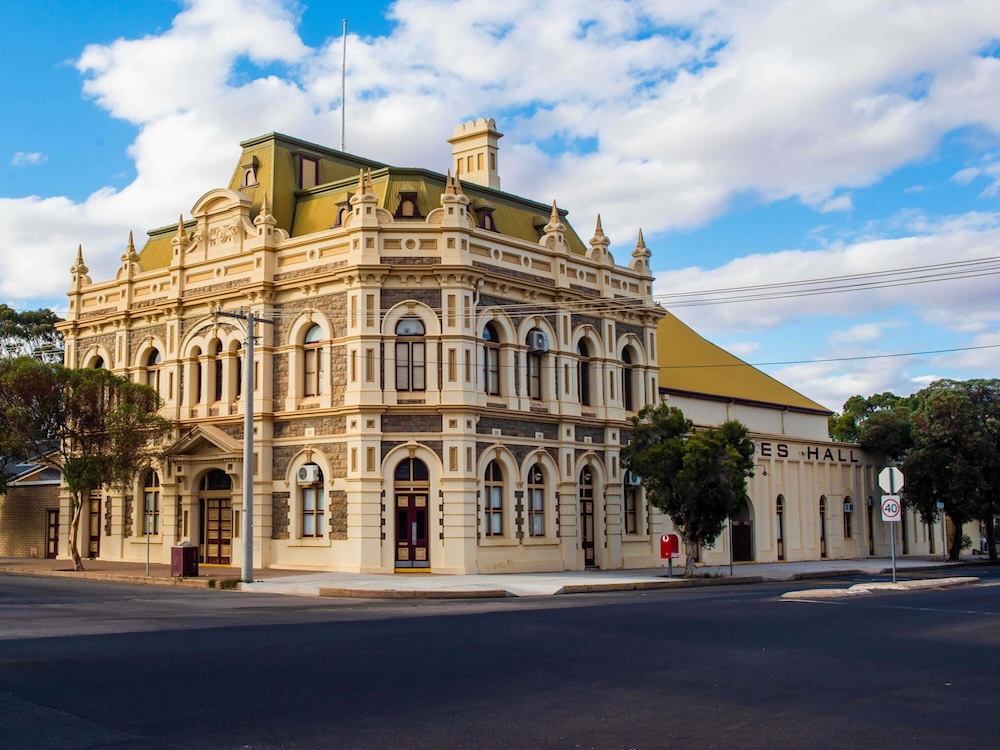
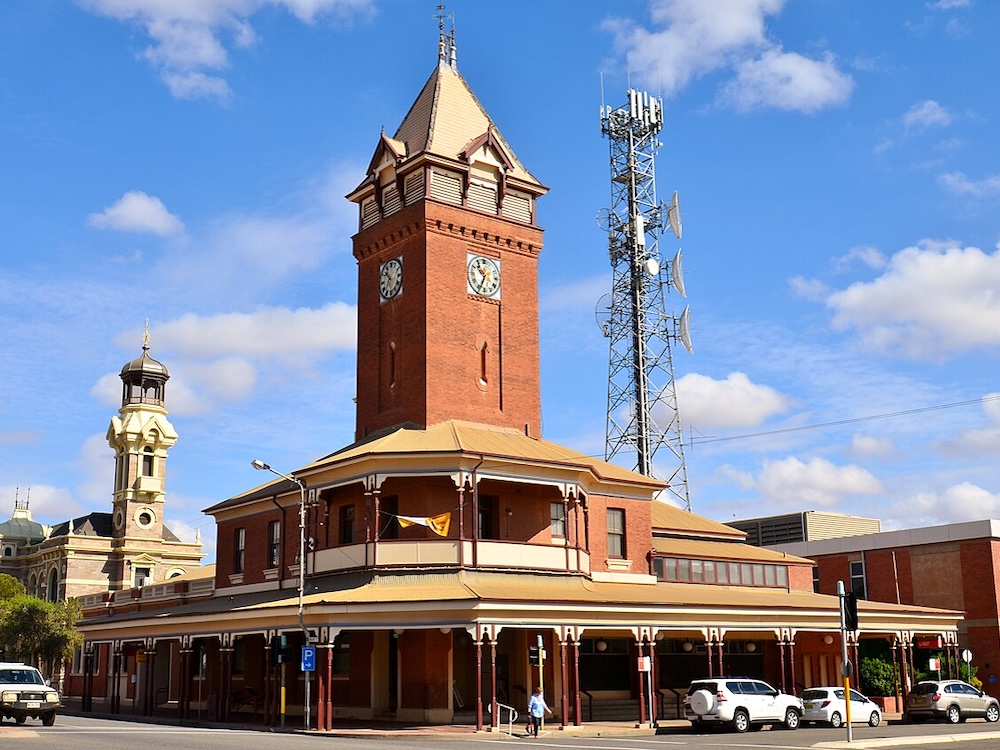
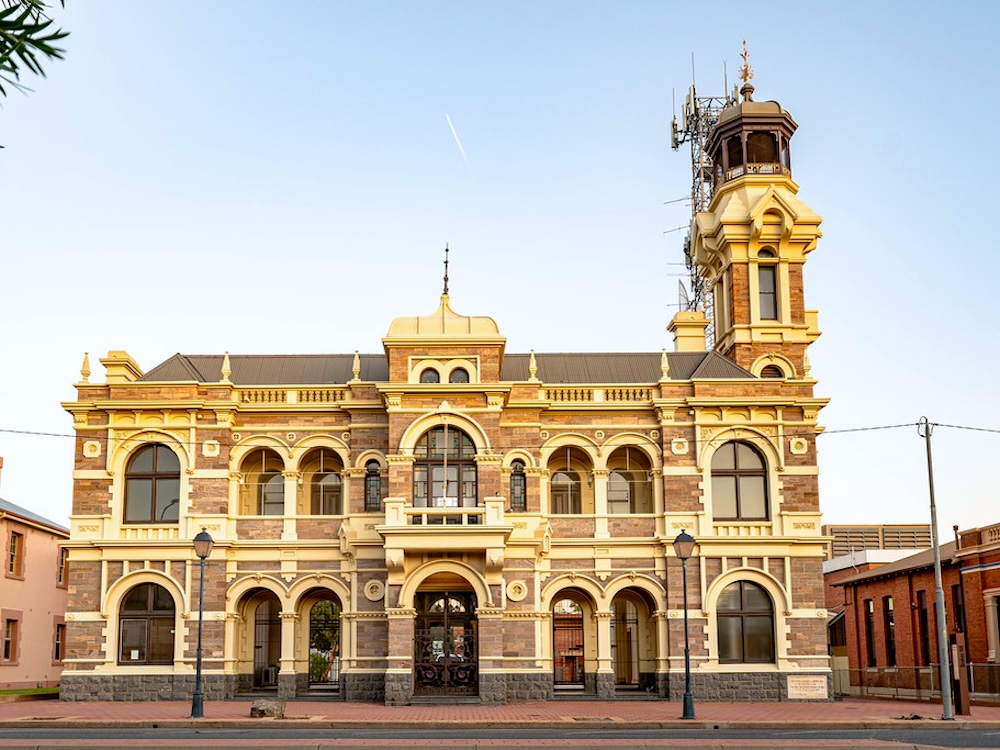
the Indian Pacific passengers took a bus tour of the town.
Broken Hill is a historic mining town located in the remote
outback of Australia. It’s renowned for its rich heritage tied
to silver, lead, and zinc mining, which has earned it the
nickname "Silver City." This rugged, resilient town is
surrounded by vast red desert plains and striking landscapes
that offer a classic outback experience. Established in the late
19th century, Broken Hill boasts grand heritage buildings, art
galleries, and a vibrant mining history that continues to shape
the town’s character today. It is home to Australia’s oldest
mining company, BHP (Broken Hill Proprietary Company), which
began there in 1885. The town is also known for its creative
spirit, with many artists inspired by the stark beauty of the
outback scenery, including dramatic rock formations and sweeping
desert views. The Living Desert Reserve, with its sandstone
sculptures add to its charm, making Broken Hill a unique
blend of industrial legacy and cultural richness. Below is a
six-minute video that explains the history of the town. Both
groups took this tour via a coach ride through the town.
All
the Indian Pacific passengers took a bus tour of the town.
Broken Hill is a historic mining town located in the remote
outback of Australia. It’s renowned for its rich heritage tied
to silver, lead, and zinc mining, which has earned it the
nickname "Silver City." This rugged, resilient town is
surrounded by vast red desert plains and striking landscapes
that offer a classic outback experience. Established in the late
19th century, Broken Hill boasts grand heritage buildings, art
galleries, and a vibrant mining history that continues to shape
the town’s character today. It is home to Australia’s oldest
mining company, BHP (Broken Hill Proprietary Company), which
began there in 1885. The town is also known for its creative
spirit, with many artists inspired by the stark beauty of the
outback scenery, including dramatic rock formations and sweeping
desert views. The Living Desert Reserve, with its sandstone
sculptures add to its charm, making Broken Hill a unique
blend of industrial legacy and cultural richness. Below is a
six-minute video that explains the history of the town. Both
groups took this tour via a coach ride through the town.| Heritage
Walk Photo Gallery (Click on Photo to Enlarge) |
||
 |
 |
 |
| Kintore Headframe |
Pro Hart Ant Sculpture |
Syndicate of Seven Busts |
 |
 |
 |
| Syndicate of Seven Placard | Trades Hall | Sulfide Street Railway Station |
 |
 |
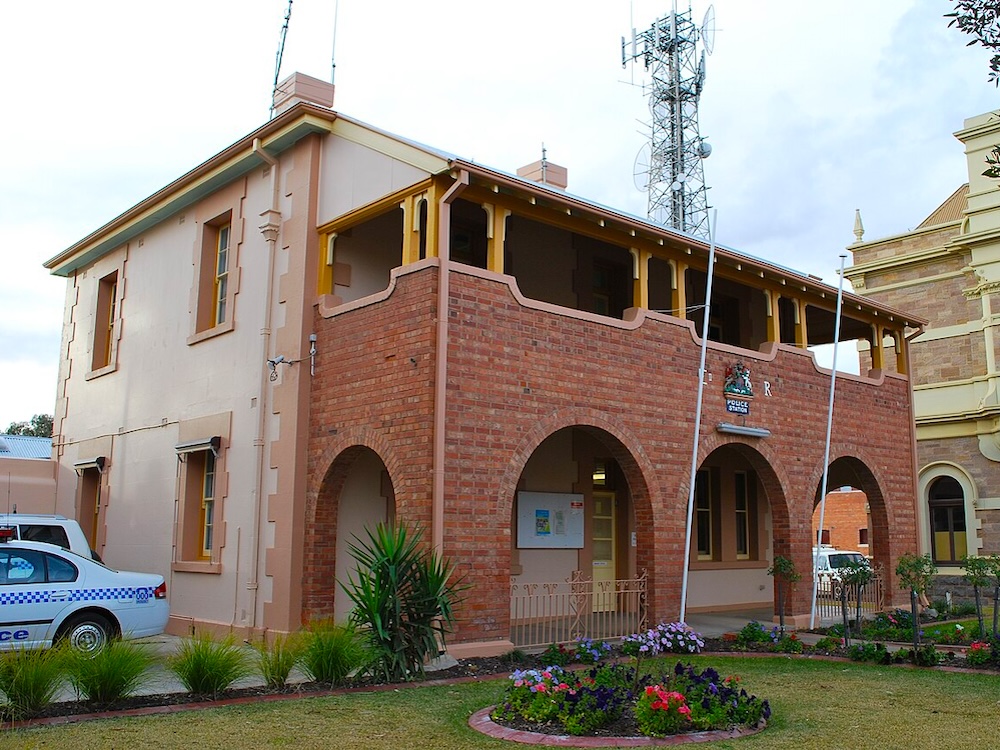 |
| Broken Hill Post Office | Old Town Hall Facade | Old Central Police Station |
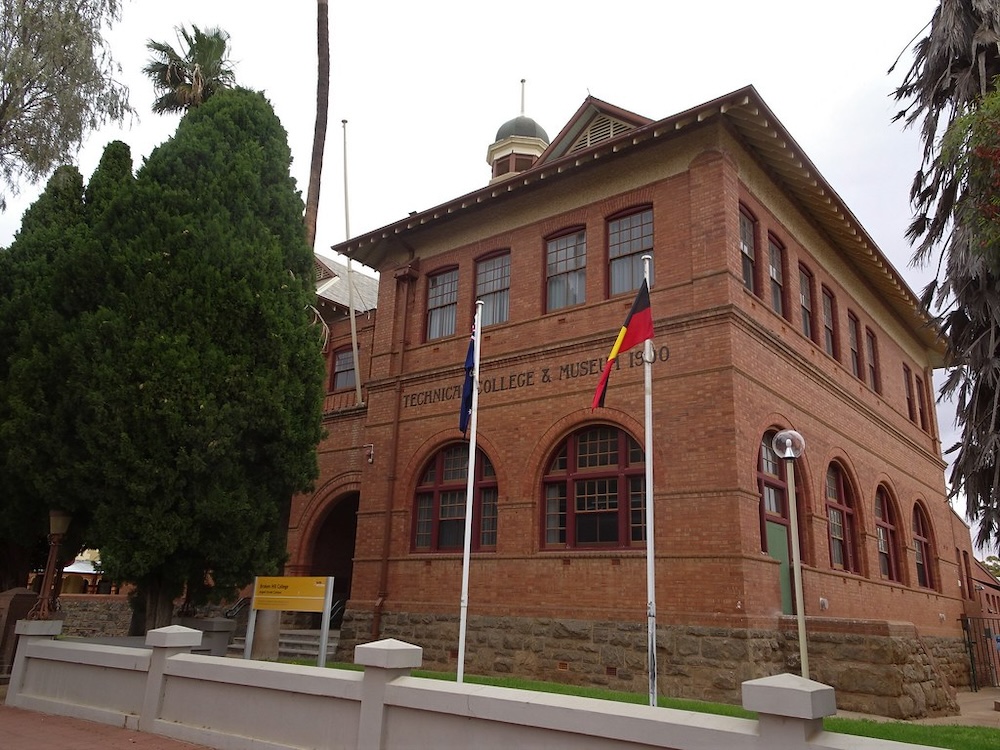 |
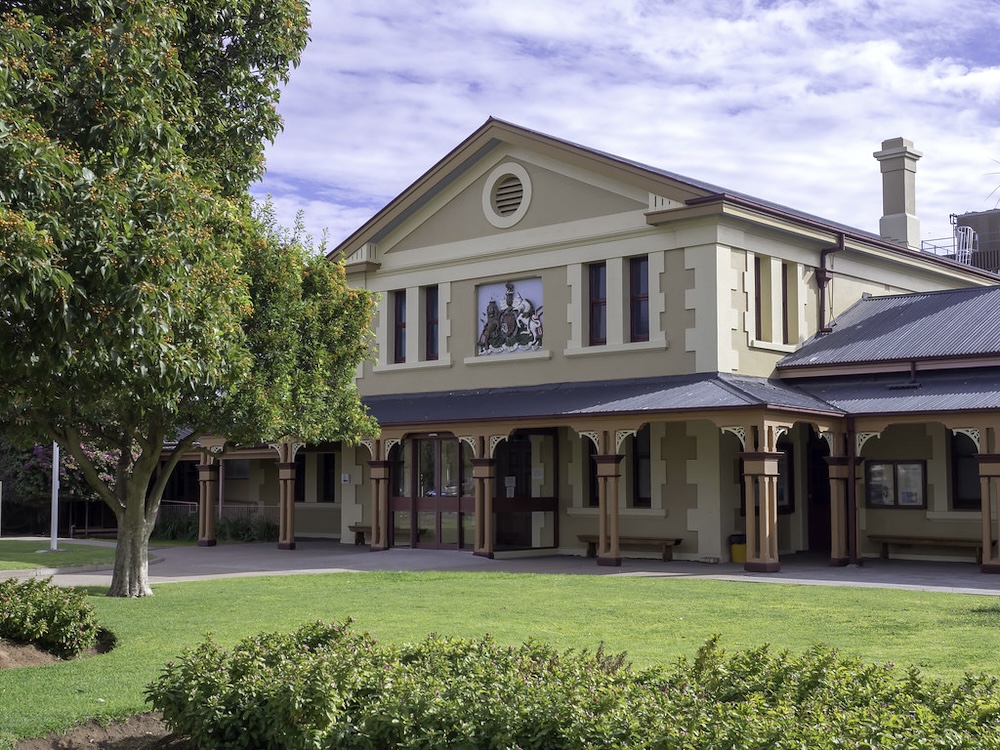 |
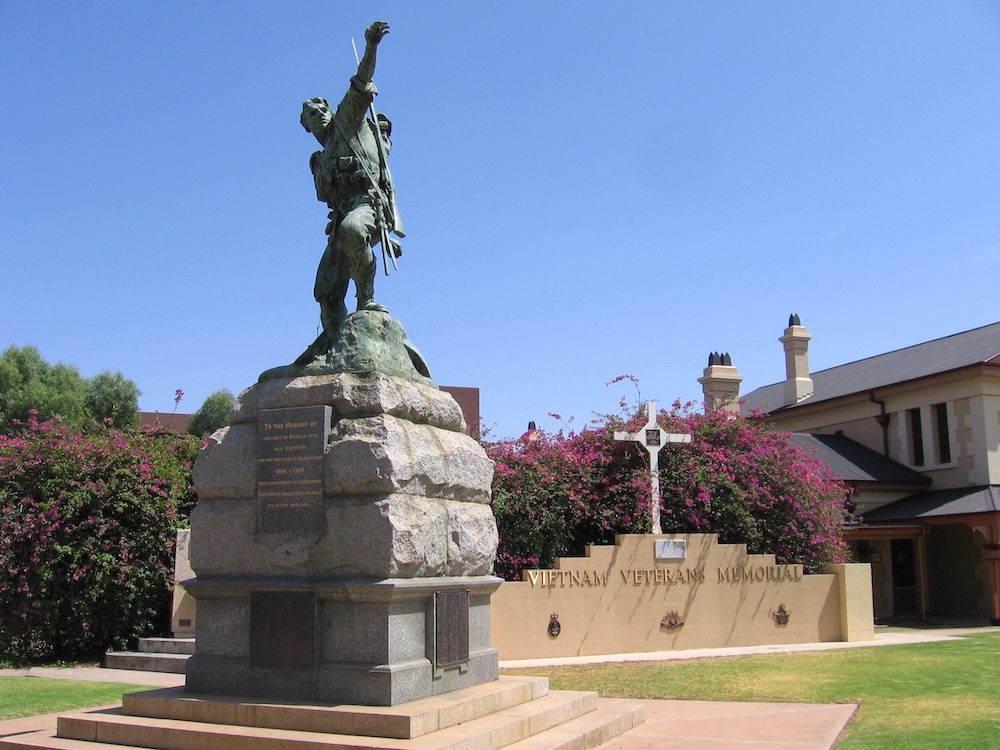 |
| BH Technical College & Museum | Broken Hill Courthouse | War Memorial |
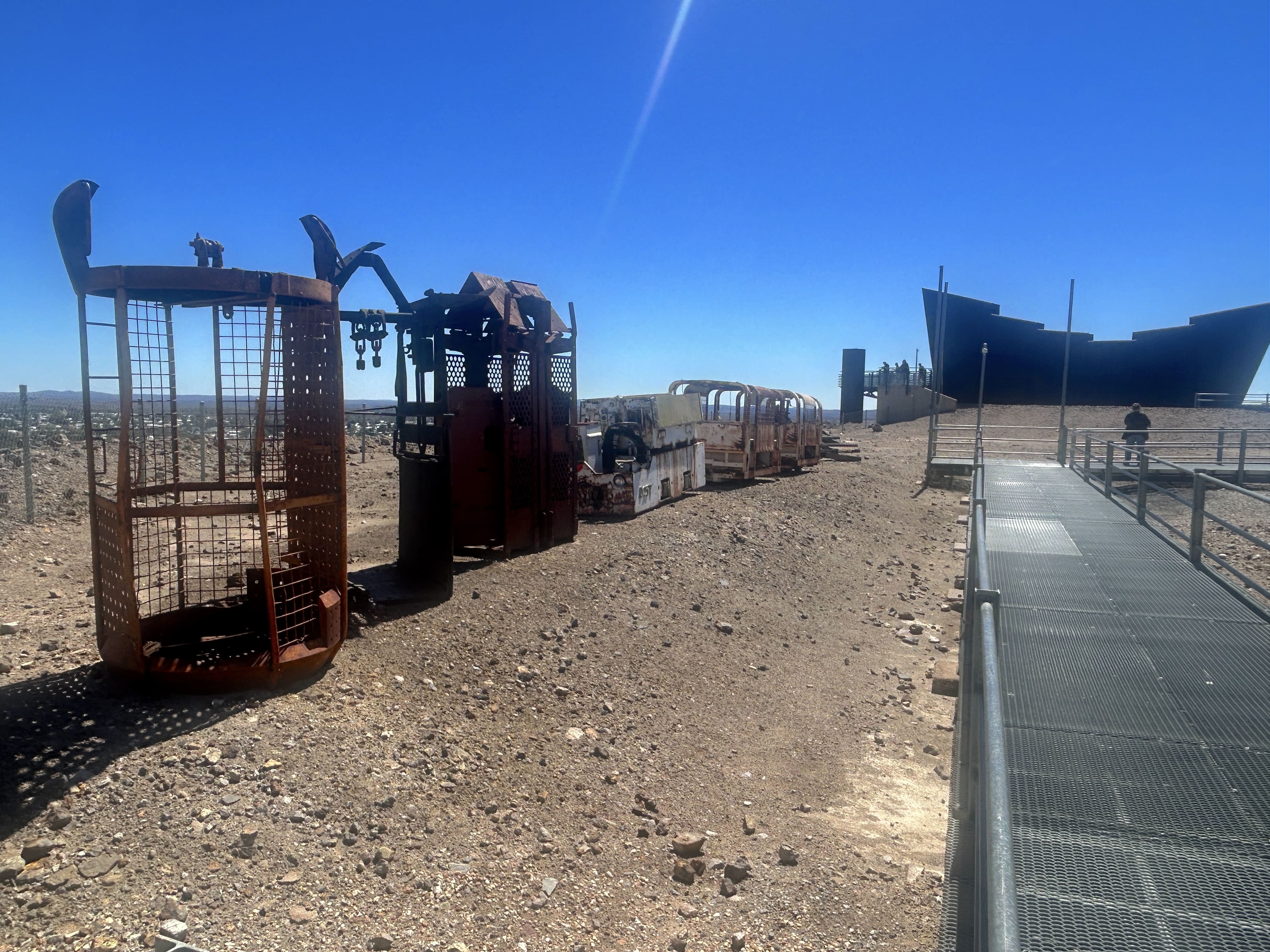 |
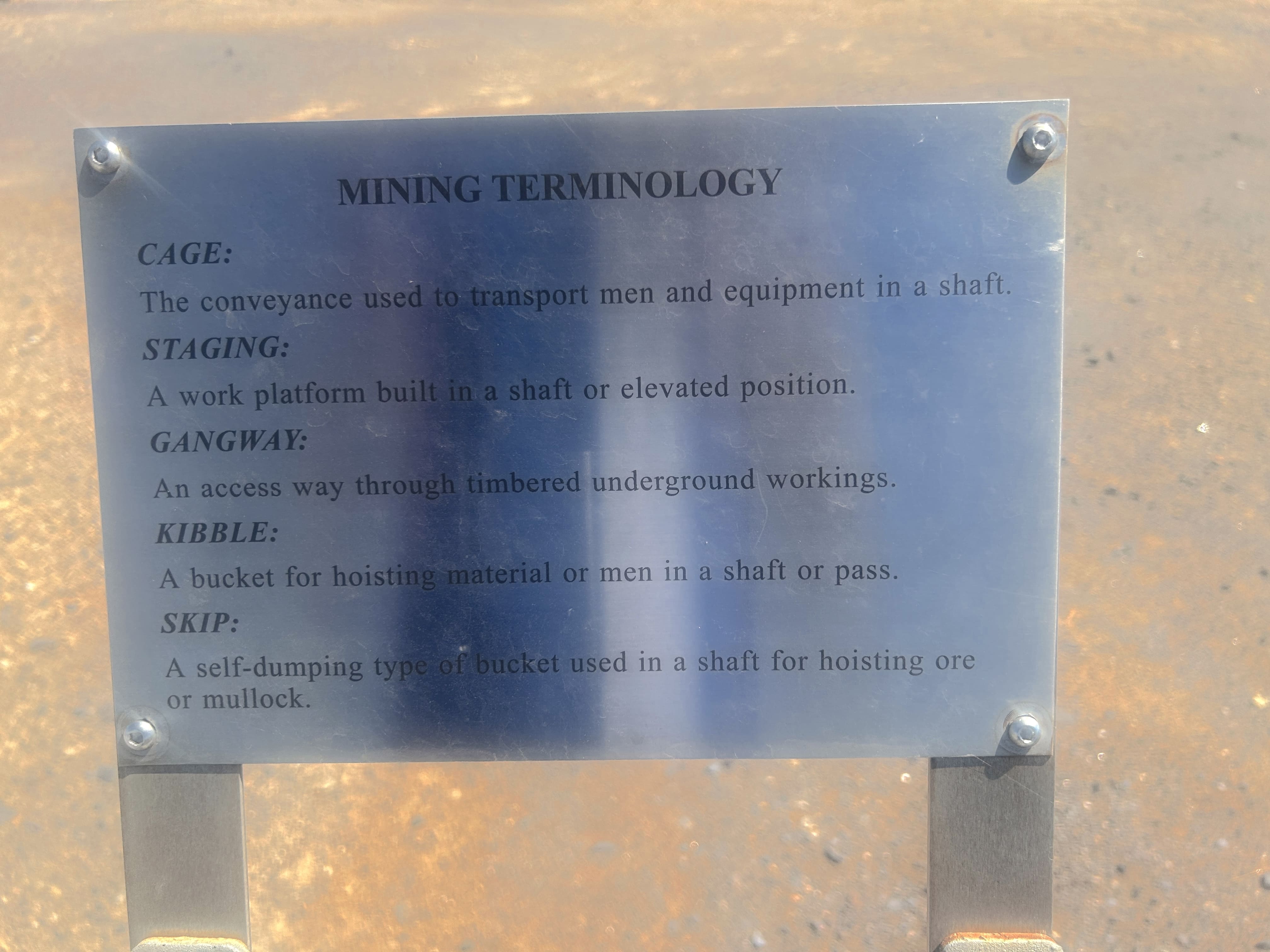 |
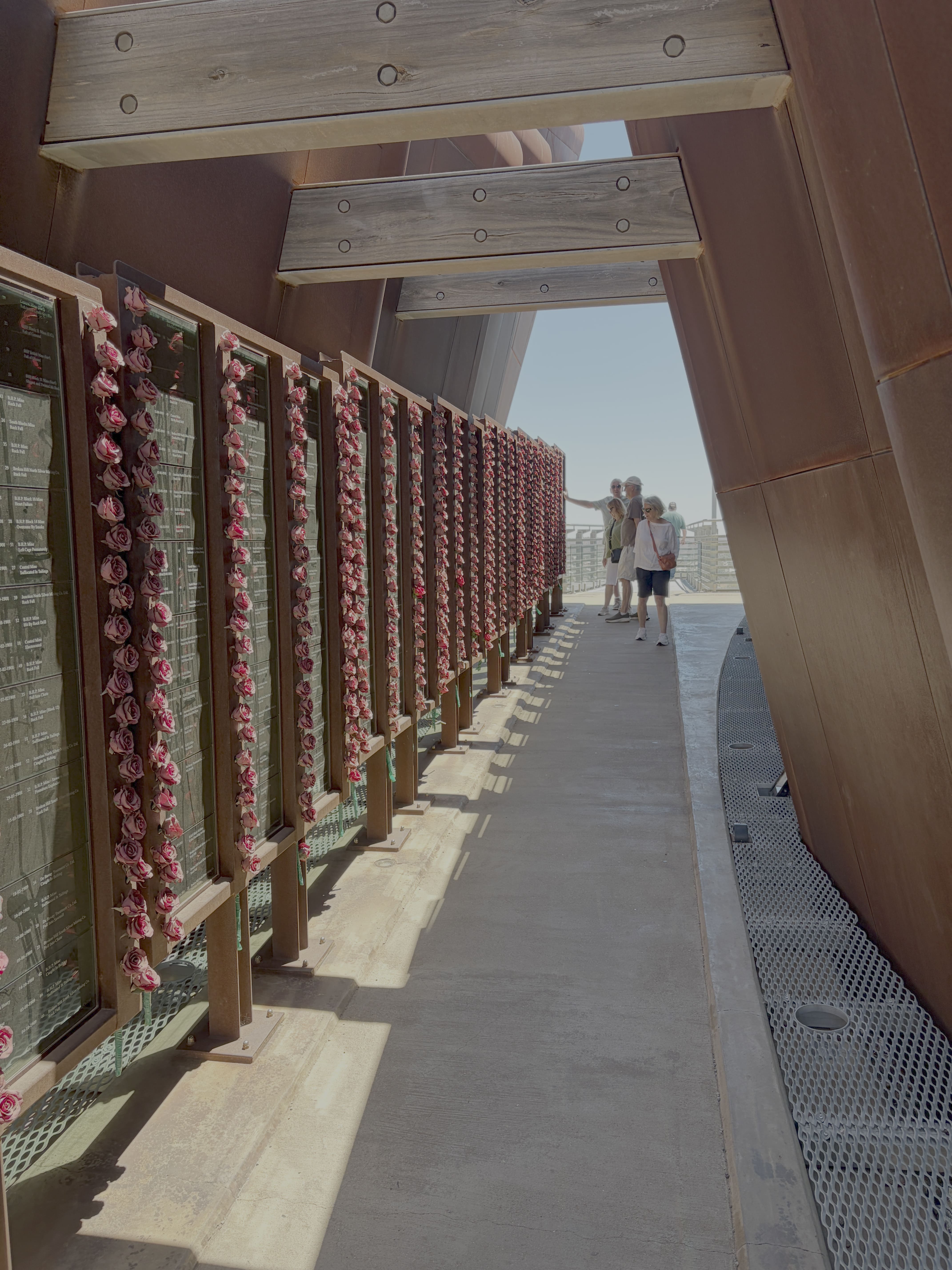 |
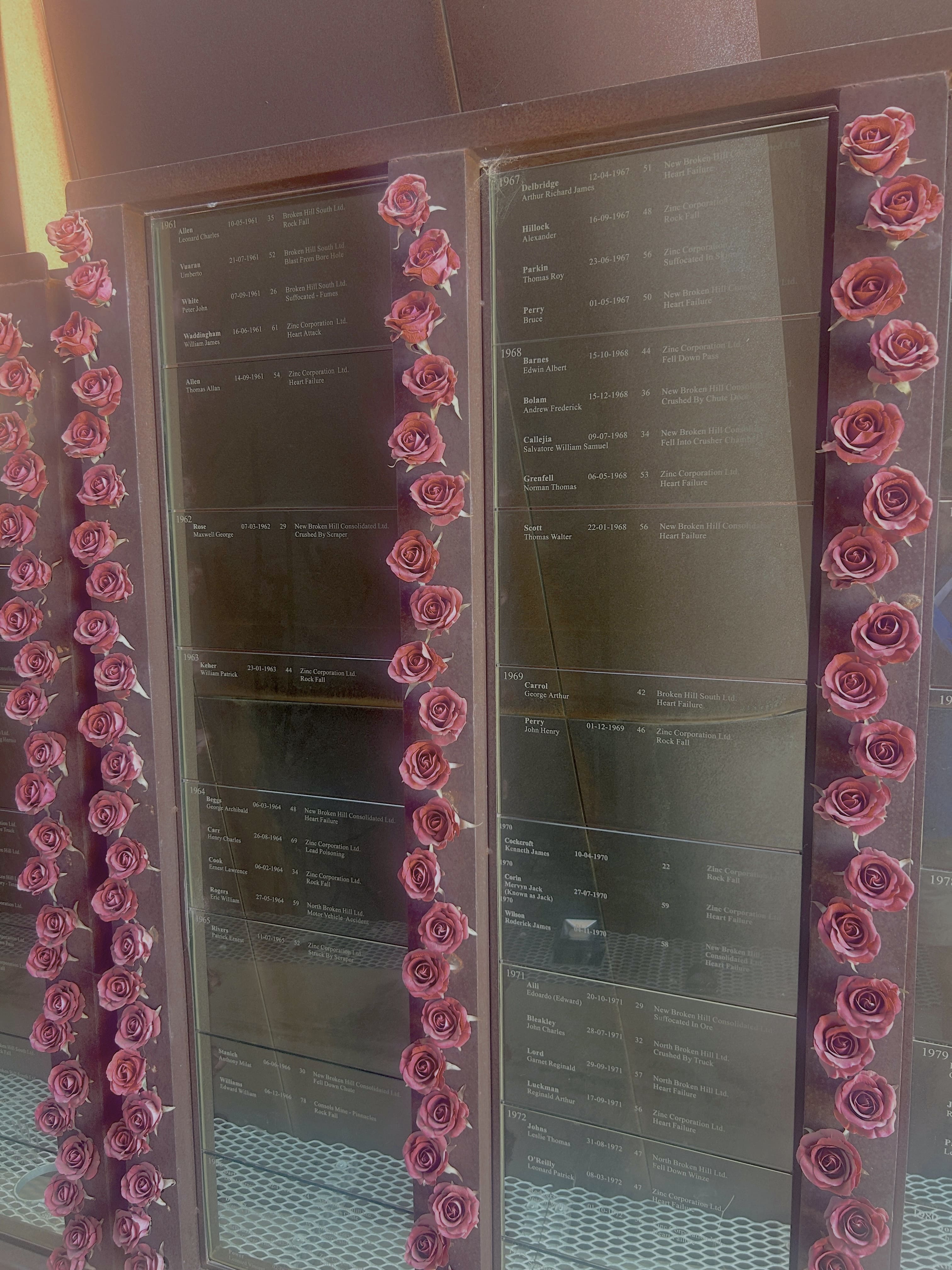 |
| Old Mining Equipment |
Mining Terninology |
Memorial Wall |
Miner's Roll |
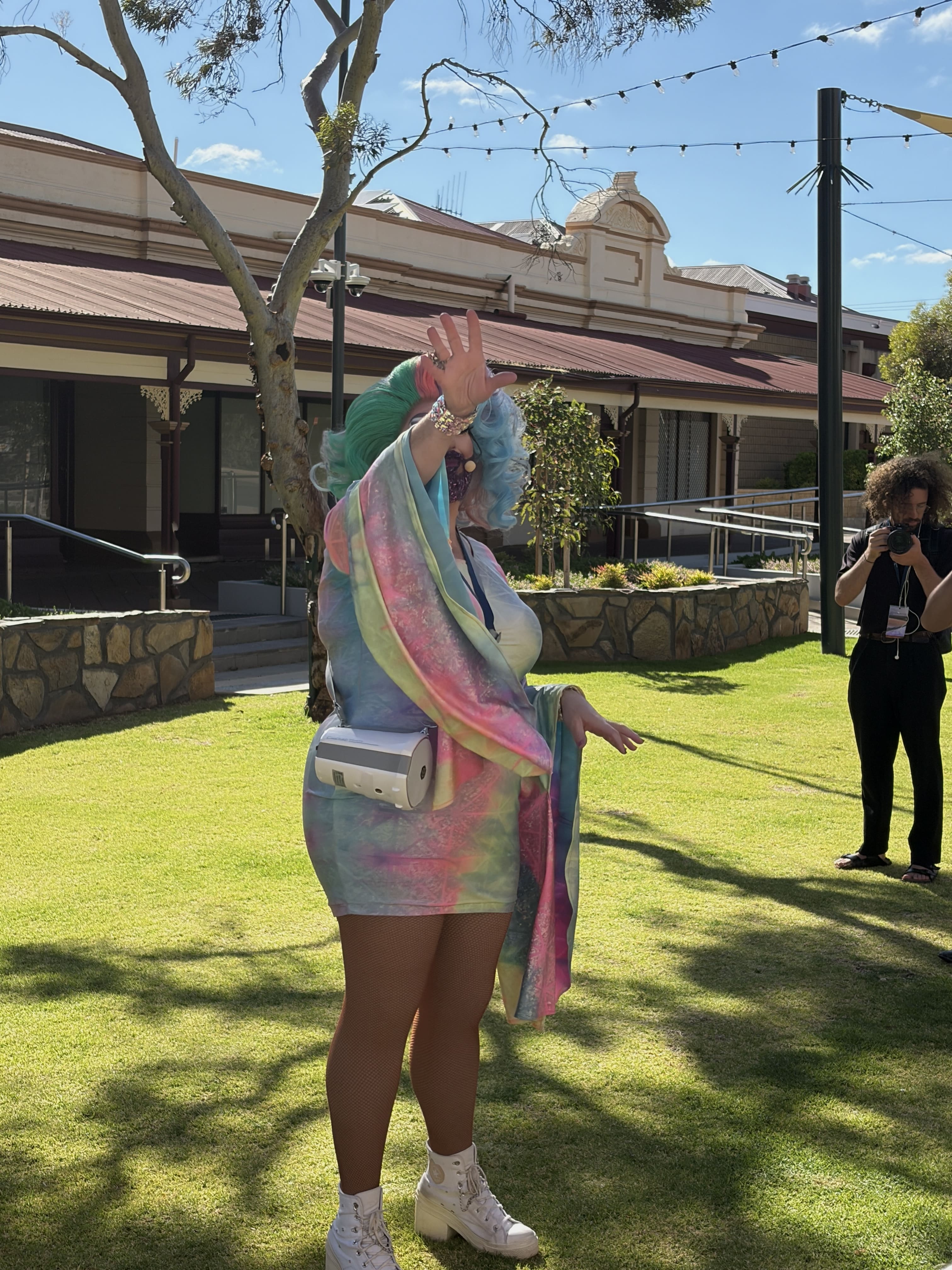 Tracy took the off-train experience that
appealed to the drama teacher in her--a tour of Broken Hill by
drag queen Sheilita Buffet, called "Off the Main Drag." Broken
Hill was the location of several scenes from the 1994 film The
Adventures of Priscilla, Queen of the Desert. It was a
walking tour of Broken Hill with commentary from a very distinct
point of view. Where the other tour options only permitted
guests to see the historic buildings from the bus (with the
exception of the Sulfide Street Railway Museum), this tour
offered a street level view of Broken Hill's Heritage buildings,
although they did not go in (it was a bit early for opening
times). After the tour, Sheilita took the tour to a drag club
where they played "Drag Bingo" (Tracy won a large puzzle) and
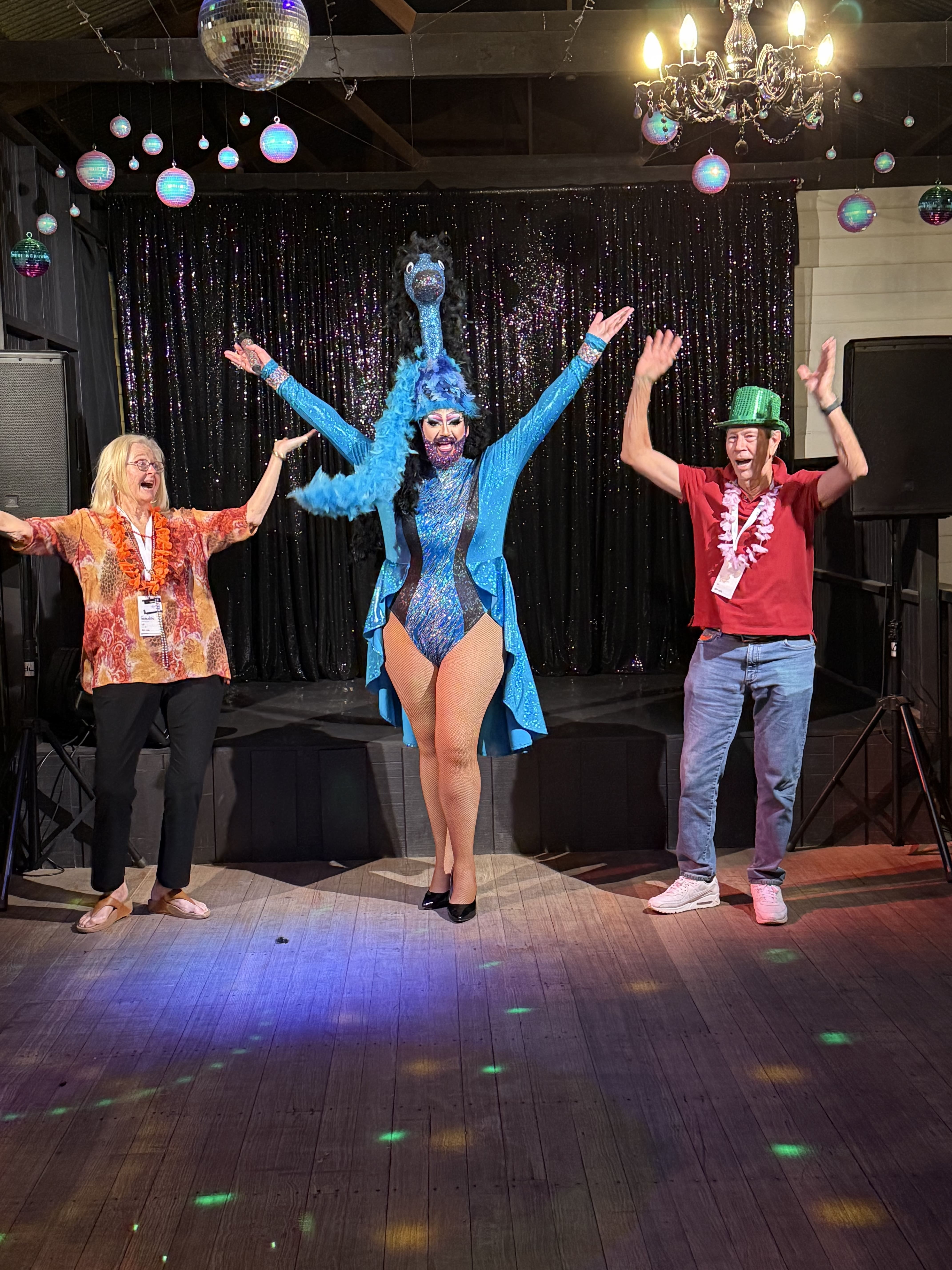
then it was showtime! Indian Pacific Passengers were treated to
performances by Sheilita and others, and were then recruited as
backup singers, replete with costumes. In addition to
performing, visitors got to meet the woman responsible for the
many outfits and costume changes--Sheilita Buffet's mother. An
entertaining and heart warming experience all the way around.
Tracy took the off-train experience that
appealed to the drama teacher in her--a tour of Broken Hill by
drag queen Sheilita Buffet, called "Off the Main Drag." Broken
Hill was the location of several scenes from the 1994 film The
Adventures of Priscilla, Queen of the Desert. It was a
walking tour of Broken Hill with commentary from a very distinct
point of view. Where the other tour options only permitted
guests to see the historic buildings from the bus (with the
exception of the Sulfide Street Railway Museum), this tour
offered a street level view of Broken Hill's Heritage buildings,
although they did not go in (it was a bit early for opening
times). After the tour, Sheilita took the tour to a drag club
where they played "Drag Bingo" (Tracy won a large puzzle) and
then it was showtime! Indian Pacific Passengers were treated to
performances by Sheilita and others, and were then recruited as
backup singers, replete with costumes. In addition to
performing, visitors got to meet the woman responsible for the
many outfits and costume changes--Sheilita Buffet's mother. An
entertaining and heart warming experience all the way around.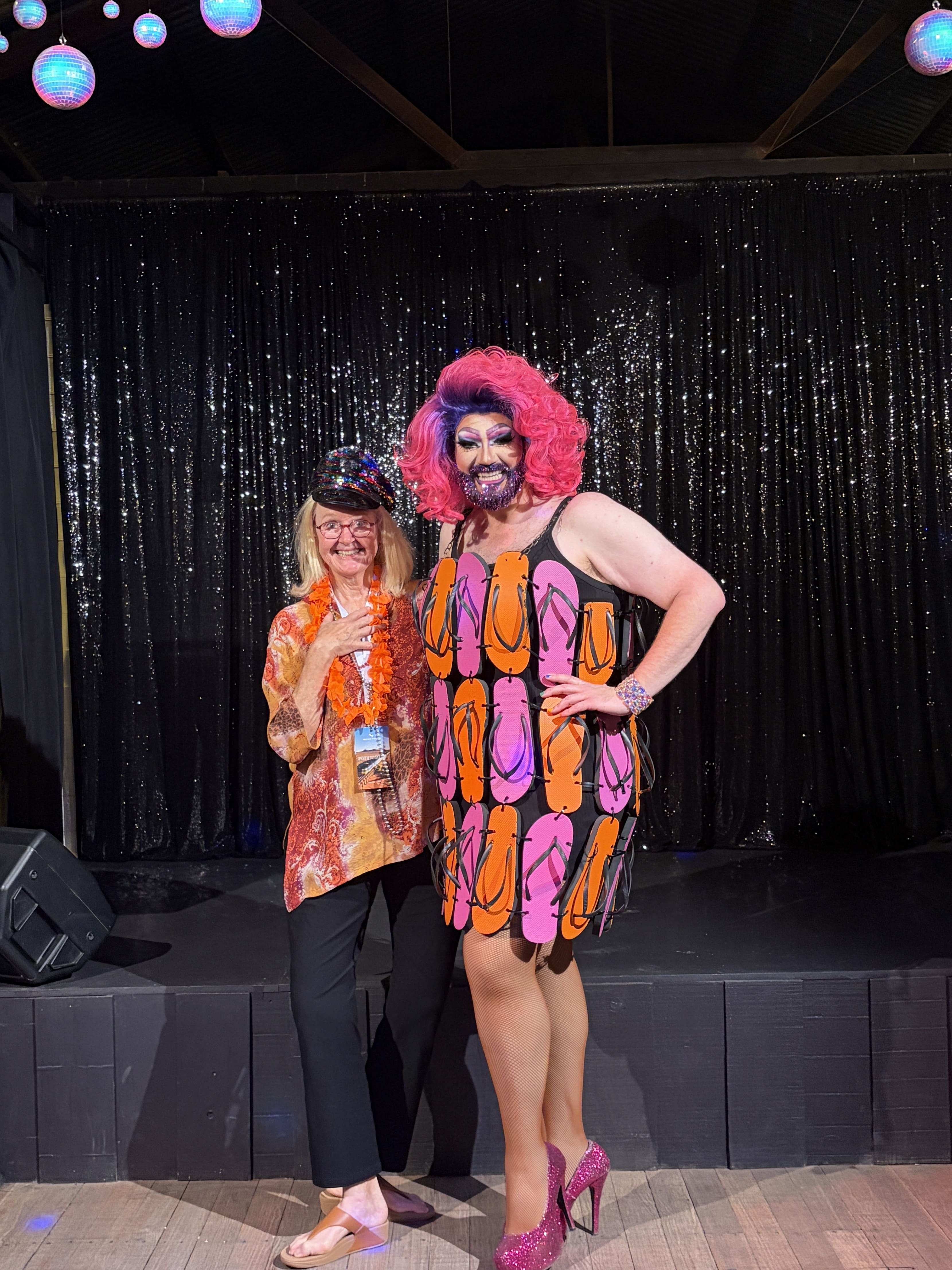 |
 |
|
 |
| Tracy with Sheilita Buffet |
Sheilita with Backup Dancers |
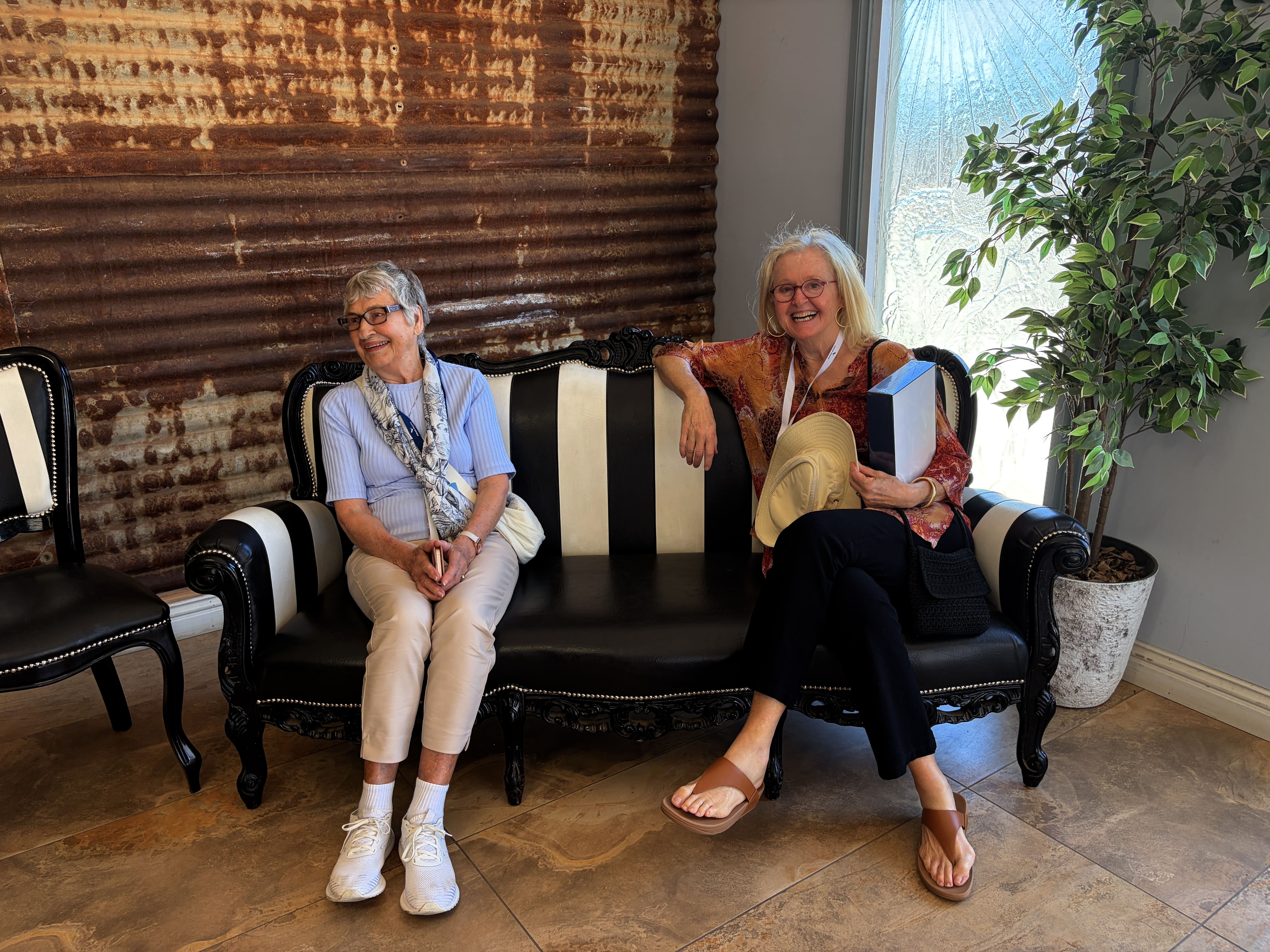
Shirley, Tracy, and Sarah |
Couches from Priscilla, Queen of
the Desert |
 |
 |
 |
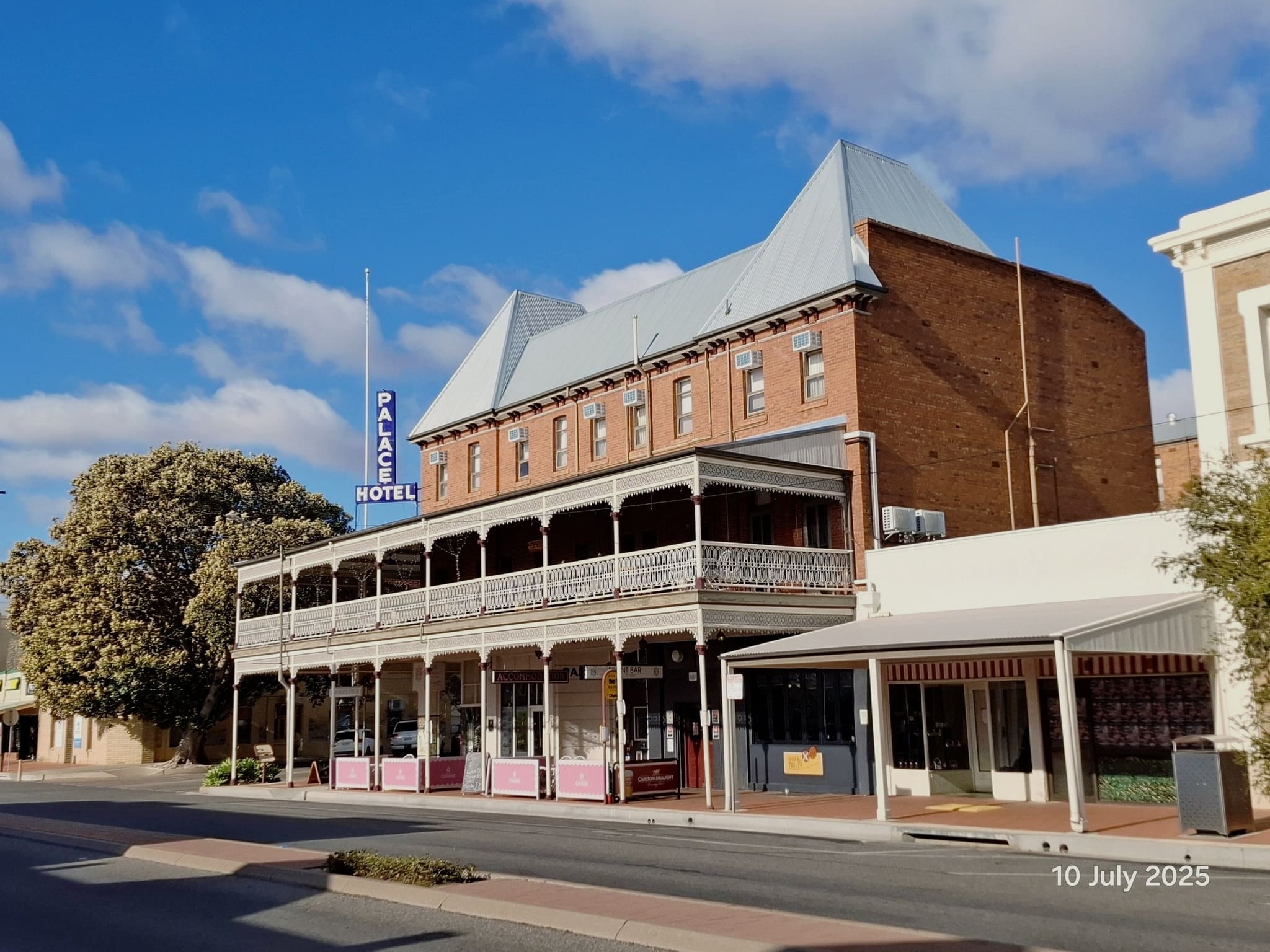
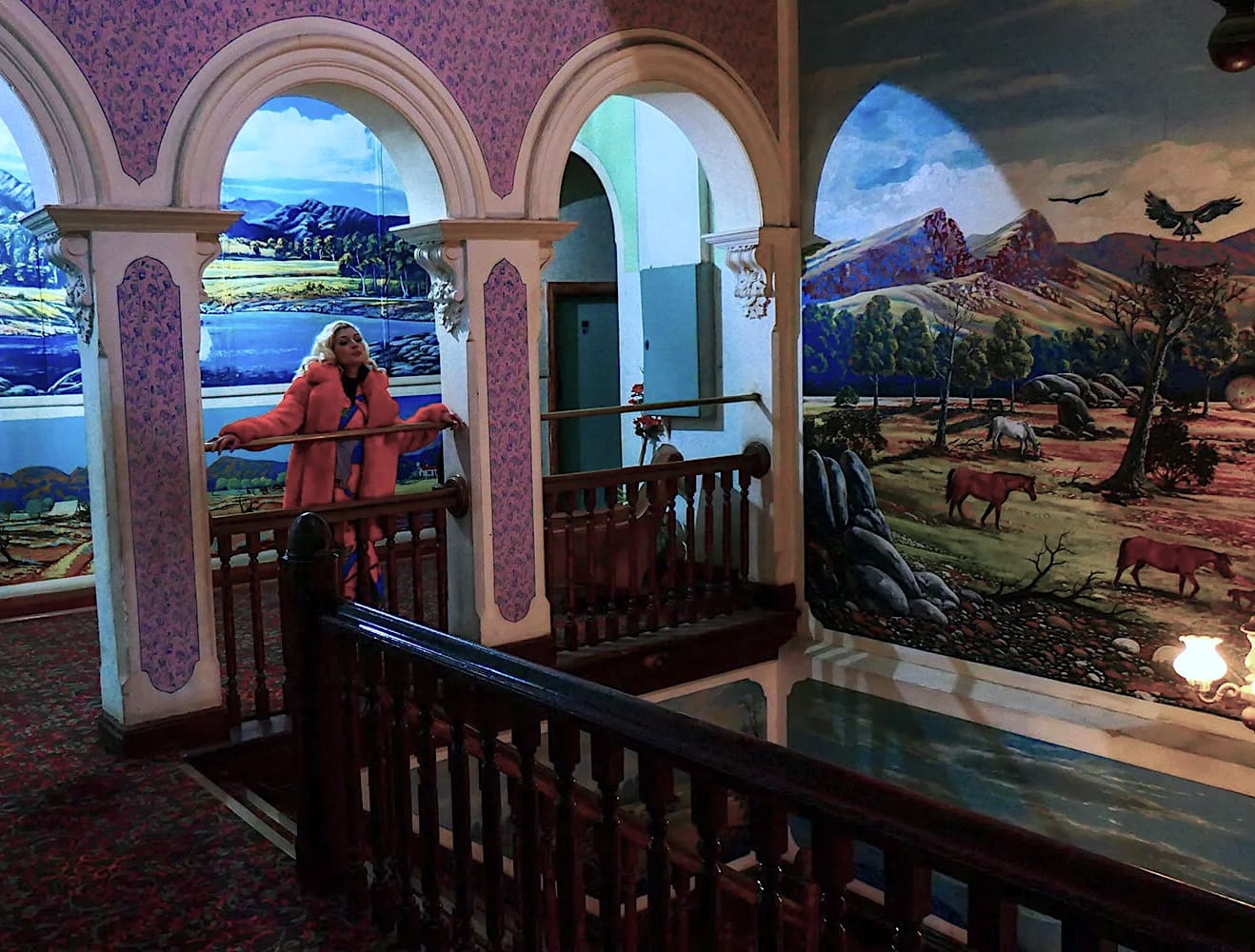
| Palace Hotel Exterior |
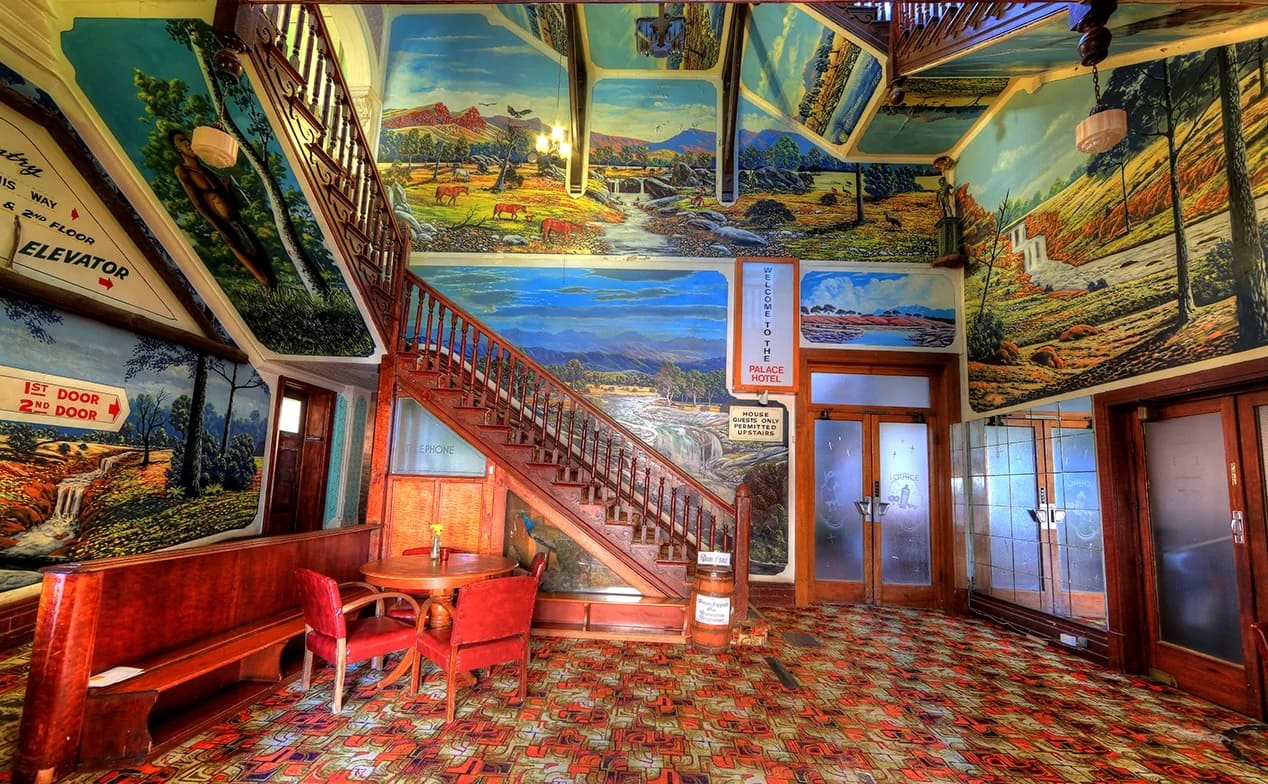
Palace Hotel Foyer |
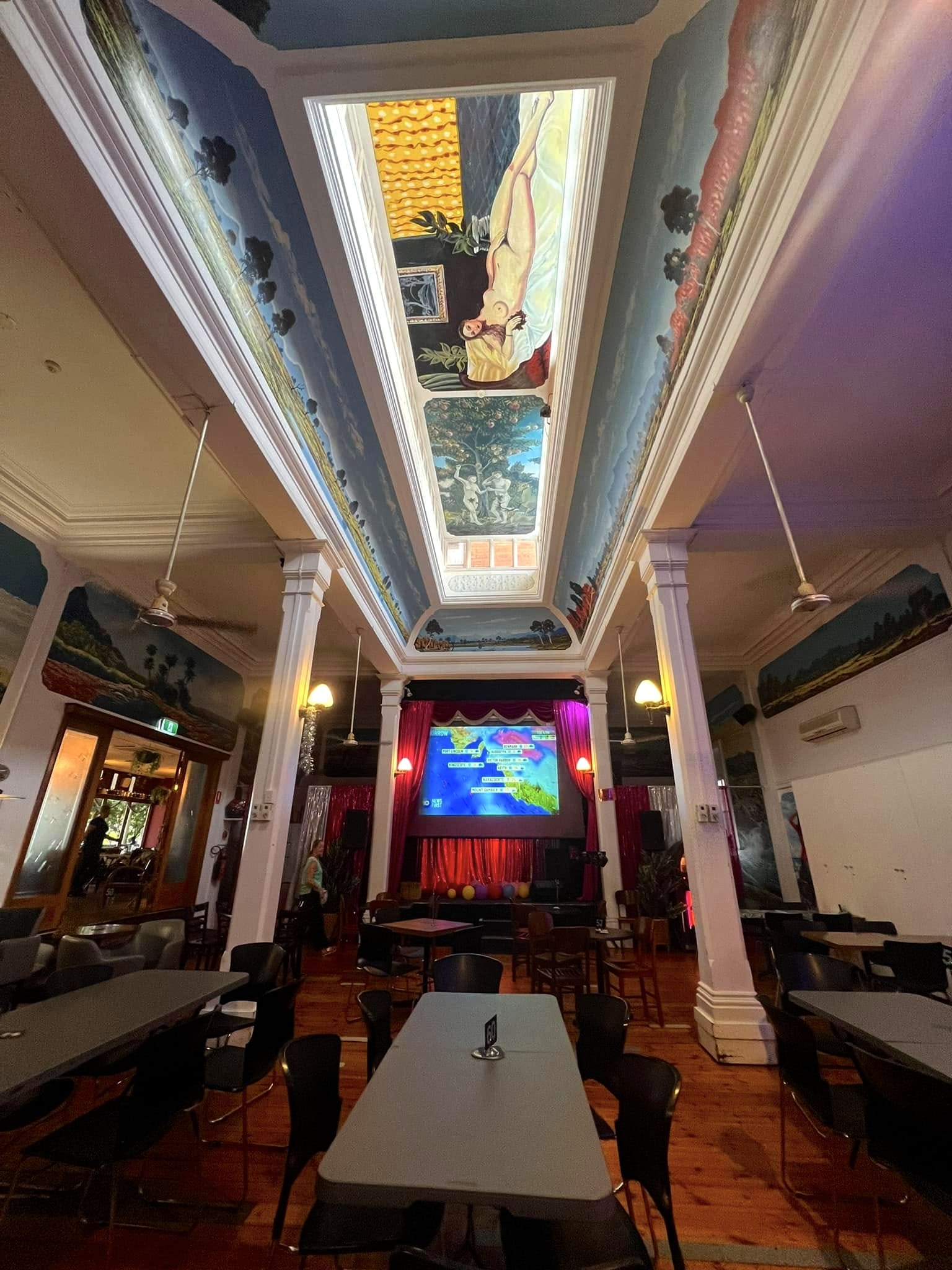
Bar and Stage Area |
 |
 |
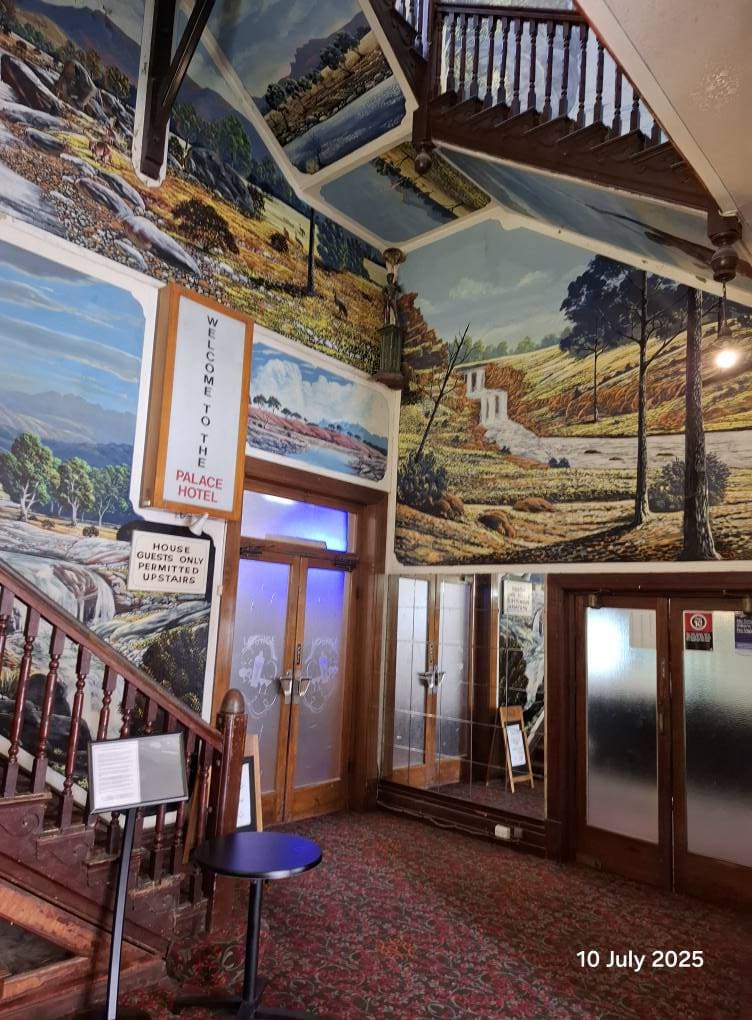 |
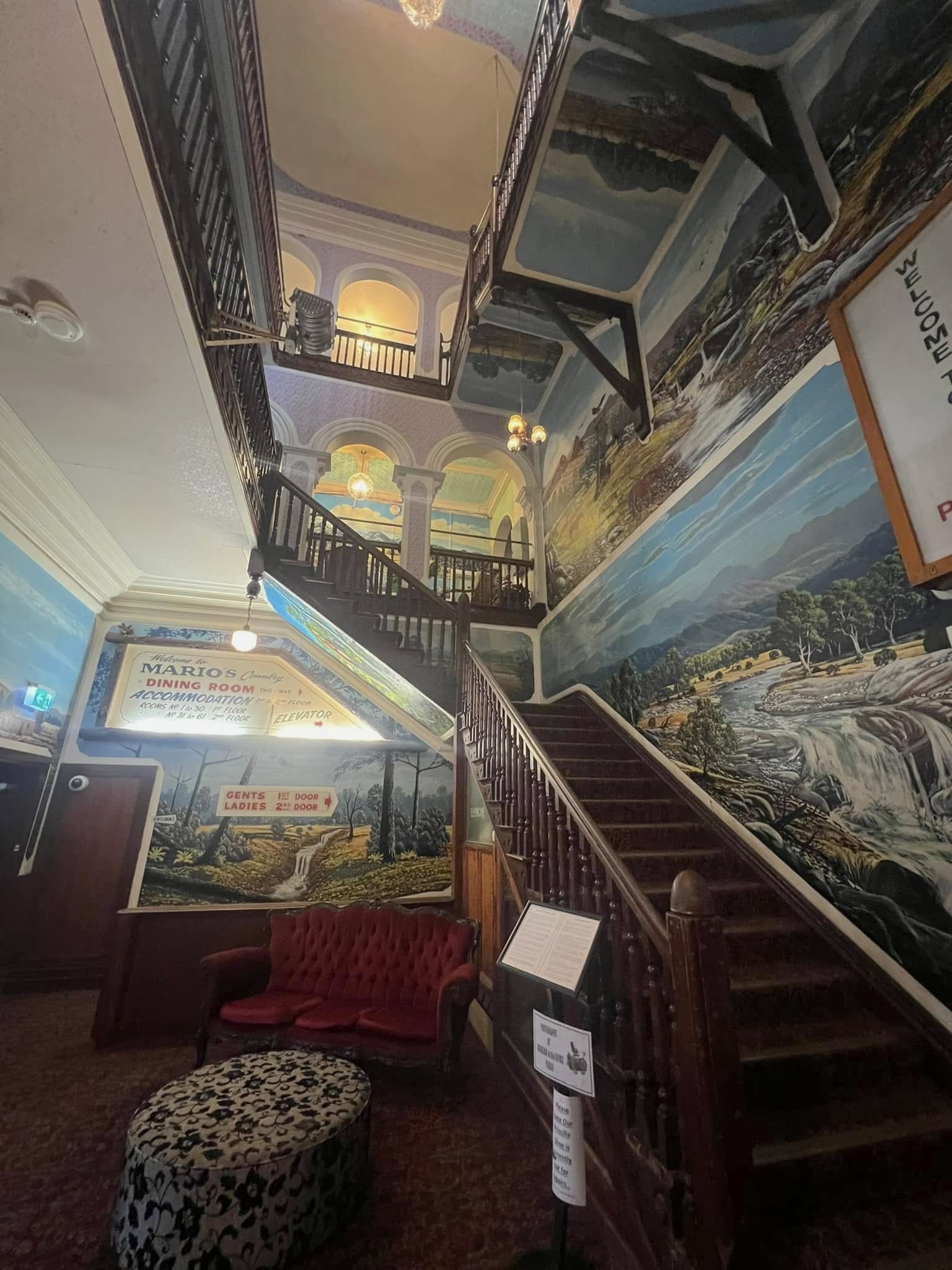
| Stairway |
Upper Hall |
Wall Murals |
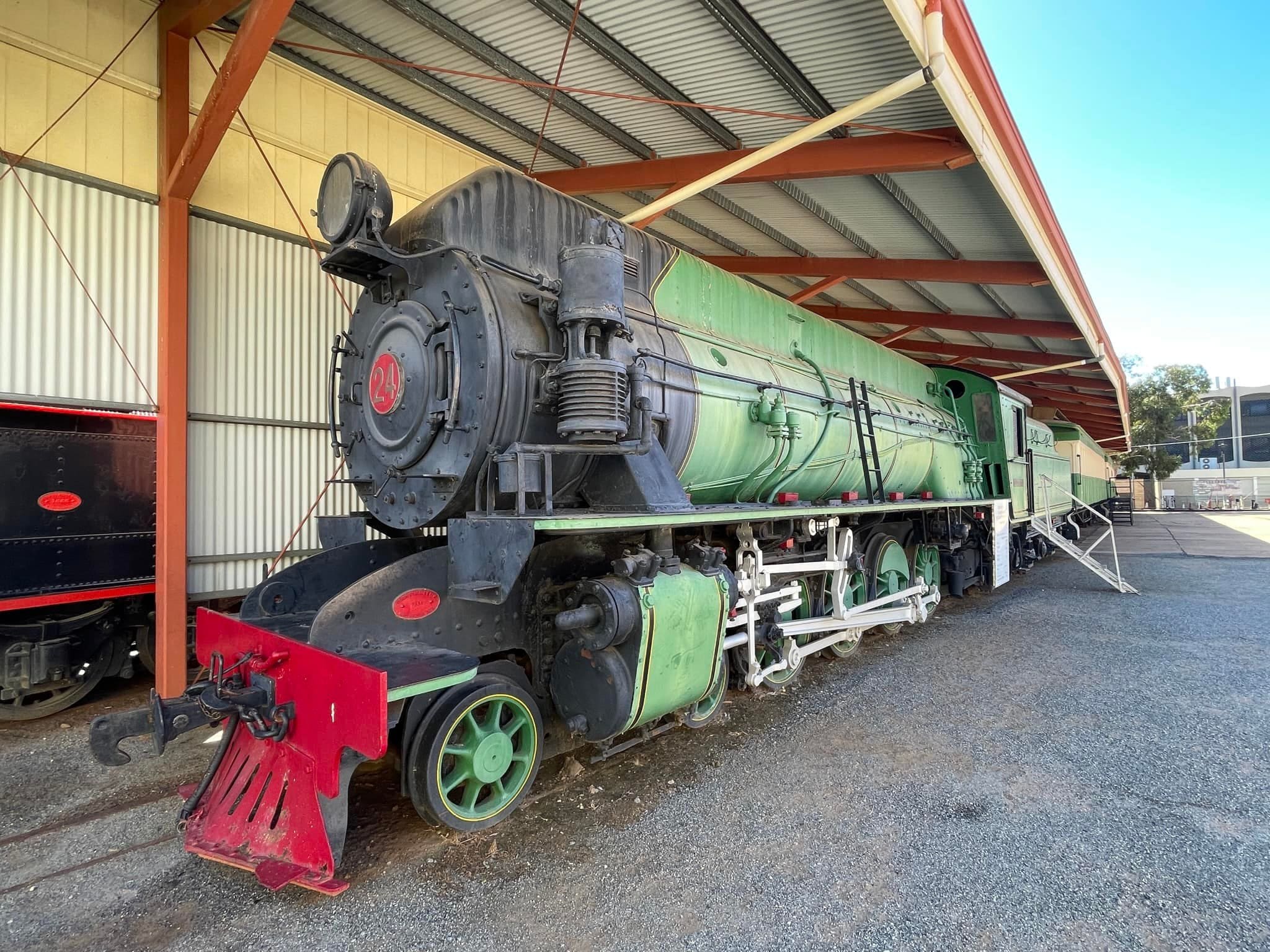 The Living Desert Sculptures
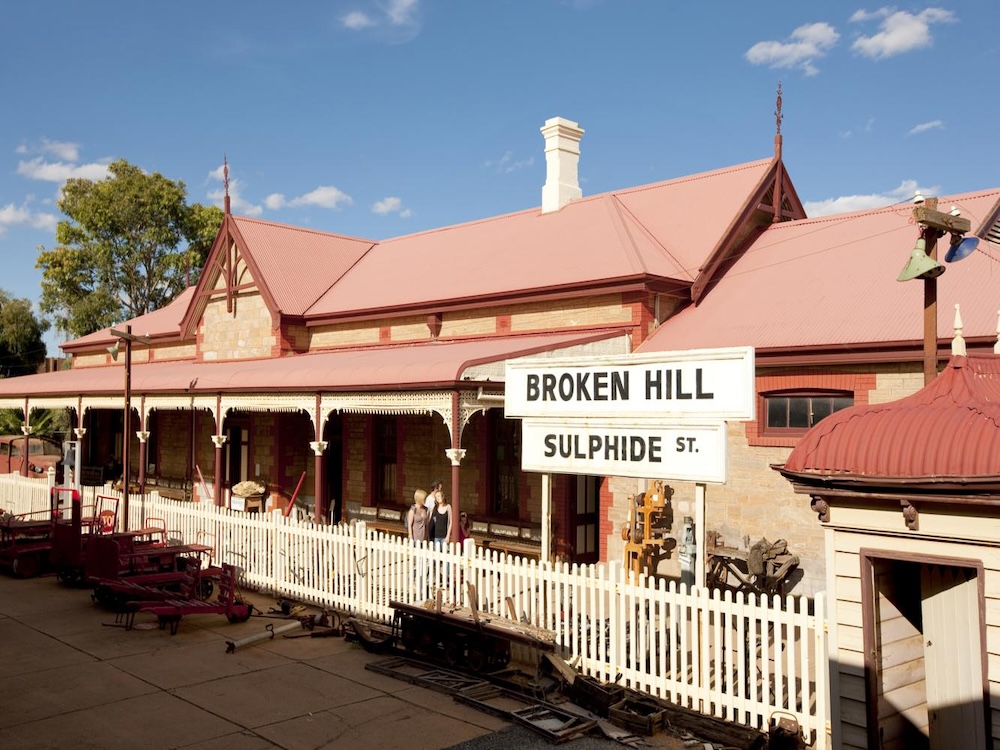
tour did make one stop in Broken Hill, at the Sulphide Street
Rail and Historical Museum .
The museum is home to the
locomotives and rail cars of the original Silverton Tramway
Company, a private concern that in the 1800's provided the
only rail transport for people and ore. The locomotives as
well as passenger cars are there for people to walk through as
a guide explains the history of the Silverton Tramway Company.
In addition, there are four separate museum collections in the
Sulfphide Street Rail and Historical Museum. These are listed
below, followed by s short video explaining the museum in more
detail. We did not get to tour the Mineral museum due to time
constraints--it was housed in a separate building.
The Living Desert Sculptures
tour did make one stop in Broken Hill, at the Sulphide Street
Rail and Historical Museum .
The museum is home to the
locomotives and rail cars of the original Silverton Tramway
Company, a private concern that in the 1800's provided the
only rail transport for people and ore. The locomotives as
well as passenger cars are there for people to walk through as
a guide explains the history of the Silverton Tramway Company.
In addition, there are four separate museum collections in the
Sulfphide Street Rail and Historical Museum. These are listed
below, followed by s short video explaining the museum in more
detail. We did not get to tour the Mineral museum due to time
constraints--it was housed in a separate building.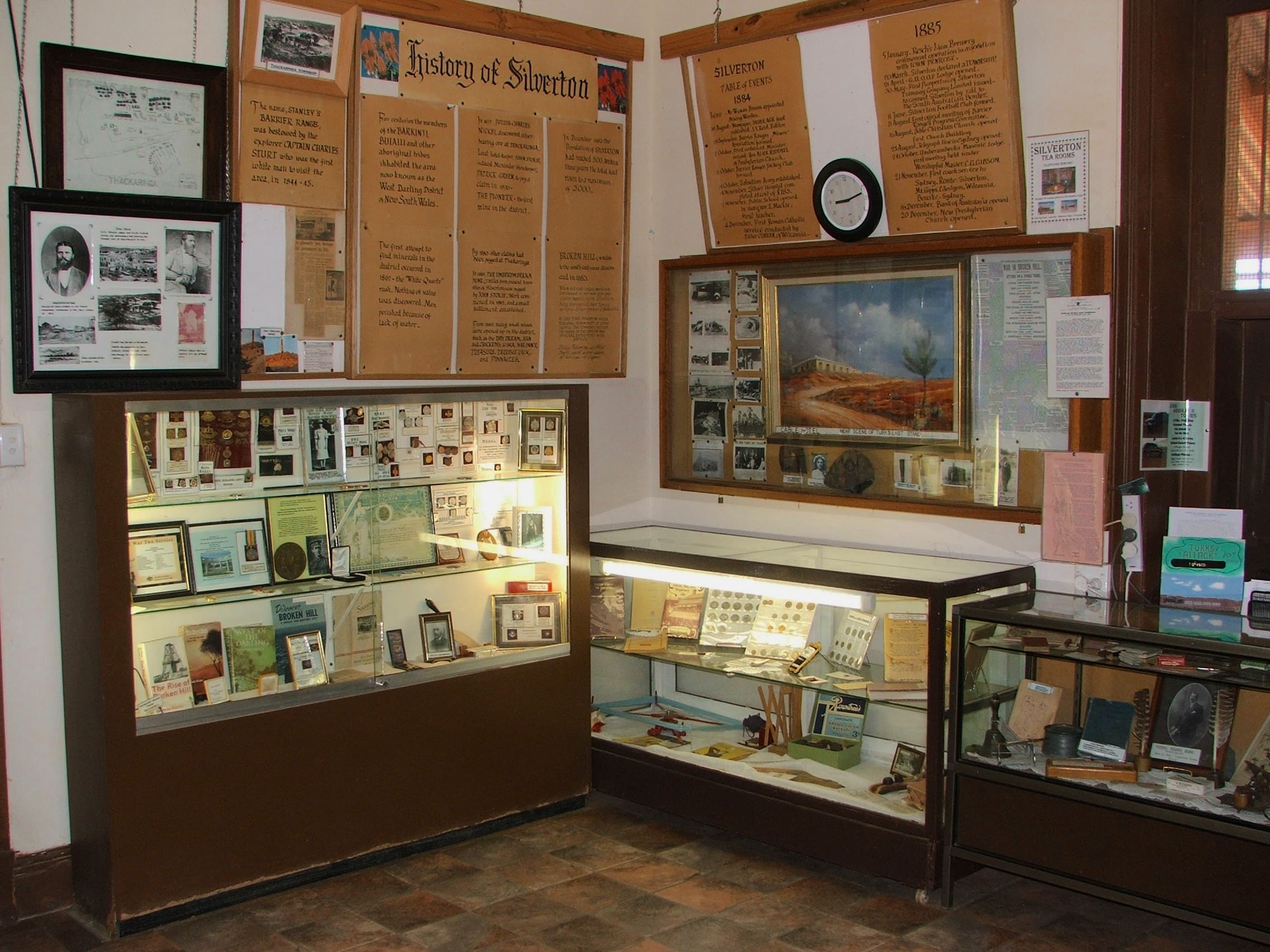 Hospital Museum; a
record of Broken Hills hospital and staff through
photographs, signs, and medical instruments
Hospital Museum; a
record of Broken Hills hospital and staff through
photographs, signs, and medical instruments 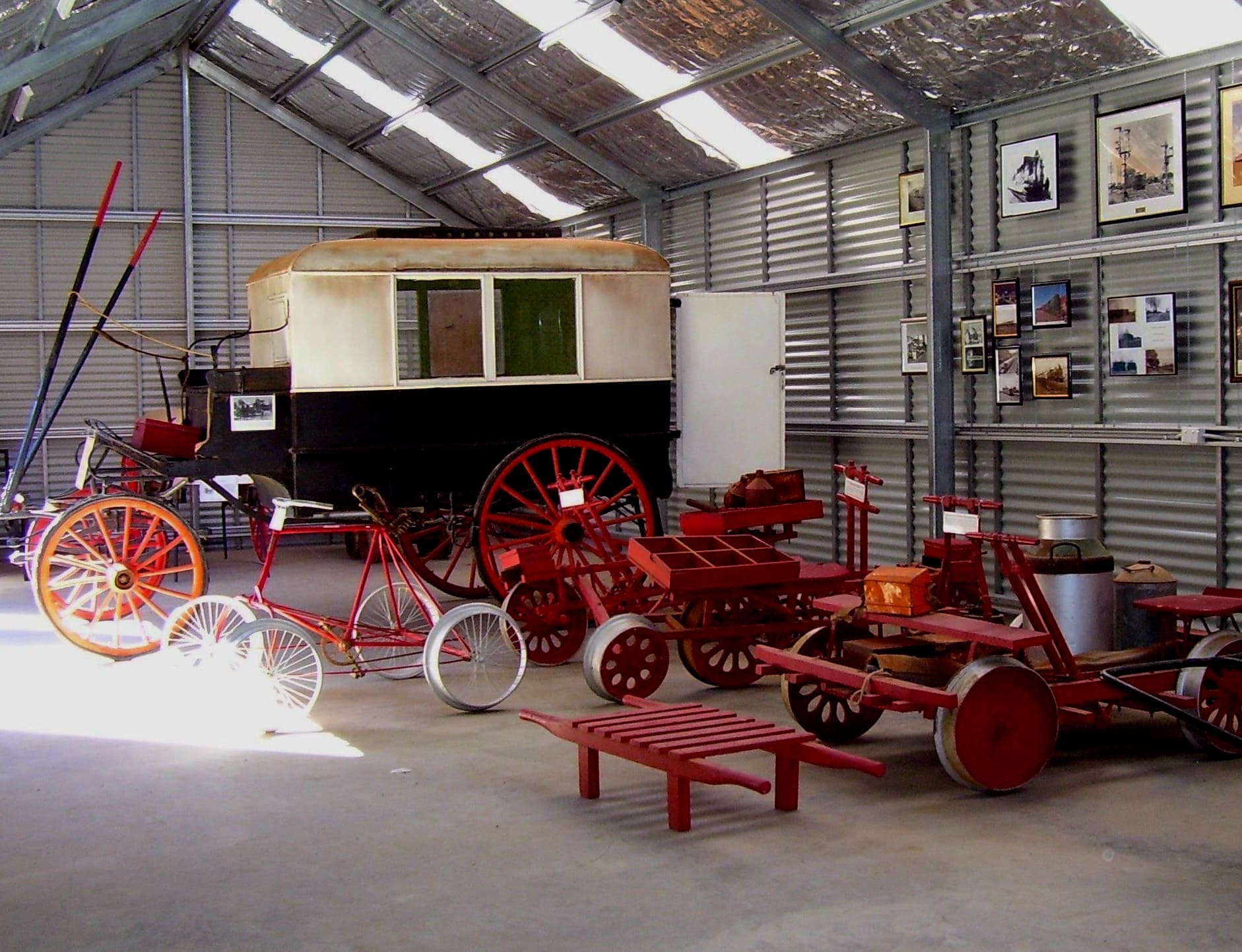 Transport Pavilion:
houses original vehicles including a horse-drawn
ambulance, bicycles, and rail machinery
Transport Pavilion:
houses original vehicles including a horse-drawn
ambulance, bicycles, and rail machinery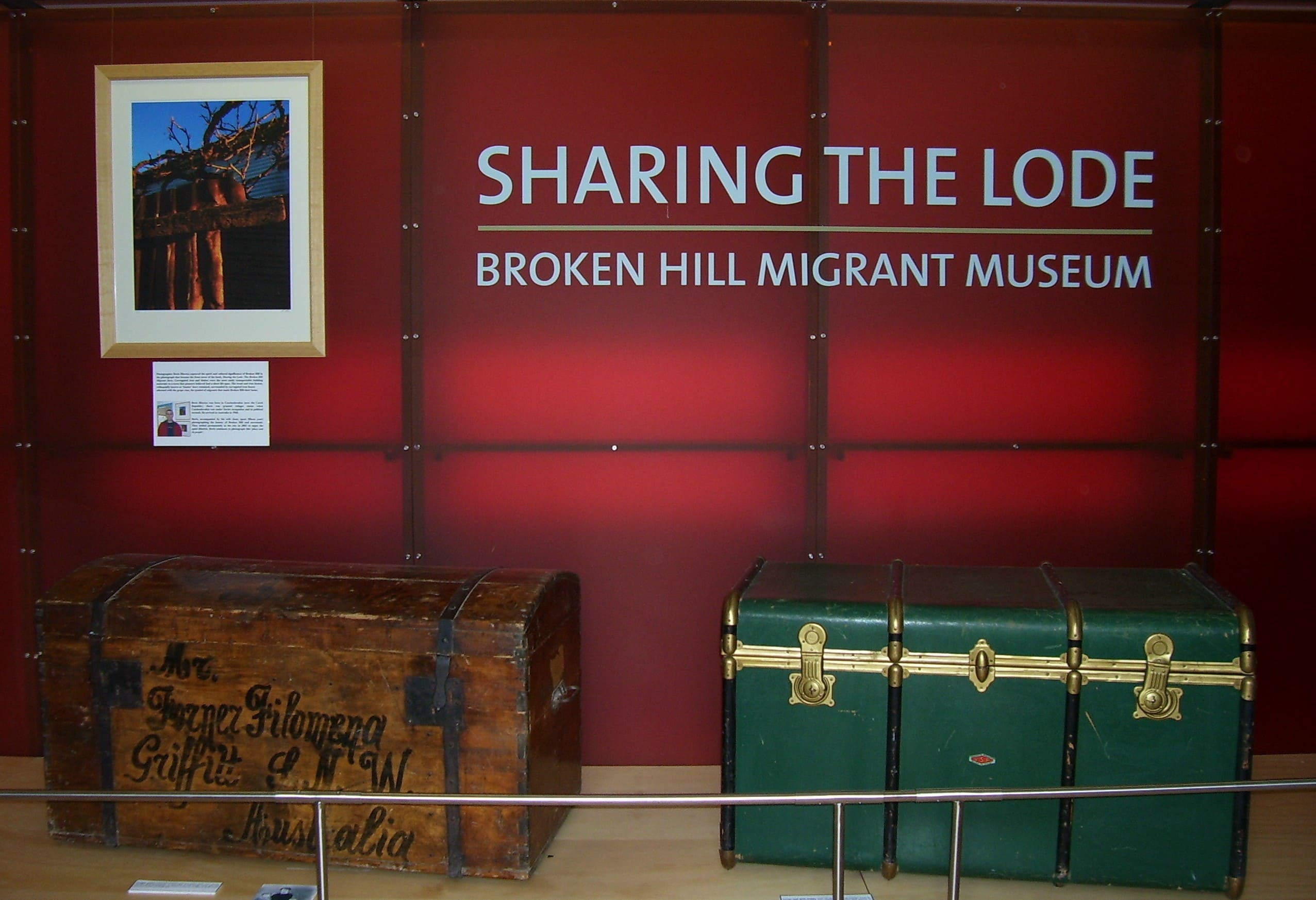 The Migrant Museum:
depicts a journey of hardship and triumph over incredible
odds
The Migrant Museum:
depicts a journey of hardship and triumph over incredible
odds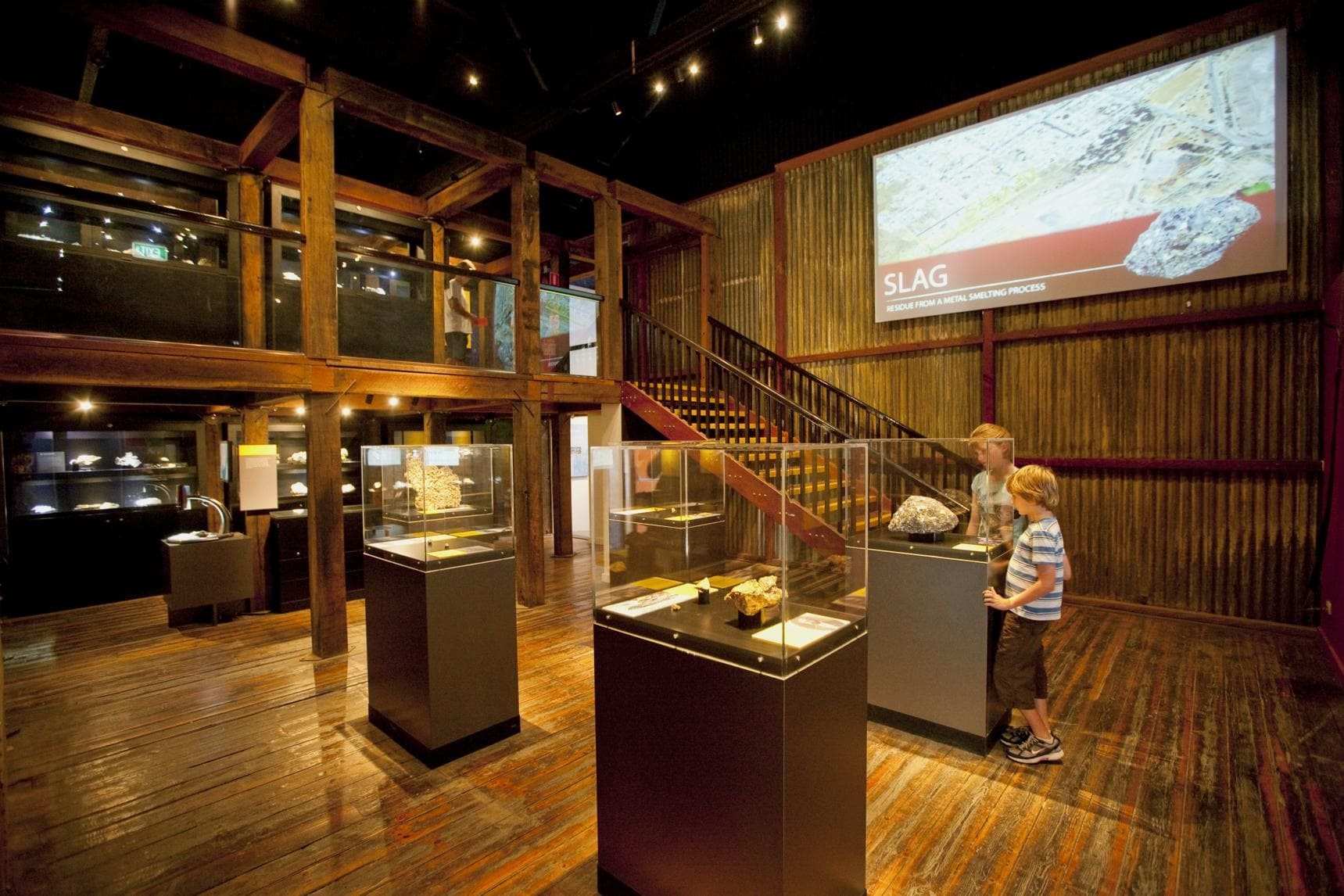 The Albert Kersten
Mining and Minerals Museum: focuses on the city's
mining history and mineral deposits
The Albert Kersten
Mining and Minerals Museum: focuses on the city's
mining history and mineral deposits
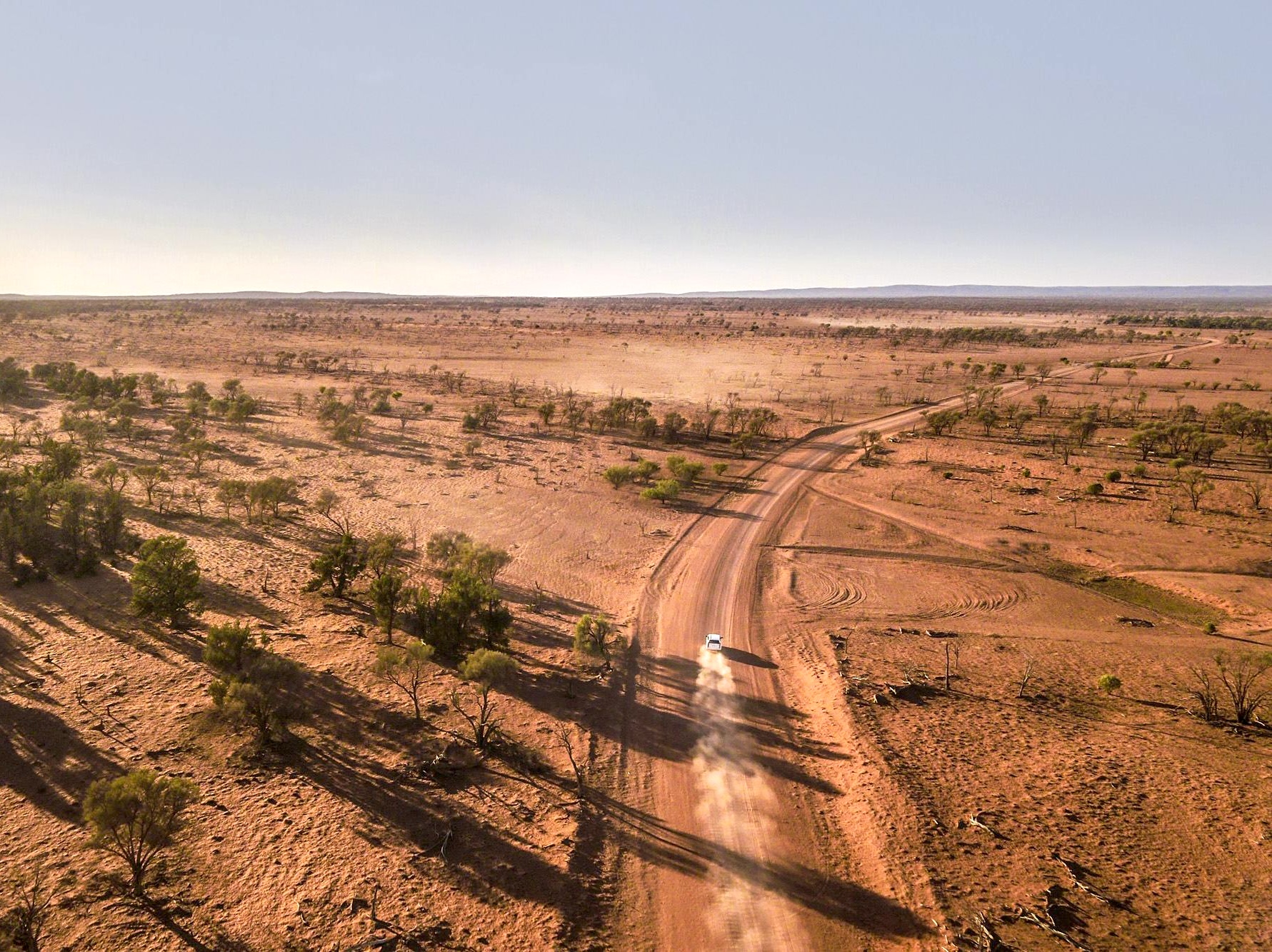
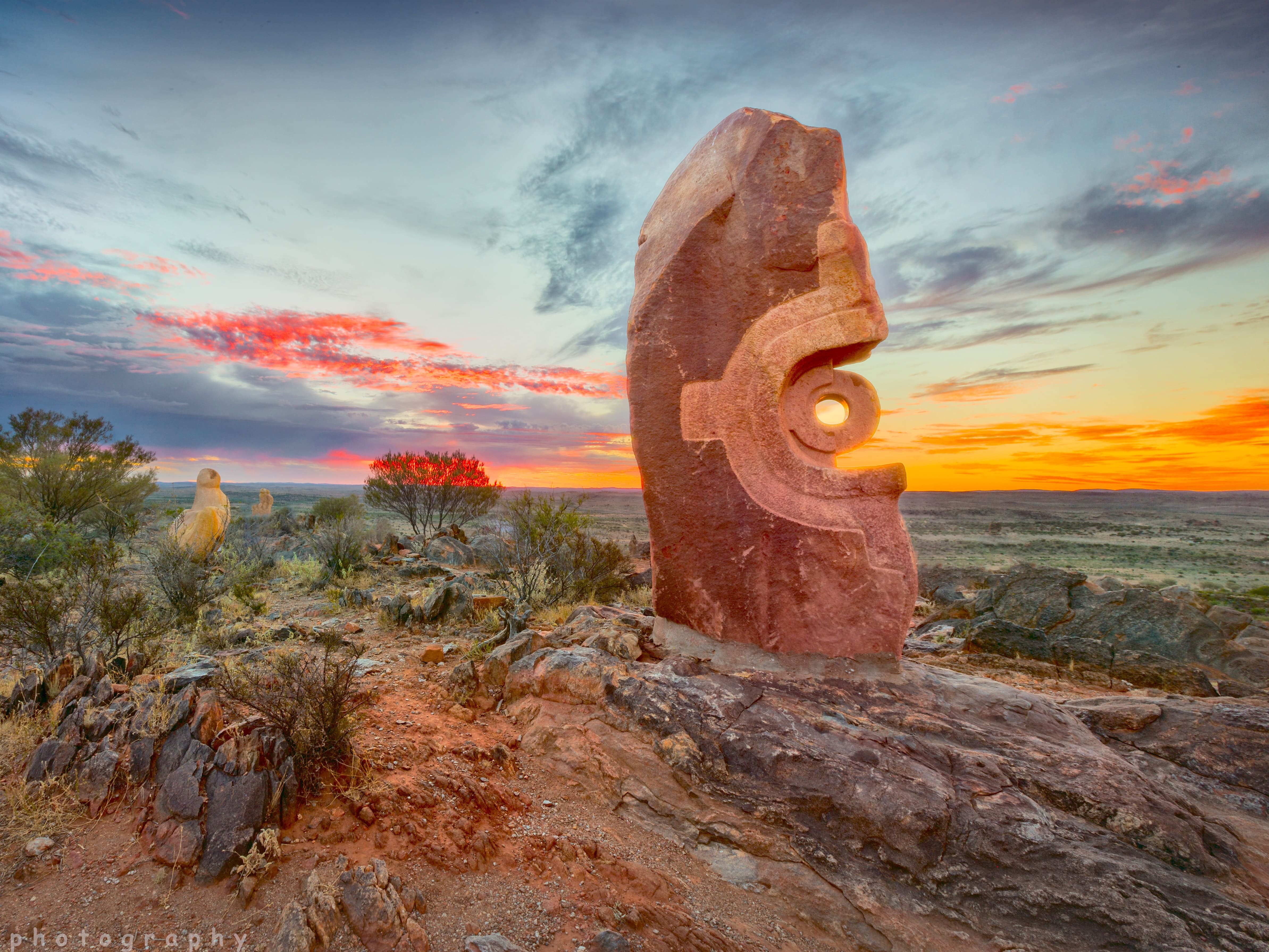
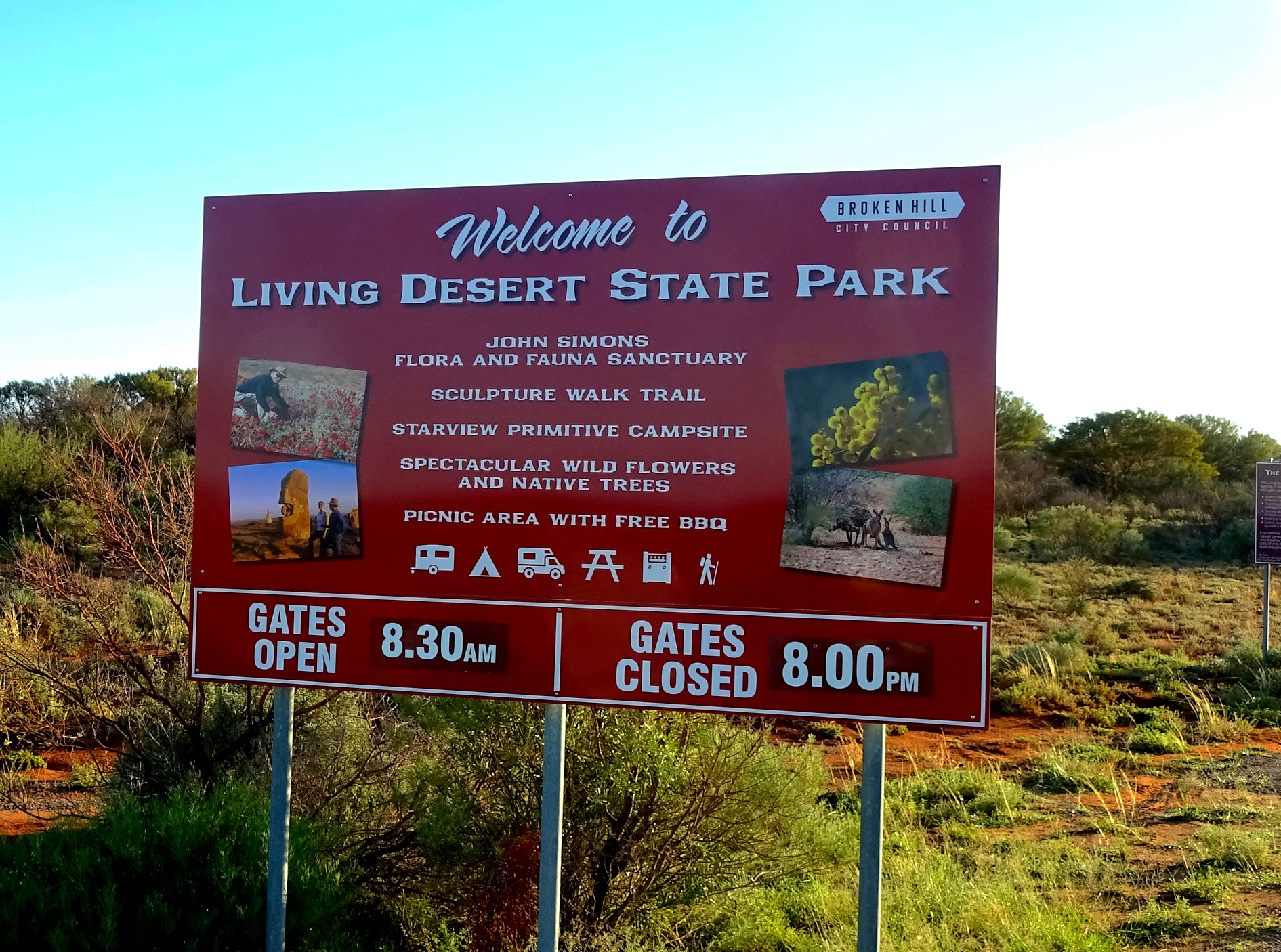 The Living Desert State Park
is located 9 kilometers from the city of Broken Hill and we
were transported there by bus from the Indian Pacific in the
early morning. The reserve includes an electric
predator-proof fence, protecting the flora and fauna.
Competing with the striking desert views, the Living Desert
Sculptures are perched on a plateau that offers panoramic
views in all directions. The plateau is home to the Living
Desert Sculptures. On April 1, 1993, artists from around the
world began work on 12 sandstone sculpture in the desert
outside Broken Hill. Giant sandstone blocks weighing more
than 50 tons had been shipped in from the Wilcannia region
for the sculpture symposium, organized by
artist Lawrence Beck. Six weeks later, the artists unveiled
their creations and, today, this is
The Living Desert State Park
is located 9 kilometers from the city of Broken Hill and we
were transported there by bus from the Indian Pacific in the
early morning. The reserve includes an electric
predator-proof fence, protecting the flora and fauna.
Competing with the striking desert views, the Living Desert
Sculptures are perched on a plateau that offers panoramic
views in all directions. The plateau is home to the Living
Desert Sculptures. On April 1, 1993, artists from around the
world began work on 12 sandstone sculpture in the desert
outside Broken Hill. Giant sandstone blocks weighing more
than 50 tons had been shipped in from the Wilcannia region
for the sculpture symposium, organized by
artist Lawrence Beck. Six weeks later, the artists unveiled
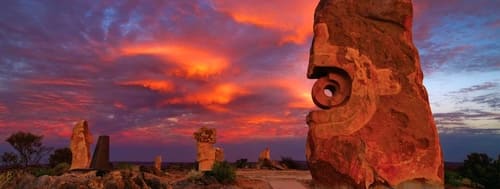
their creations and, today, this is 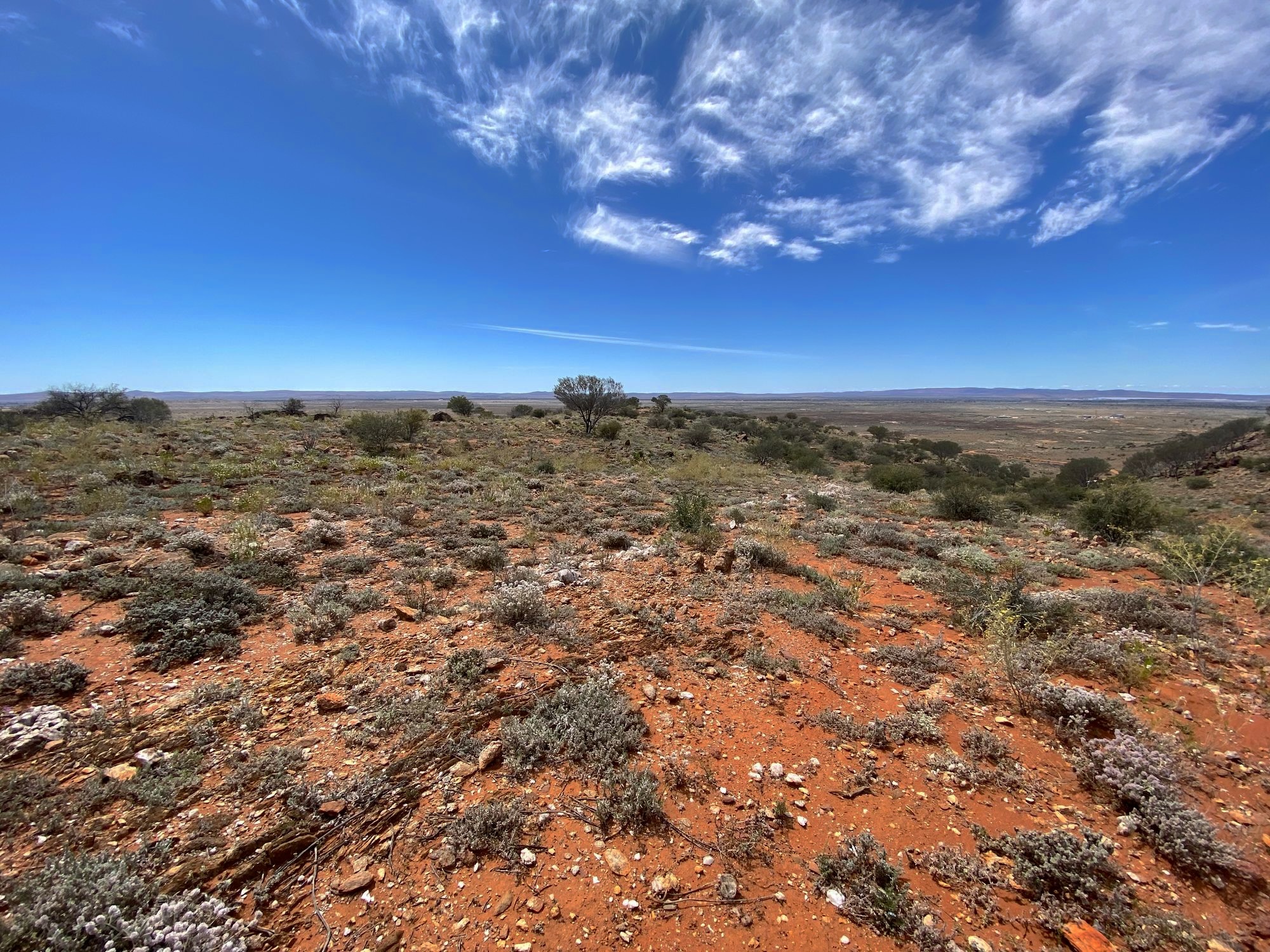 one
of the most photographed sites in the Australian Outback.
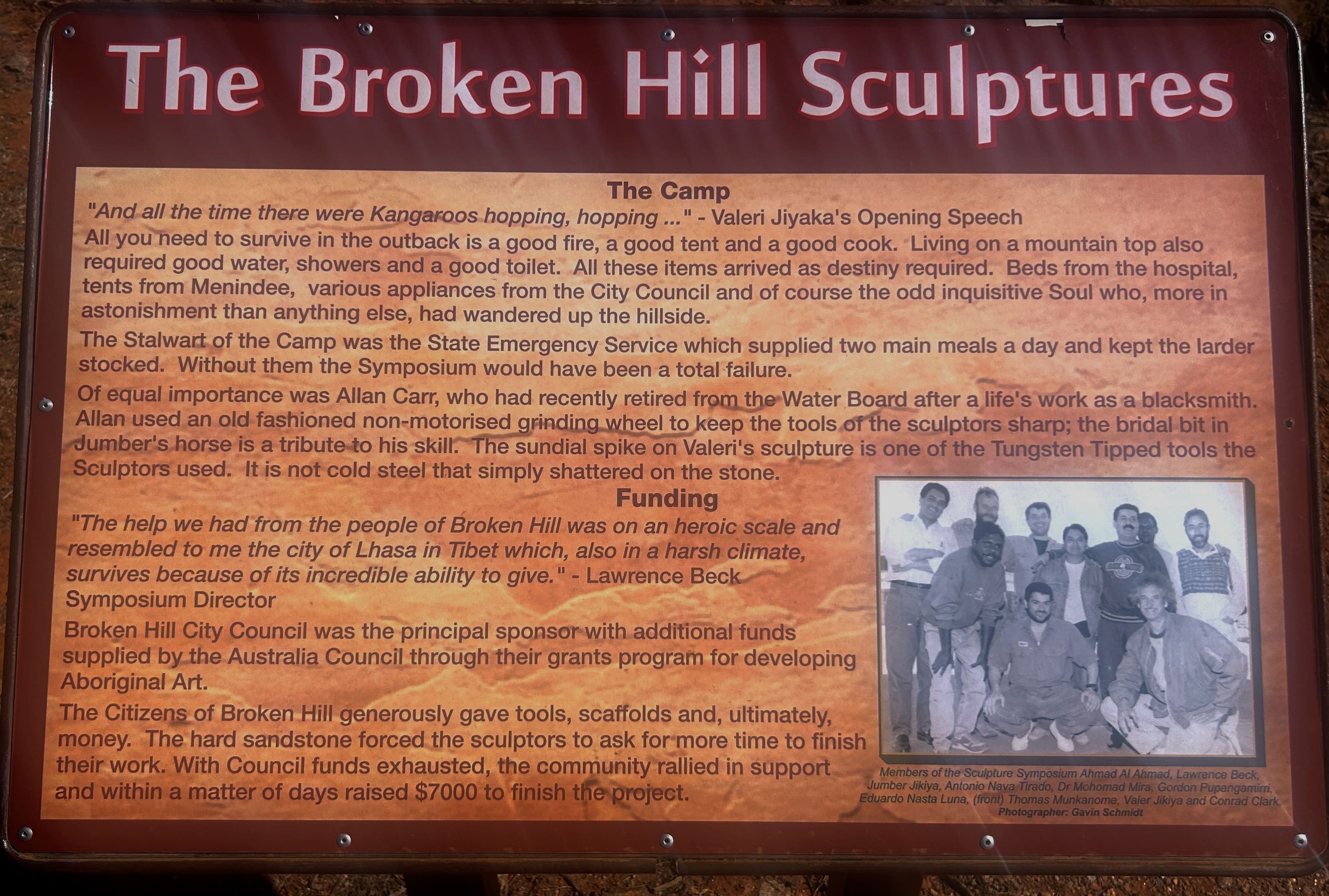
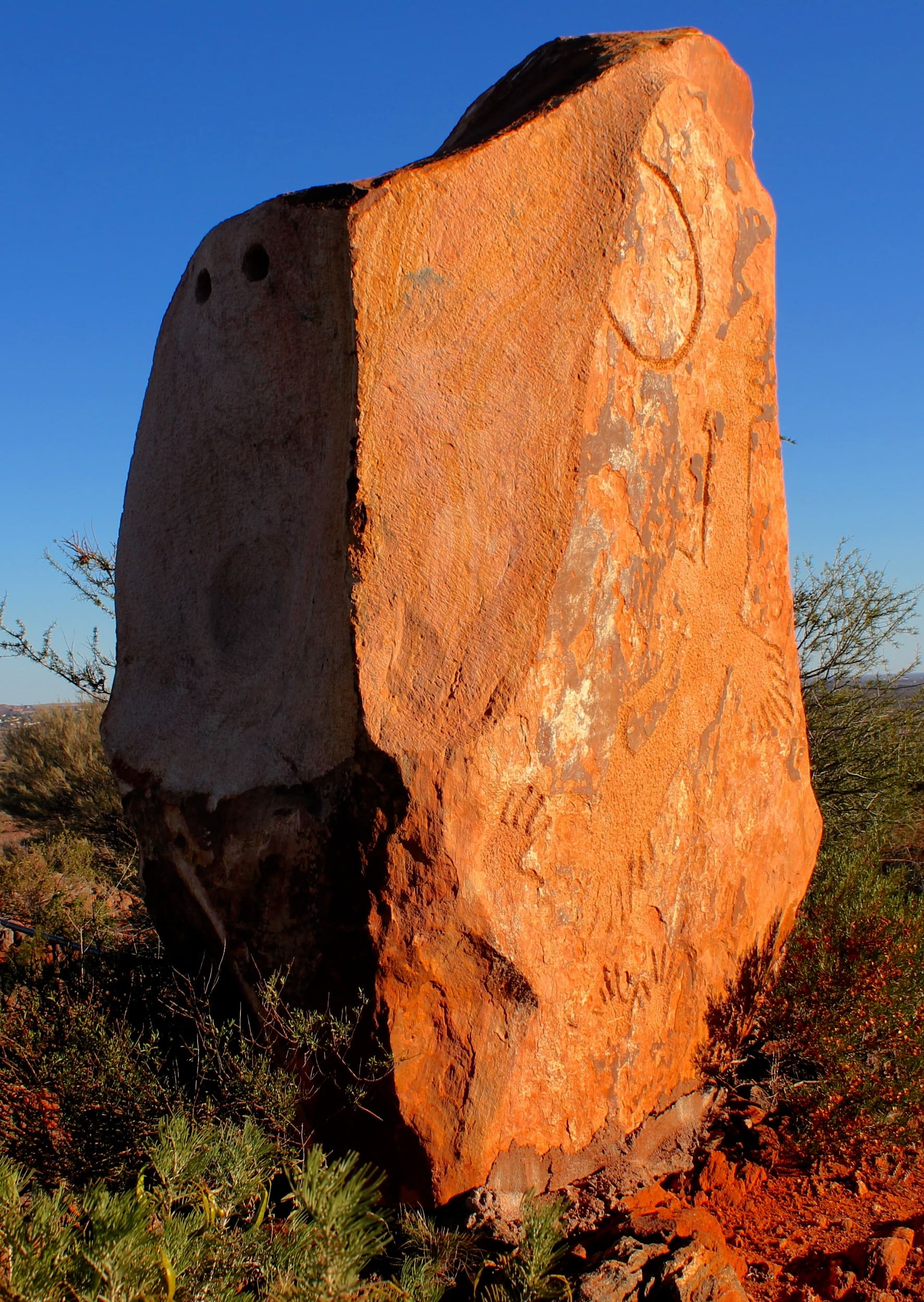
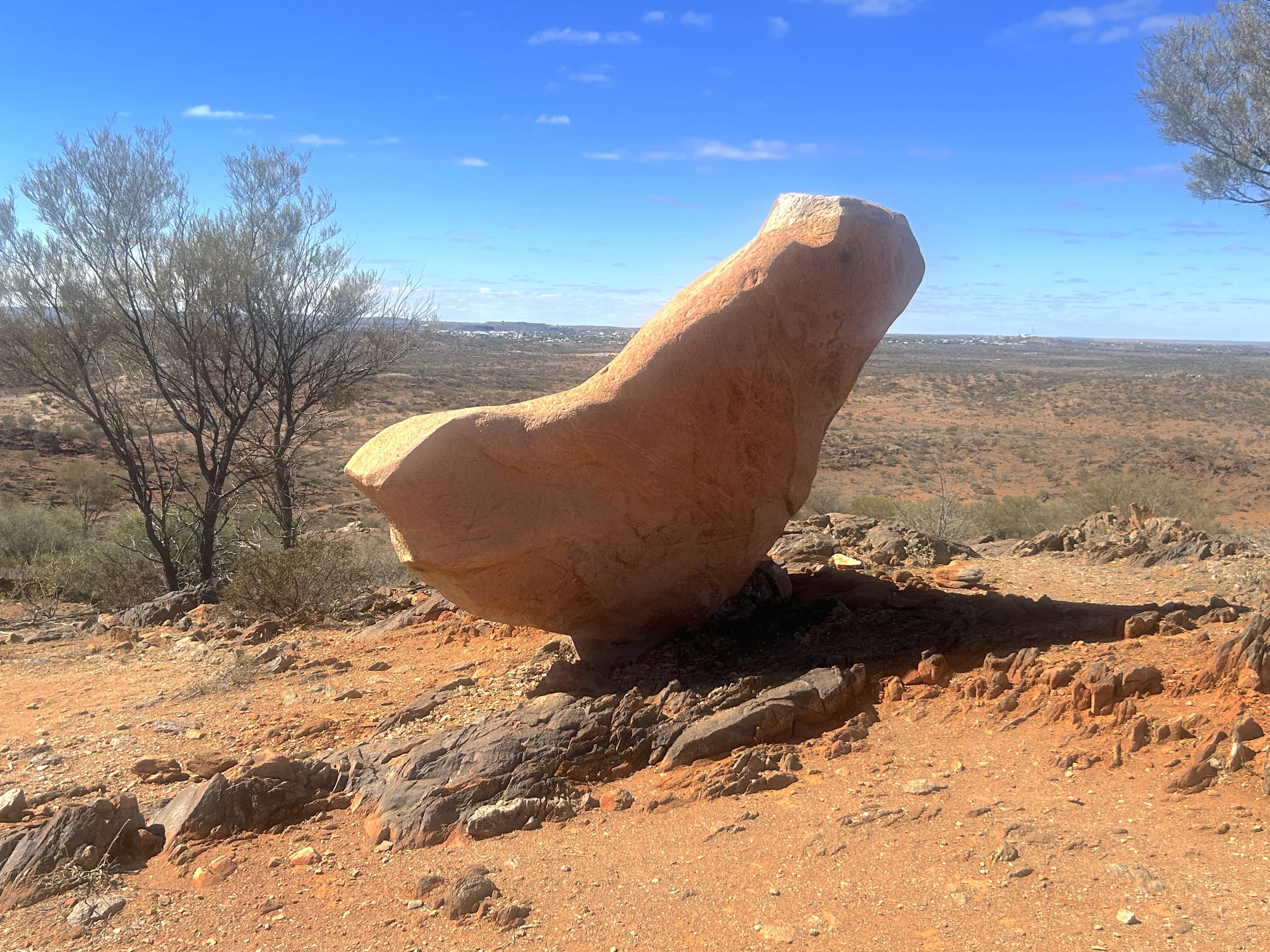
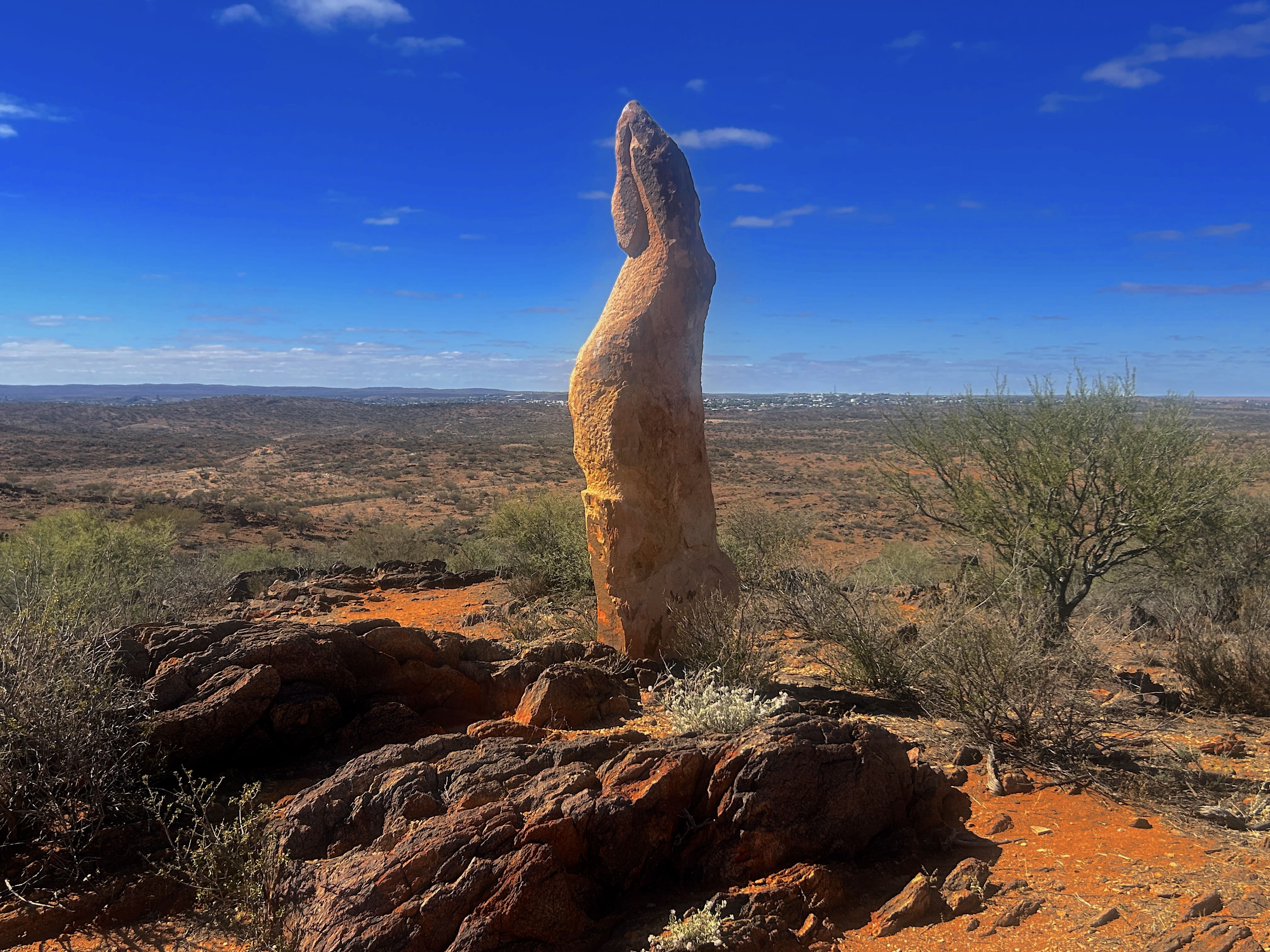
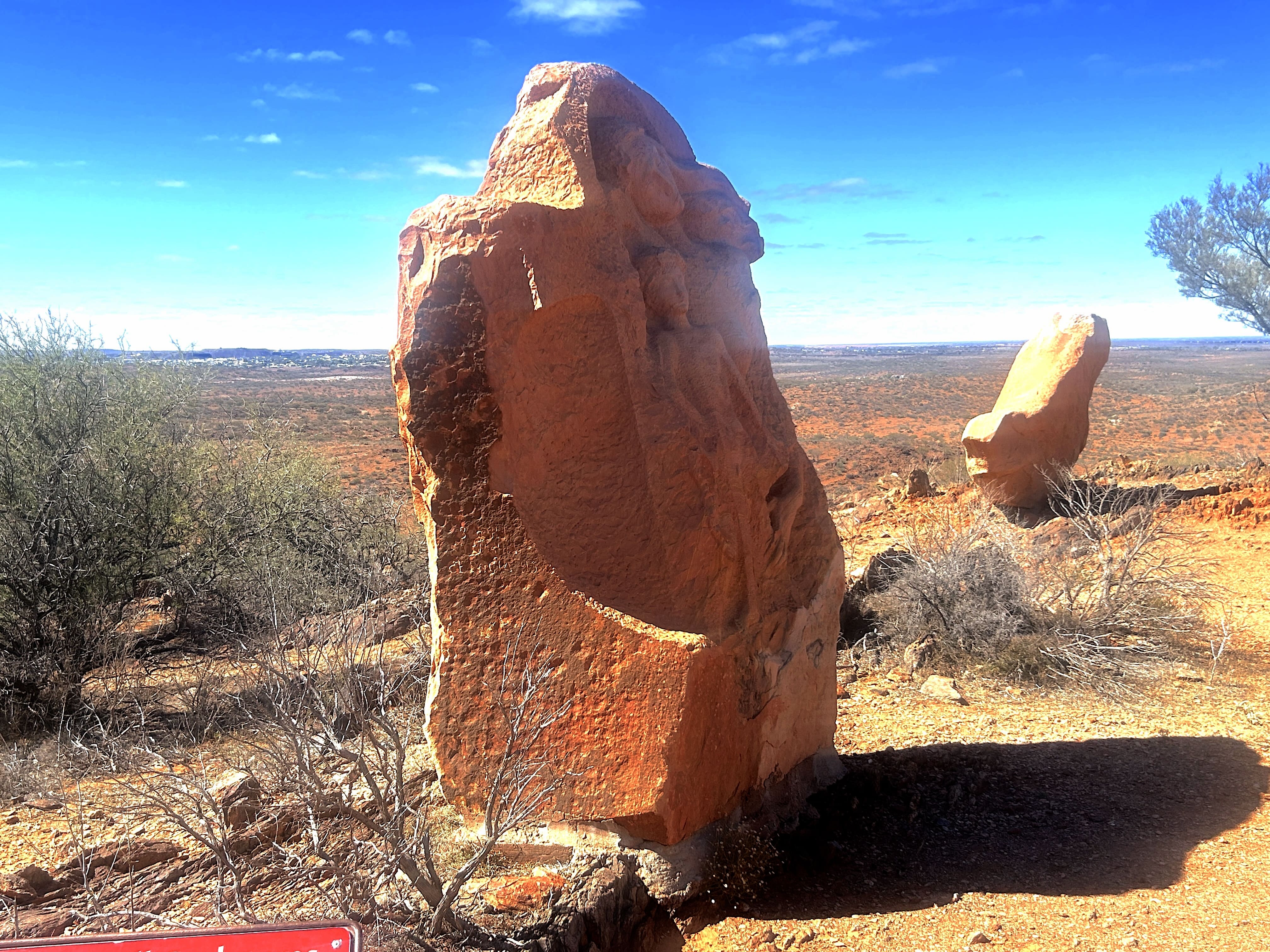
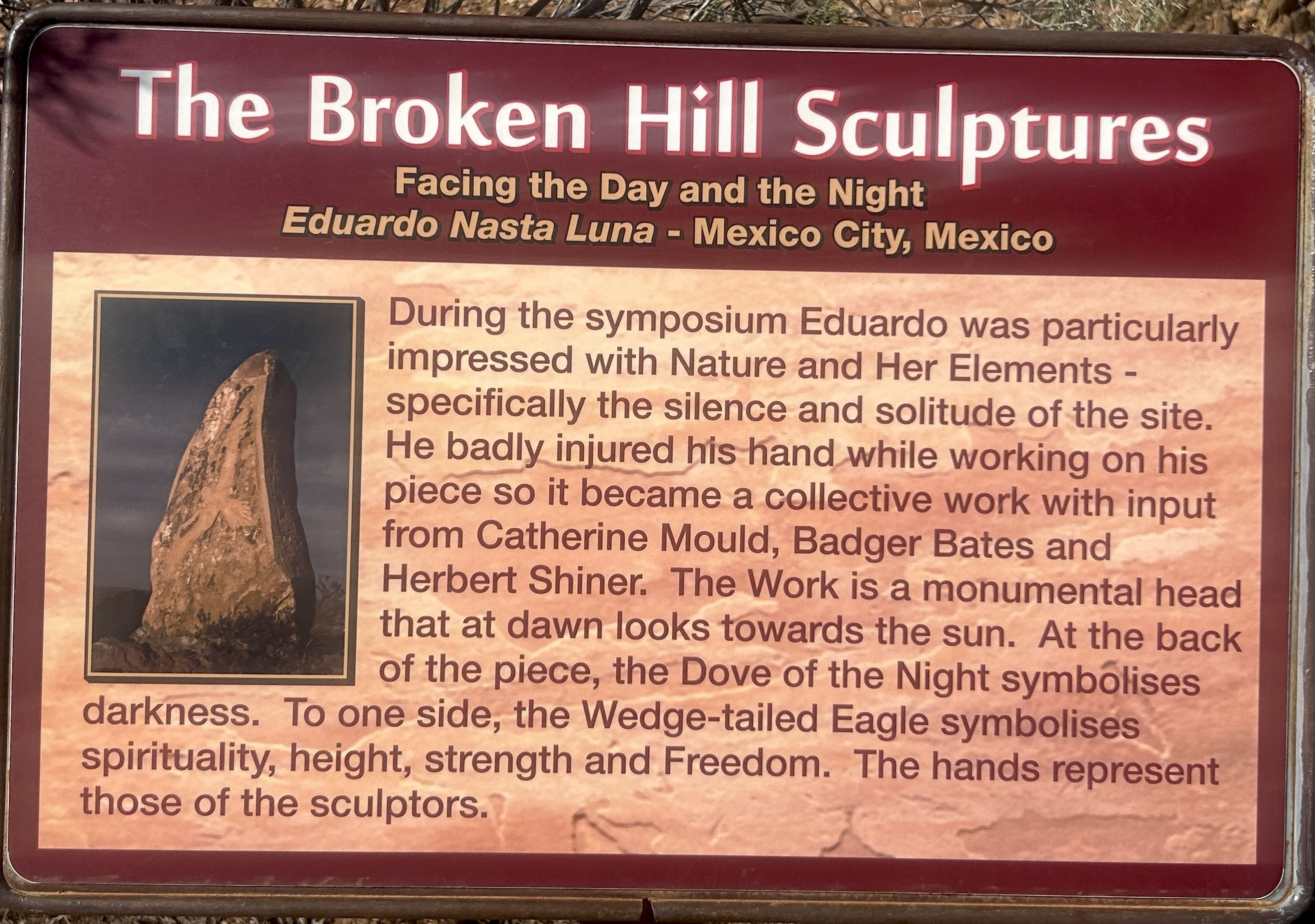
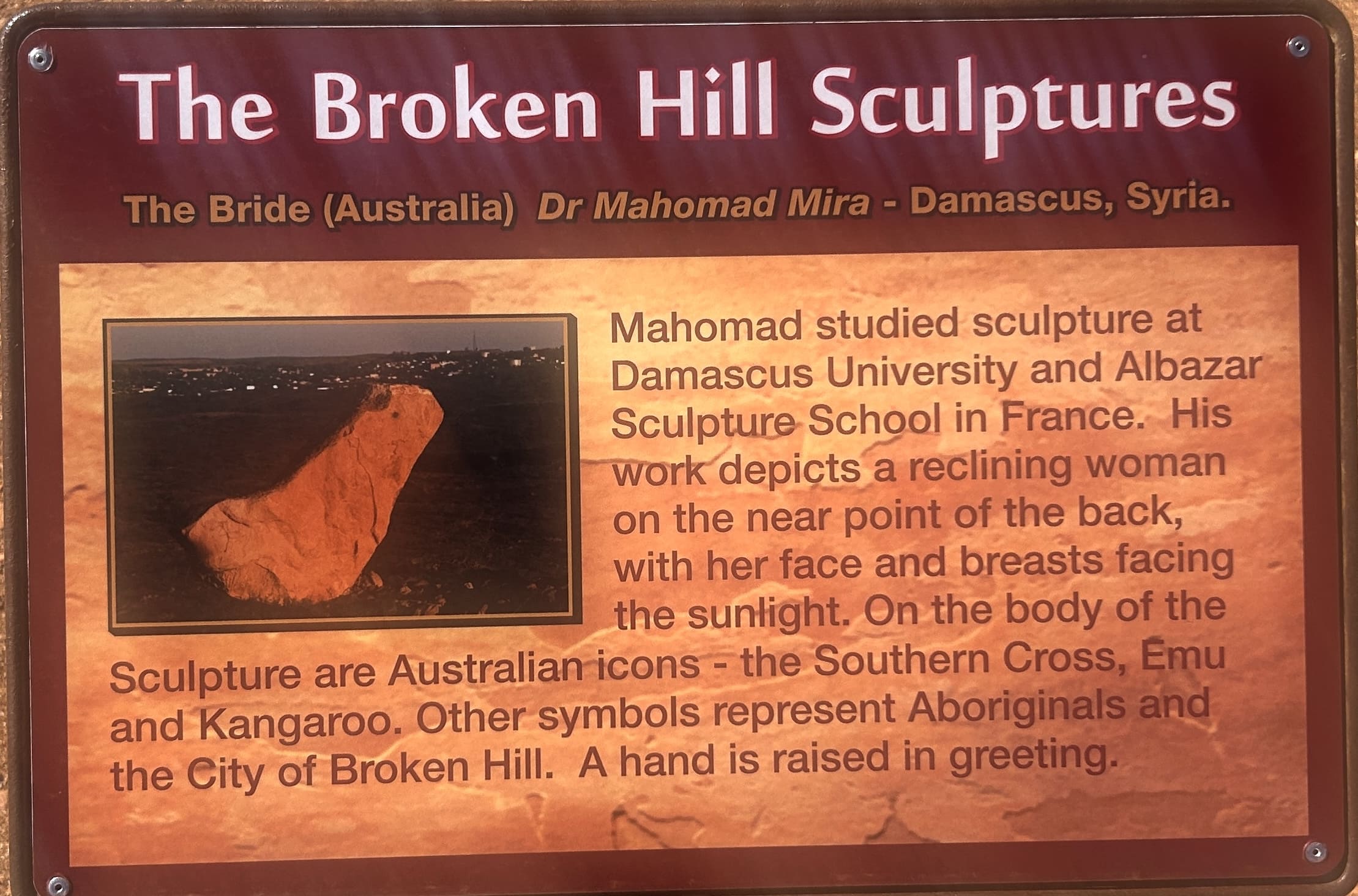
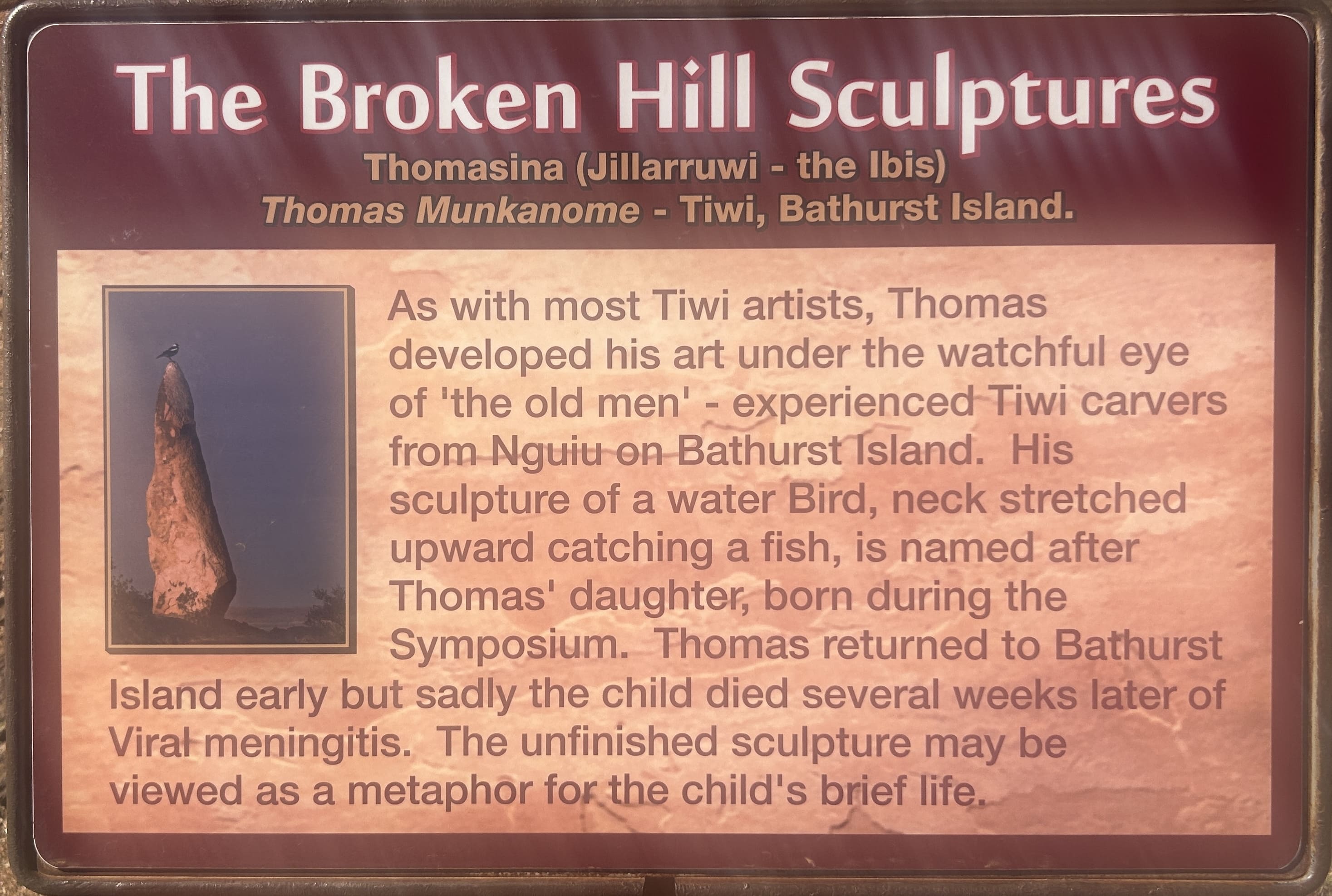
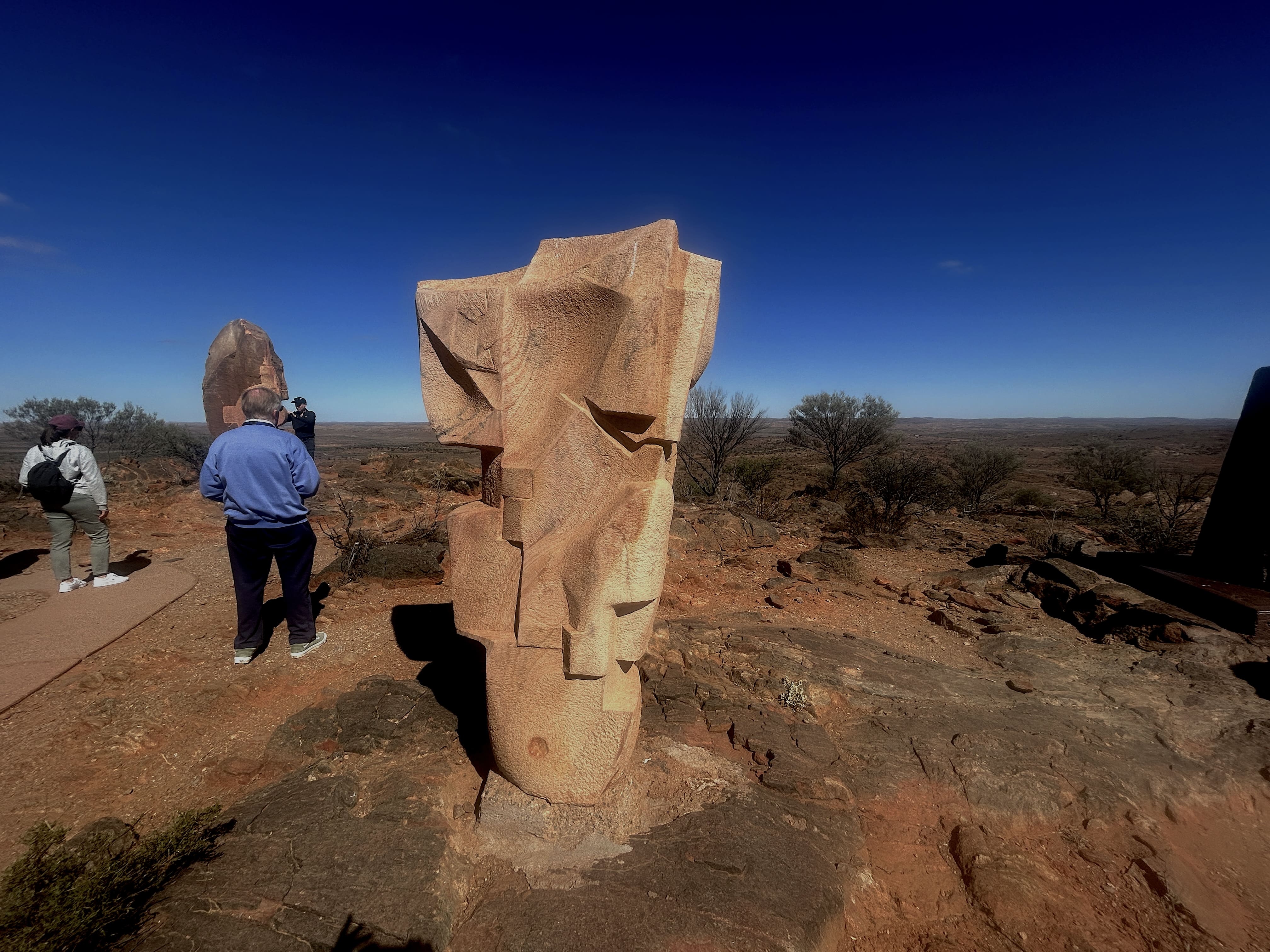
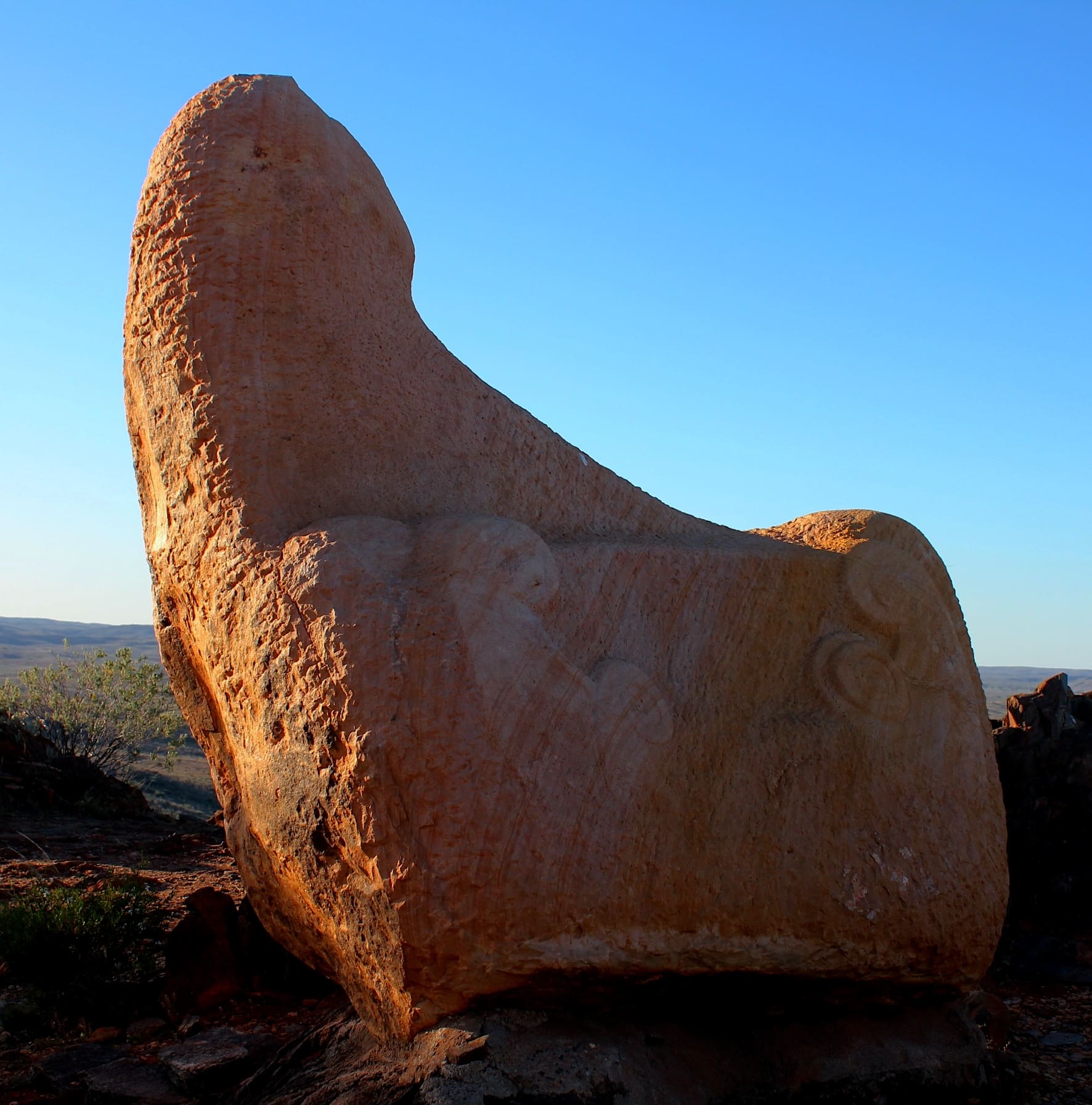
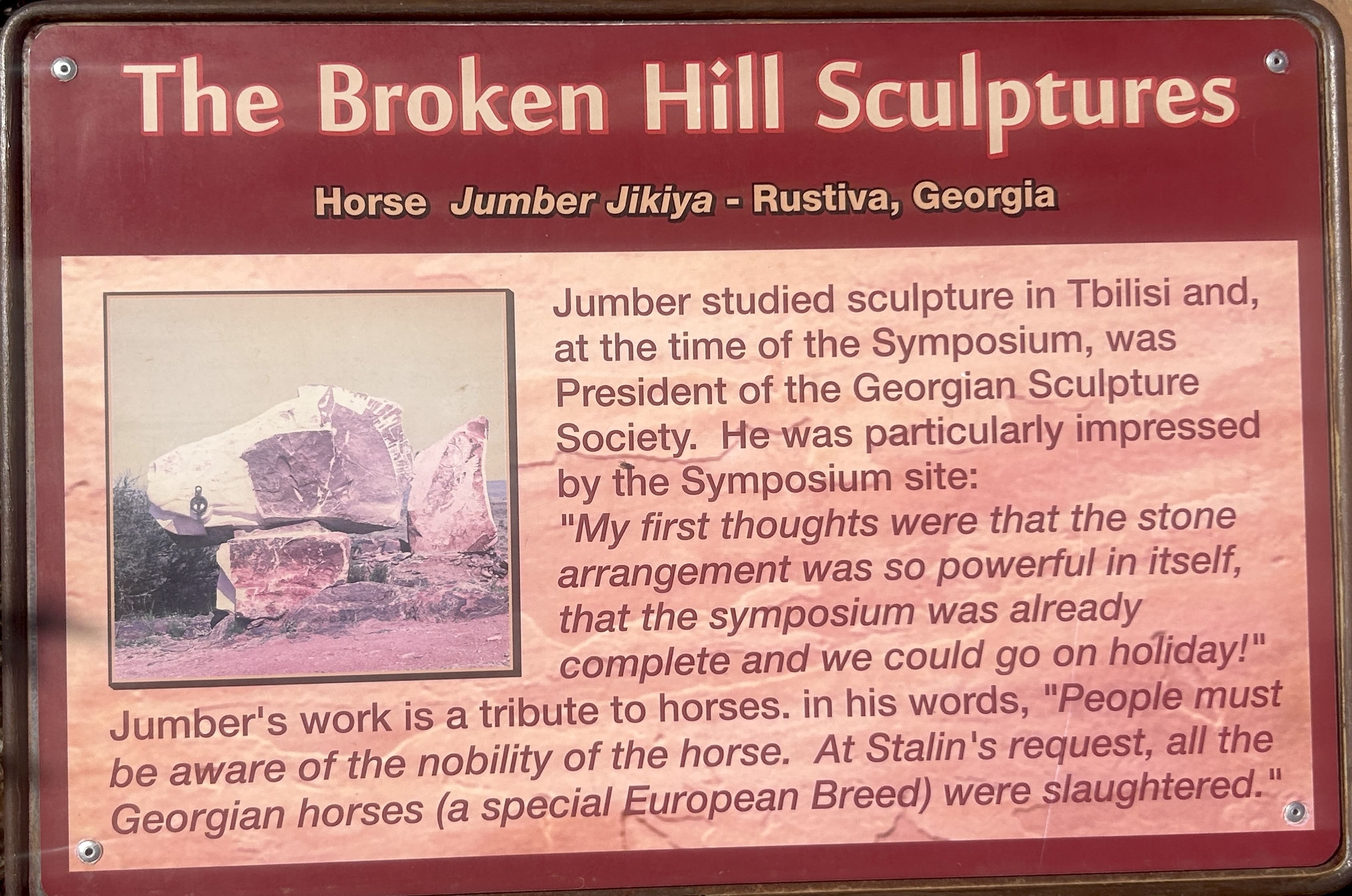
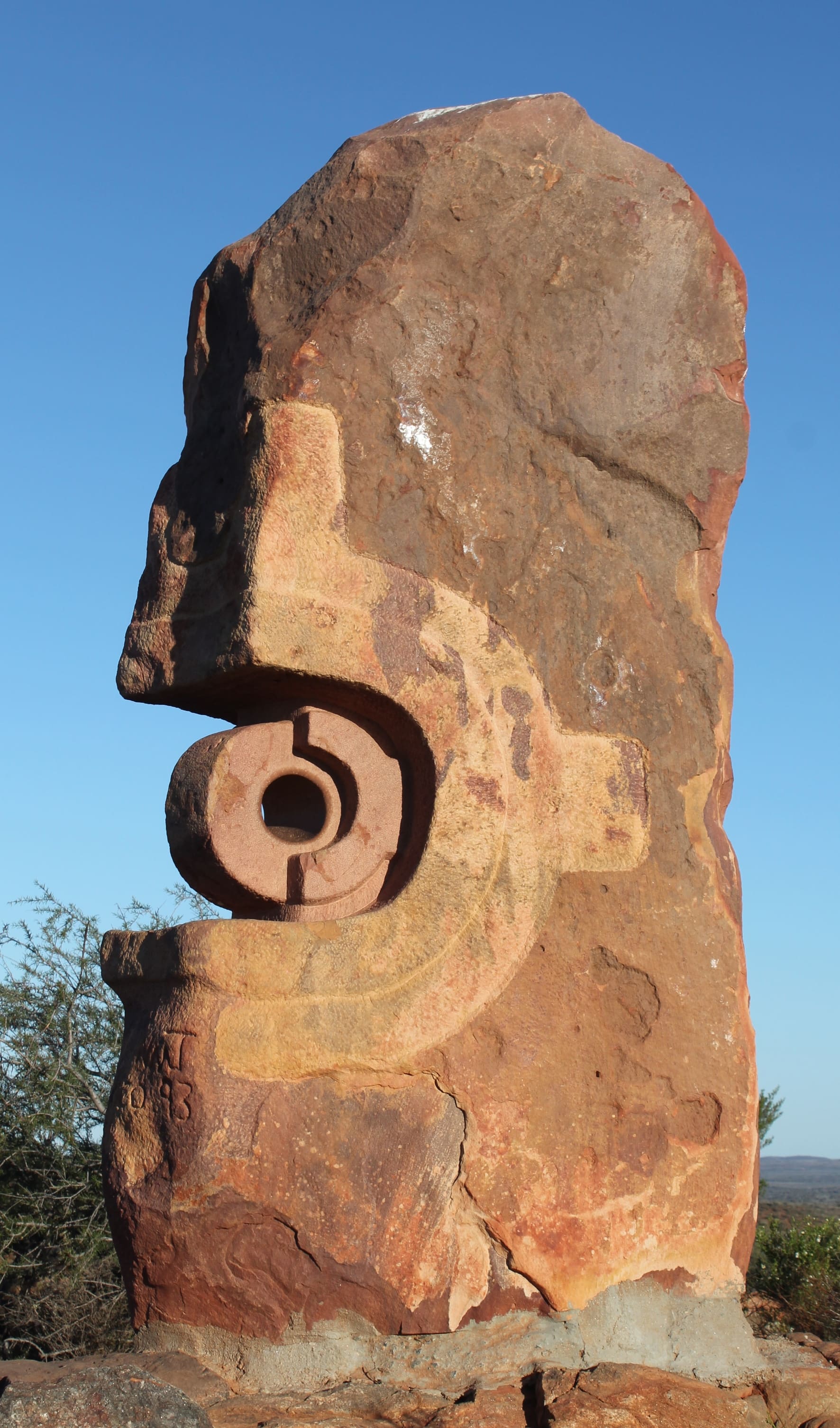
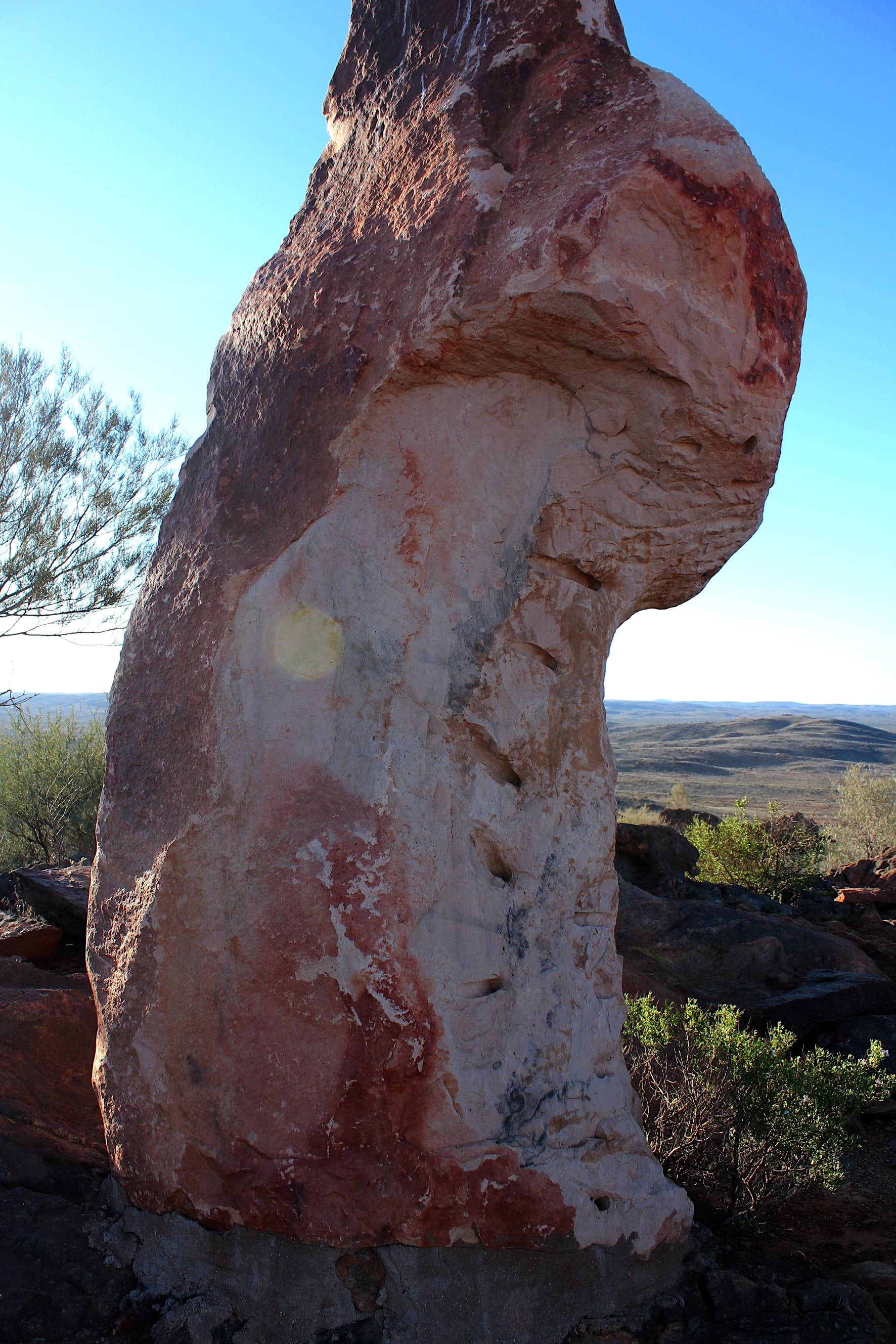
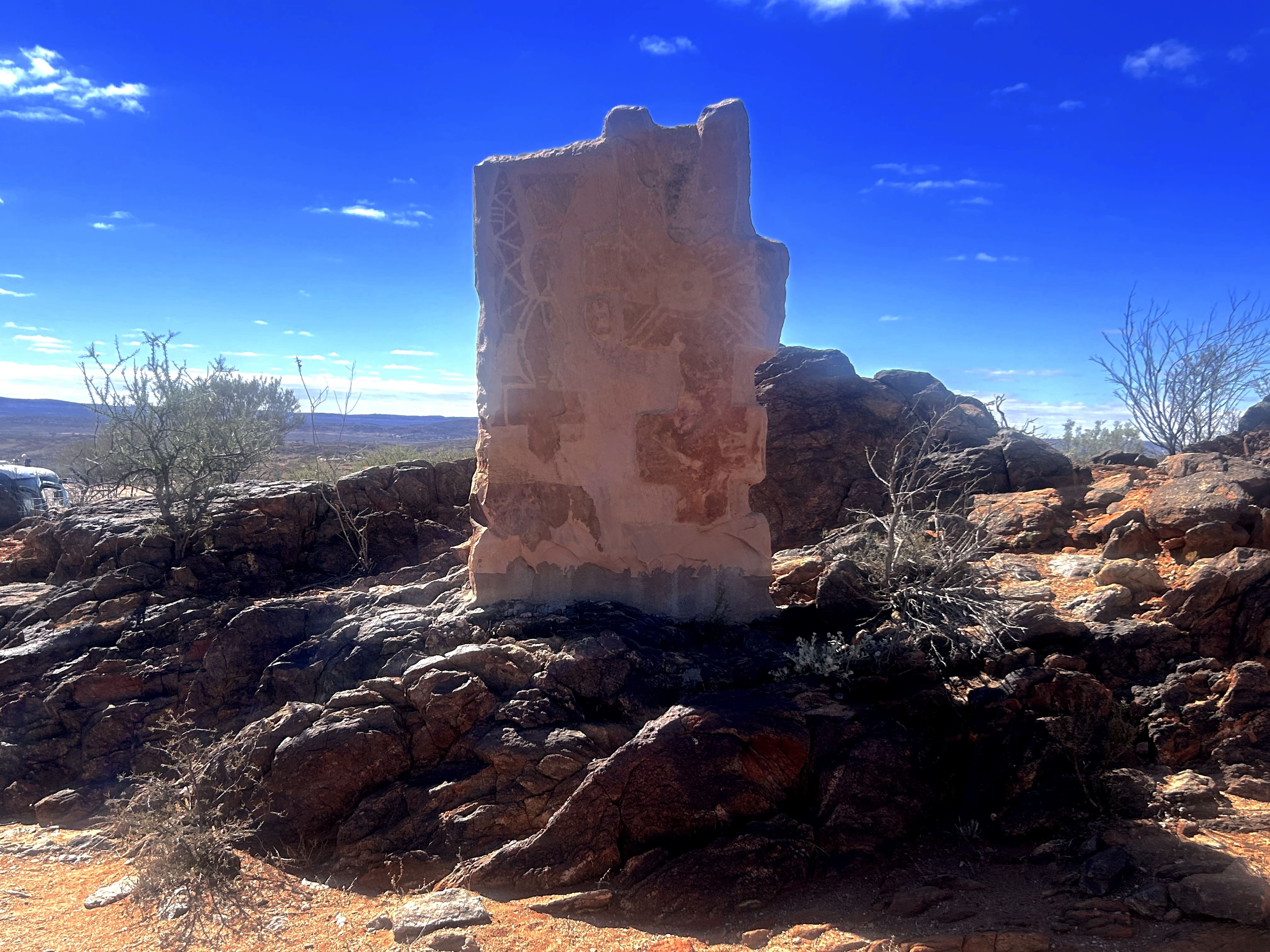
Below are two ways to view the Living Desert Scupltures. The
first is a video by Youtuber The Holiday Hunter. It presents
the sculptures in order, with a brief explanation. Below
that is a photo gallery we made that presents the sculptures
in the same order, but with a photo of the accompanying sign
that explains the sculptures in more detail (although
shadows make it challenging on a few of the signs).
one
of the most photographed sites in the Australian Outback.
Below are two ways to view the Living Desert Scupltures. The
first is a video by Youtuber The Holiday Hunter. It presents
the sculptures in order, with a brief explanation. Below
that is a photo gallery we made that presents the sculptures
in the same order, but with a photo of the accompanying sign
that explains the sculptures in more detail (although
shadows make it challenging on a few of the signs).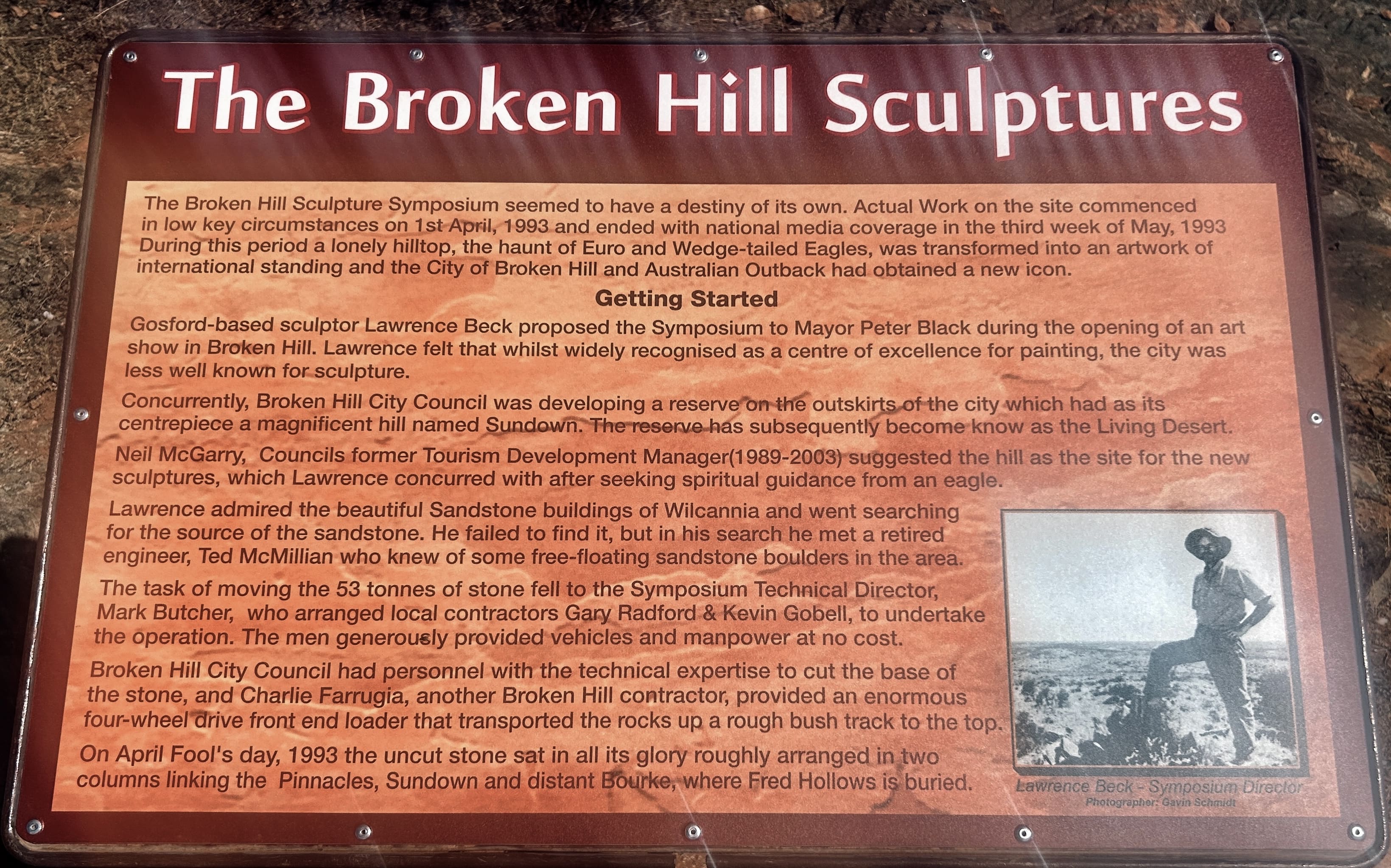 |
 |
 |
|
| About the Living Desert
Sculptures |
The Camp |
||
 |
 |
 |
 |
 |
 |
 |
 |
| Facing the Day and Night |
The Bride |
The Ibis |
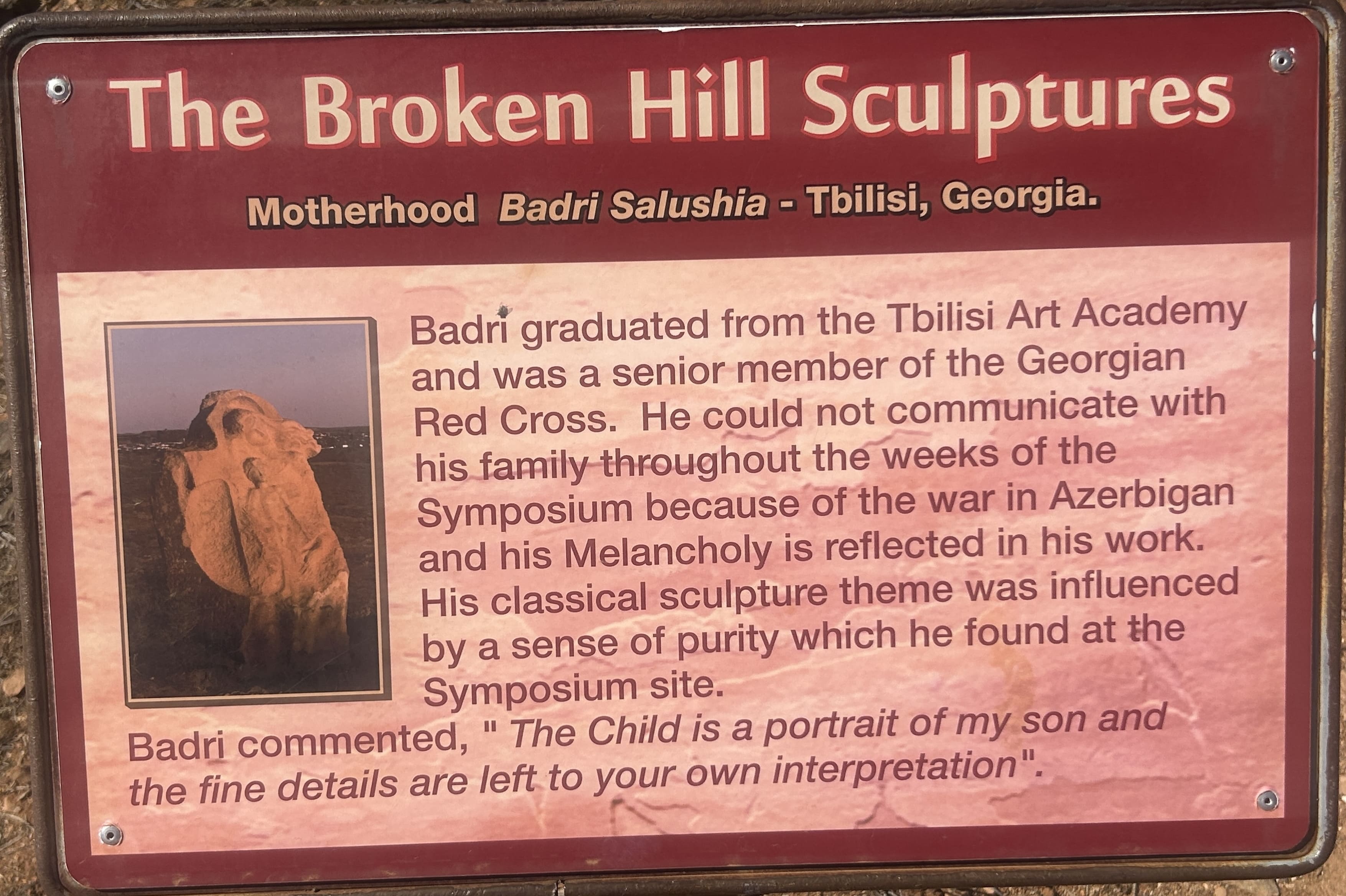
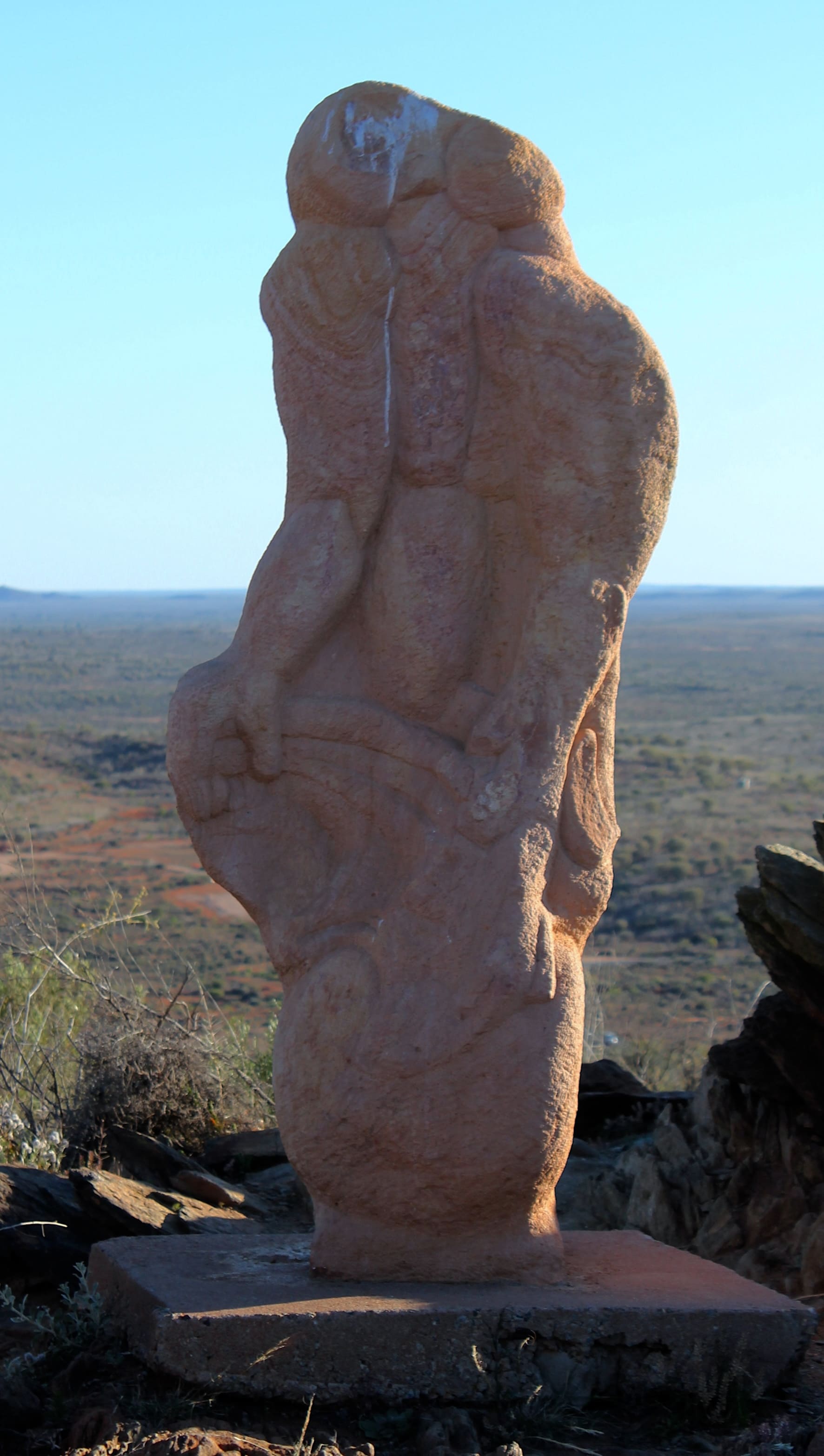
Motherhood |
 |
 |
 |
 |
 |
 |
 |
 |
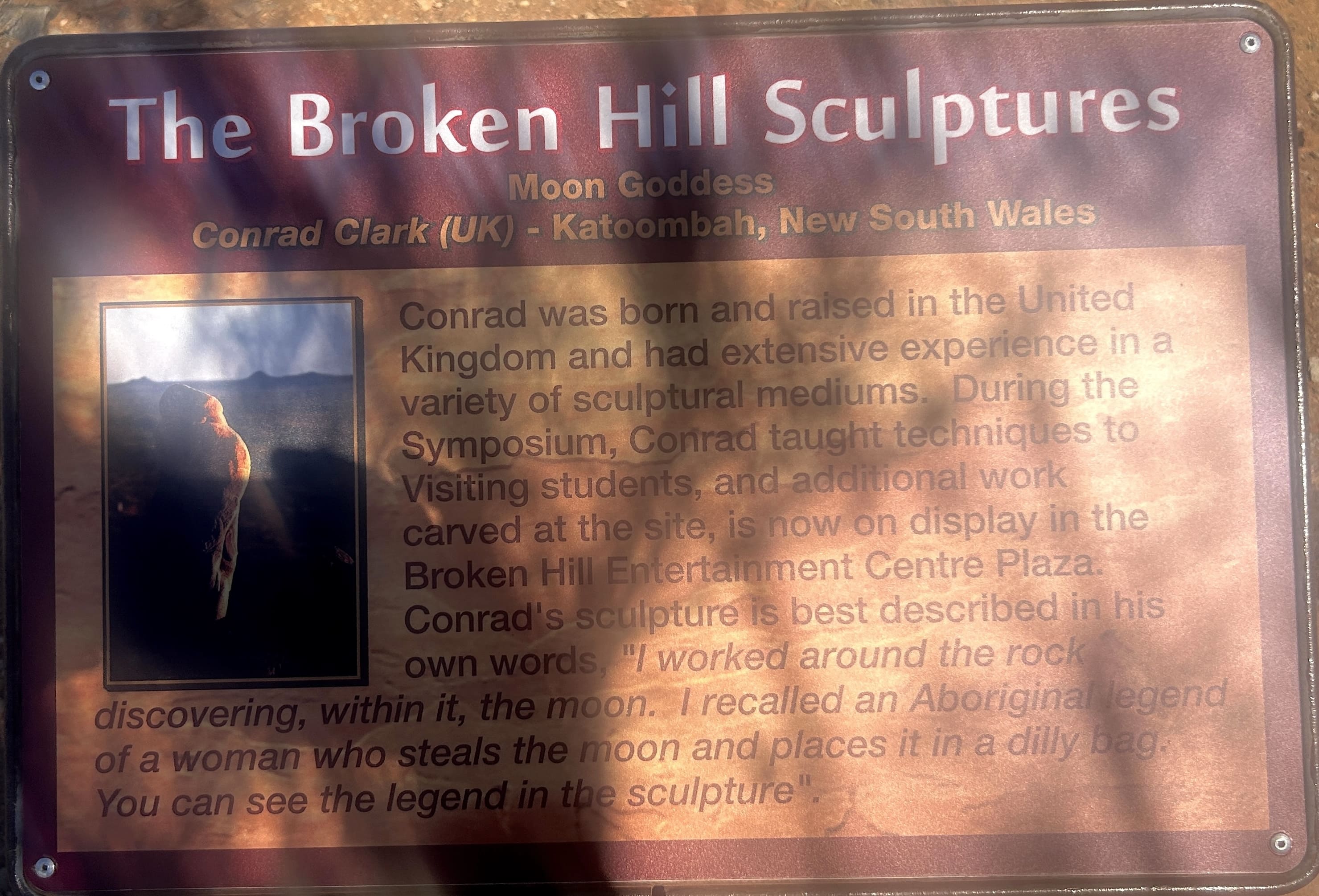
| Moon Goddess |
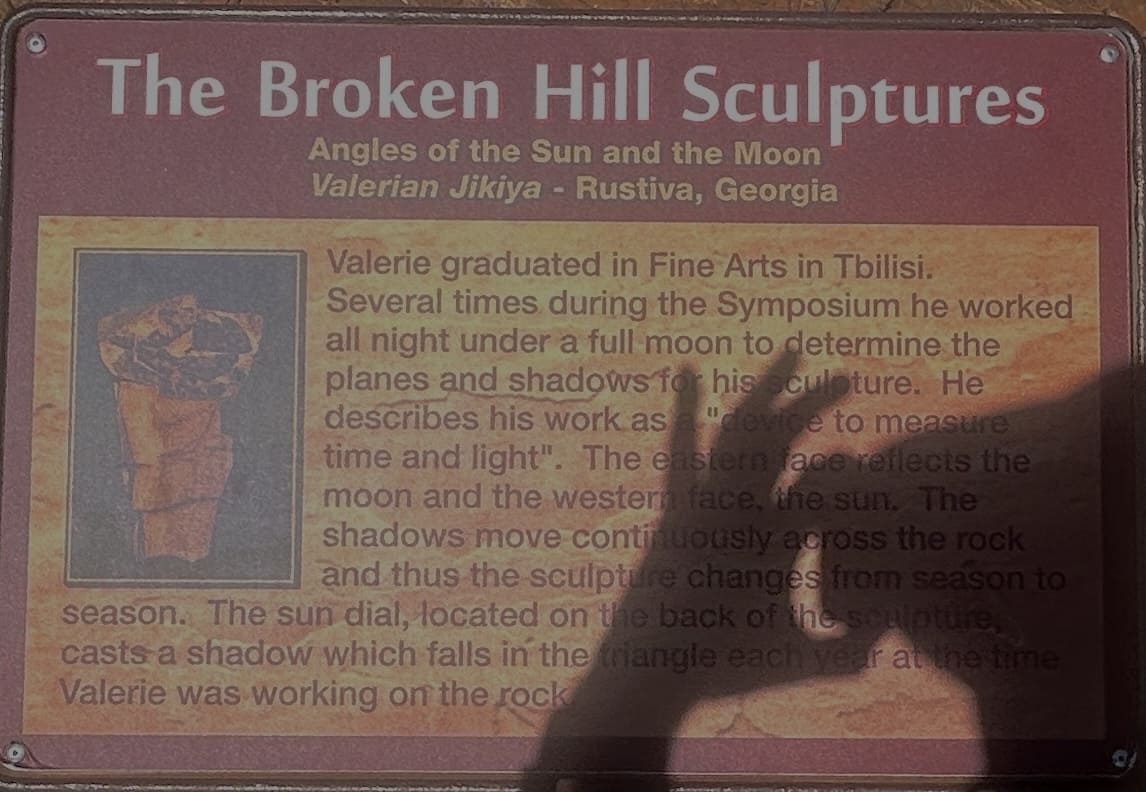
Angles of the Sun and Moon |
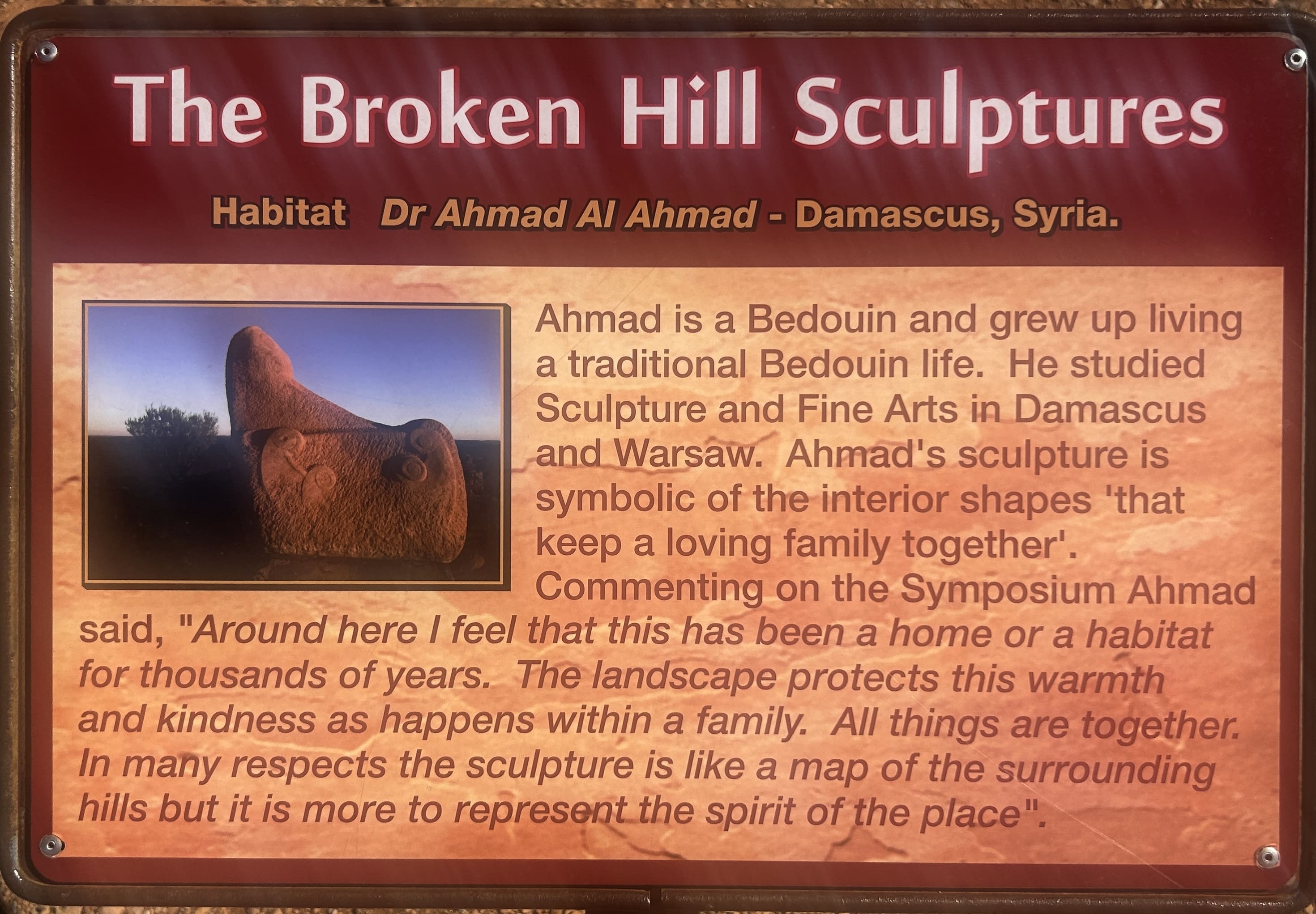
Habitat |
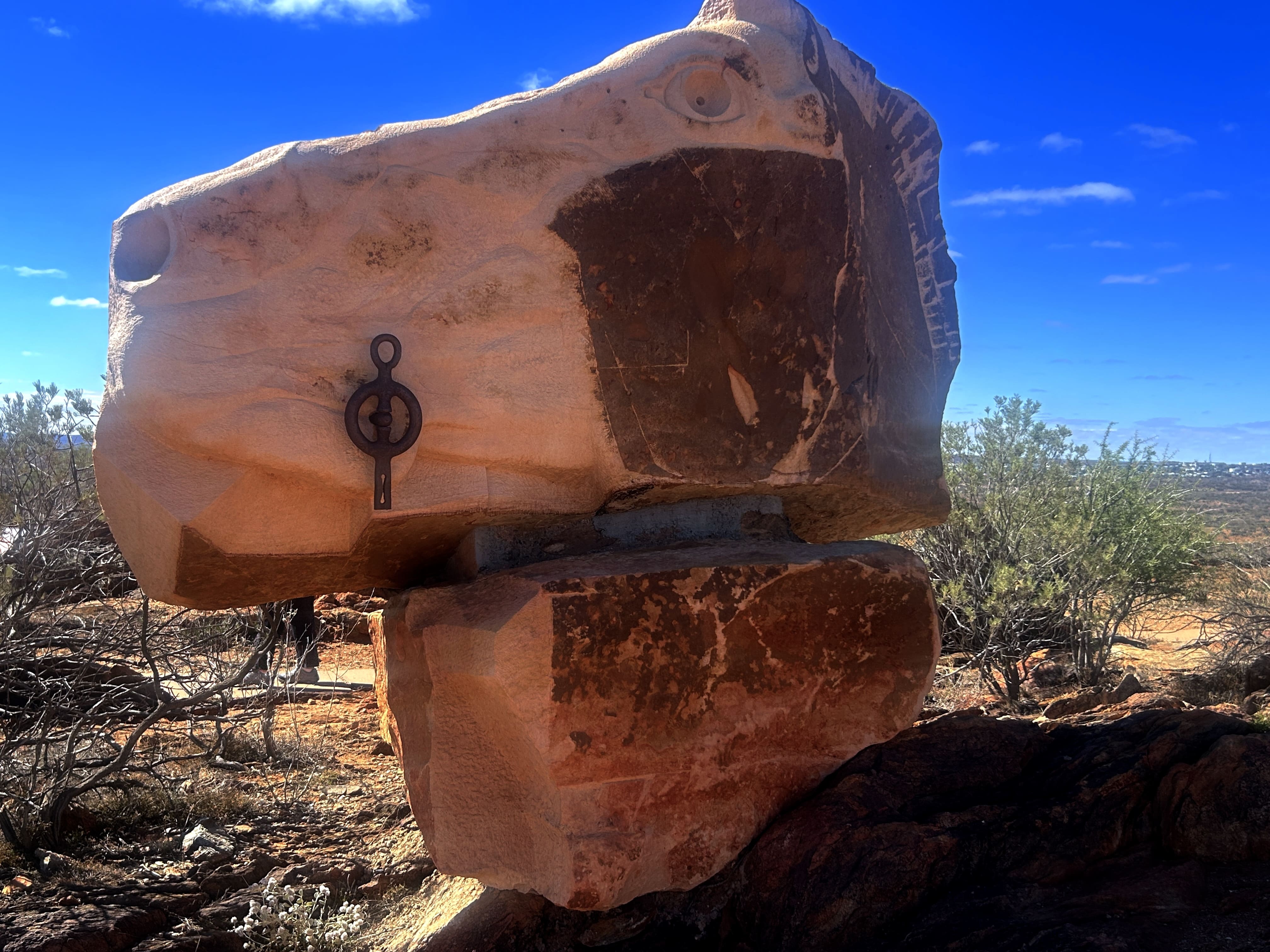
The Horse |
 |
 |
 |
 |
 |
 |
 |
 |
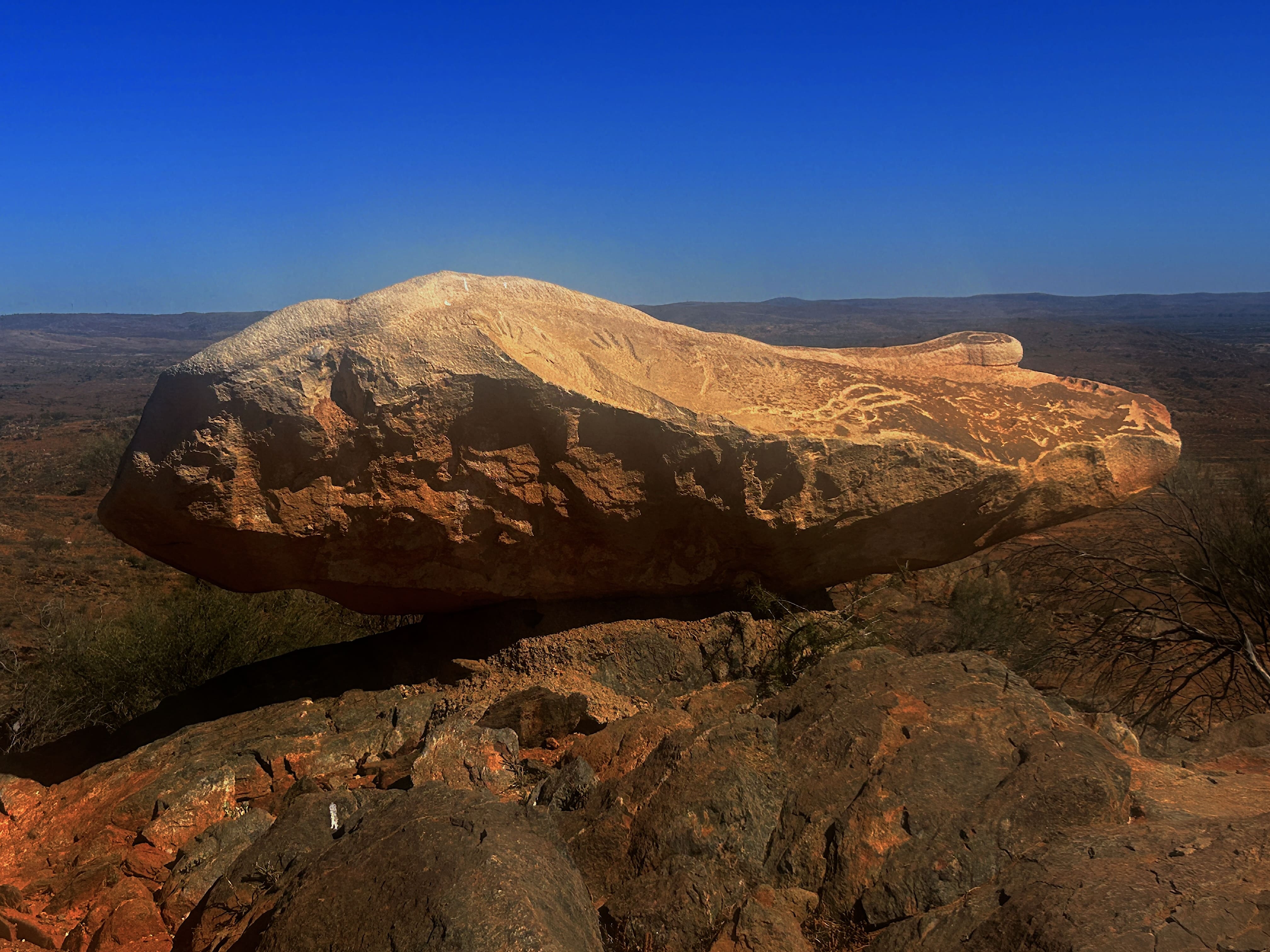
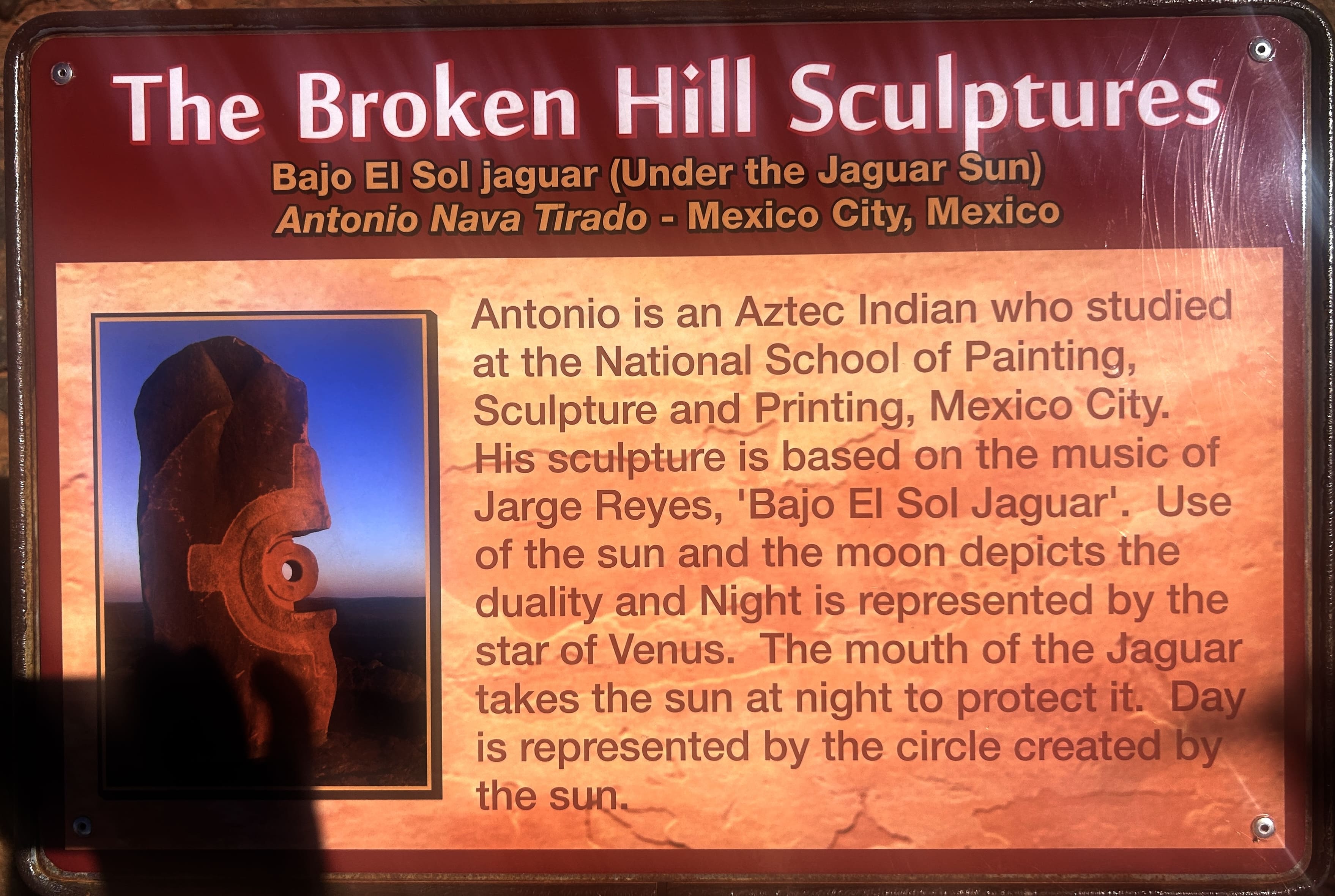
| Under the Jaguar Sun |
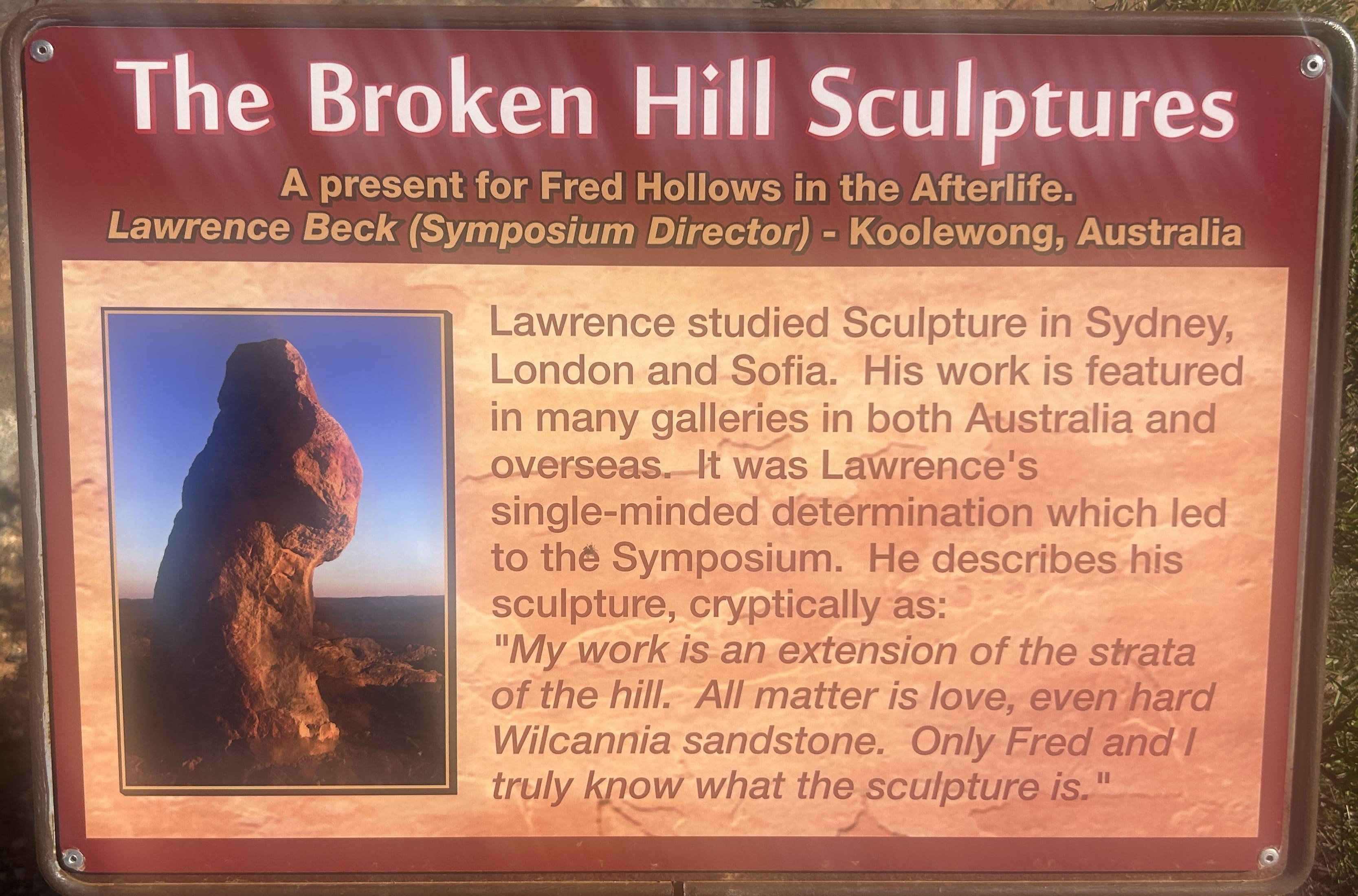
A Present for Fred Hollows in
the Afterlife |
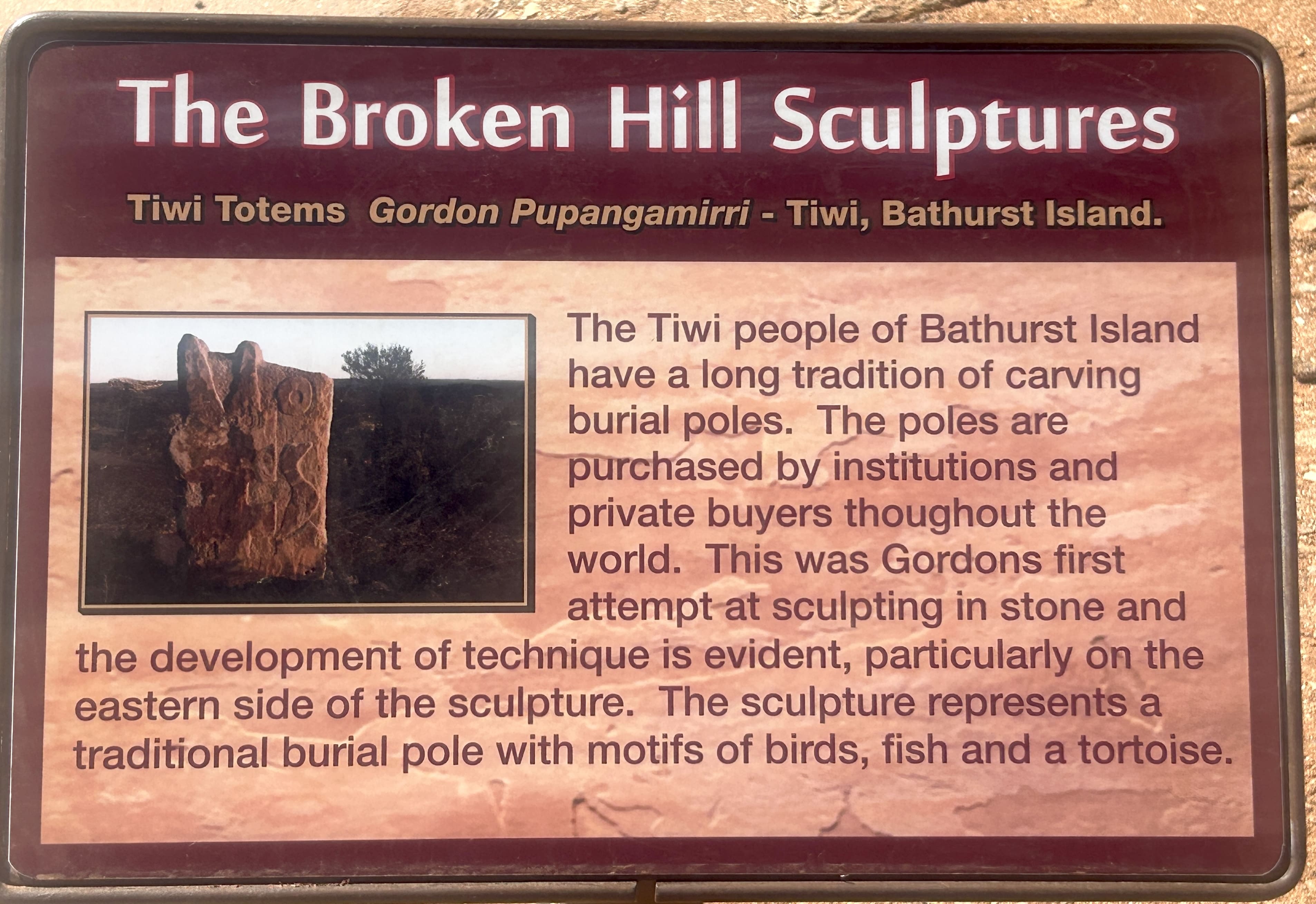
Tiwi Totems |
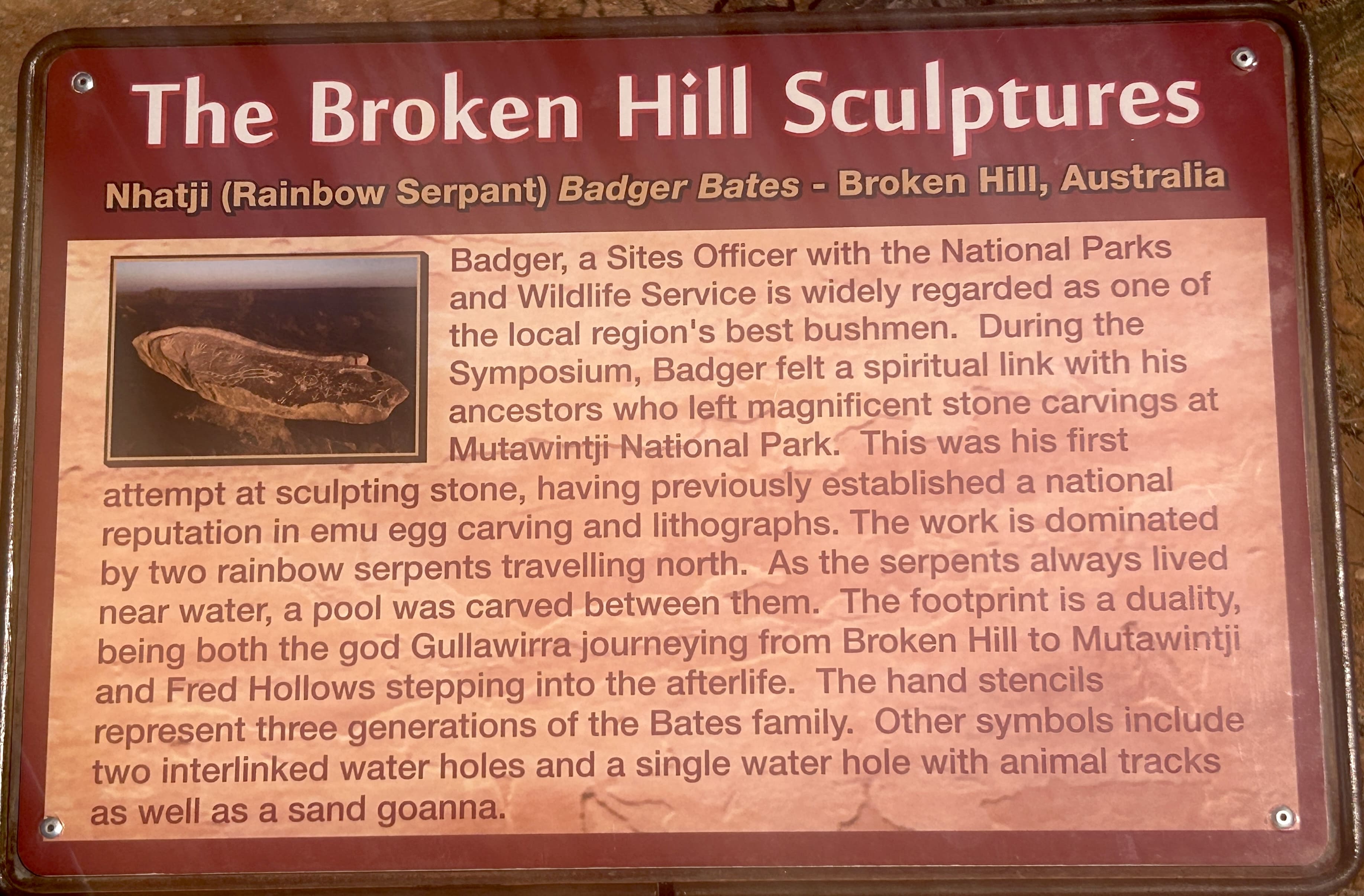
Nhatji (Rainbow Serpent) |
 As
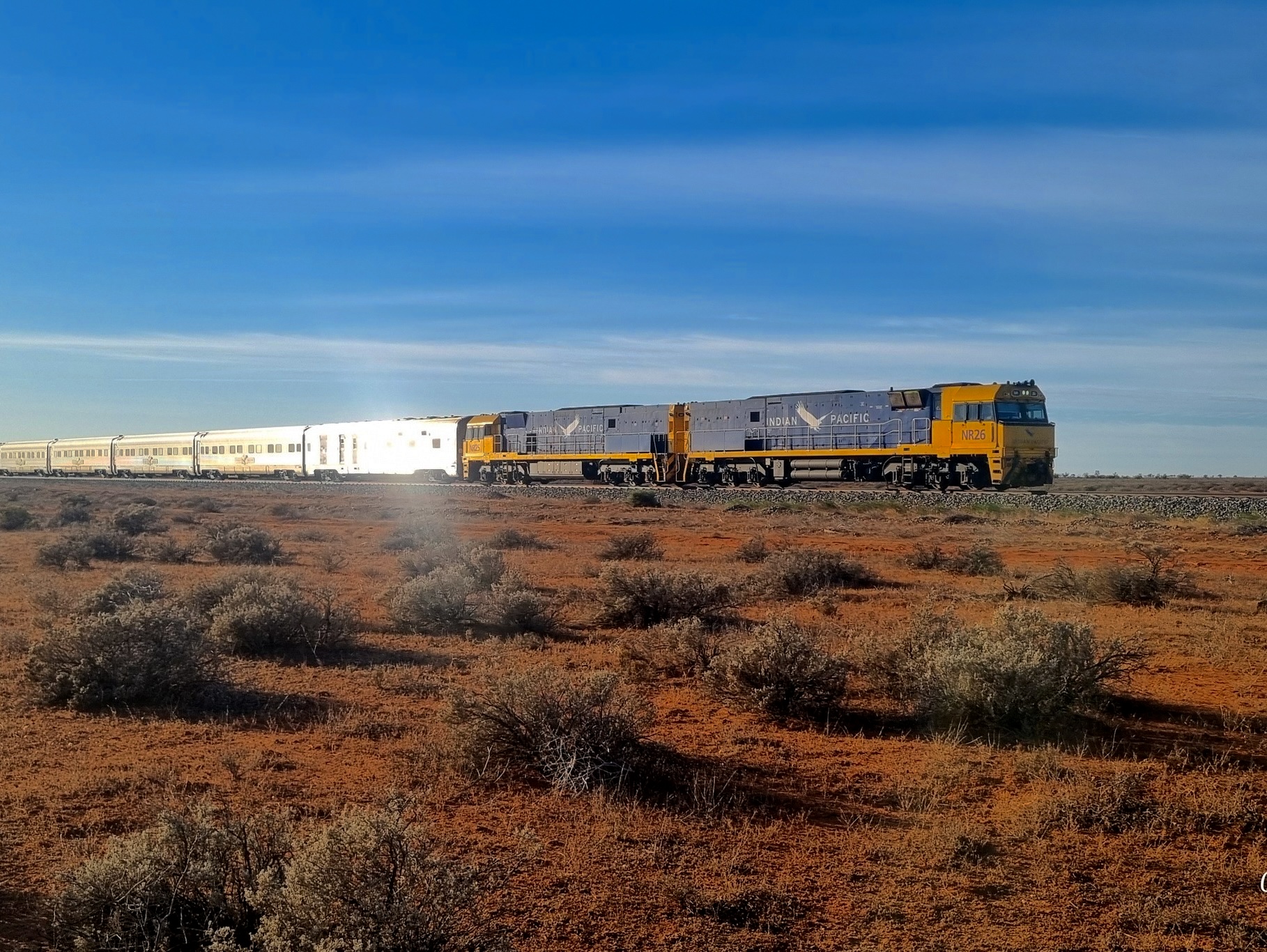
with most of the Indian Pacific "off-train experiences," our
Silverton trip was an early morning one, we suspect due the
heavy traffic on this, the only rail track from Perth to
Adelaide. So, we returned to the Indian Pacific around lunch
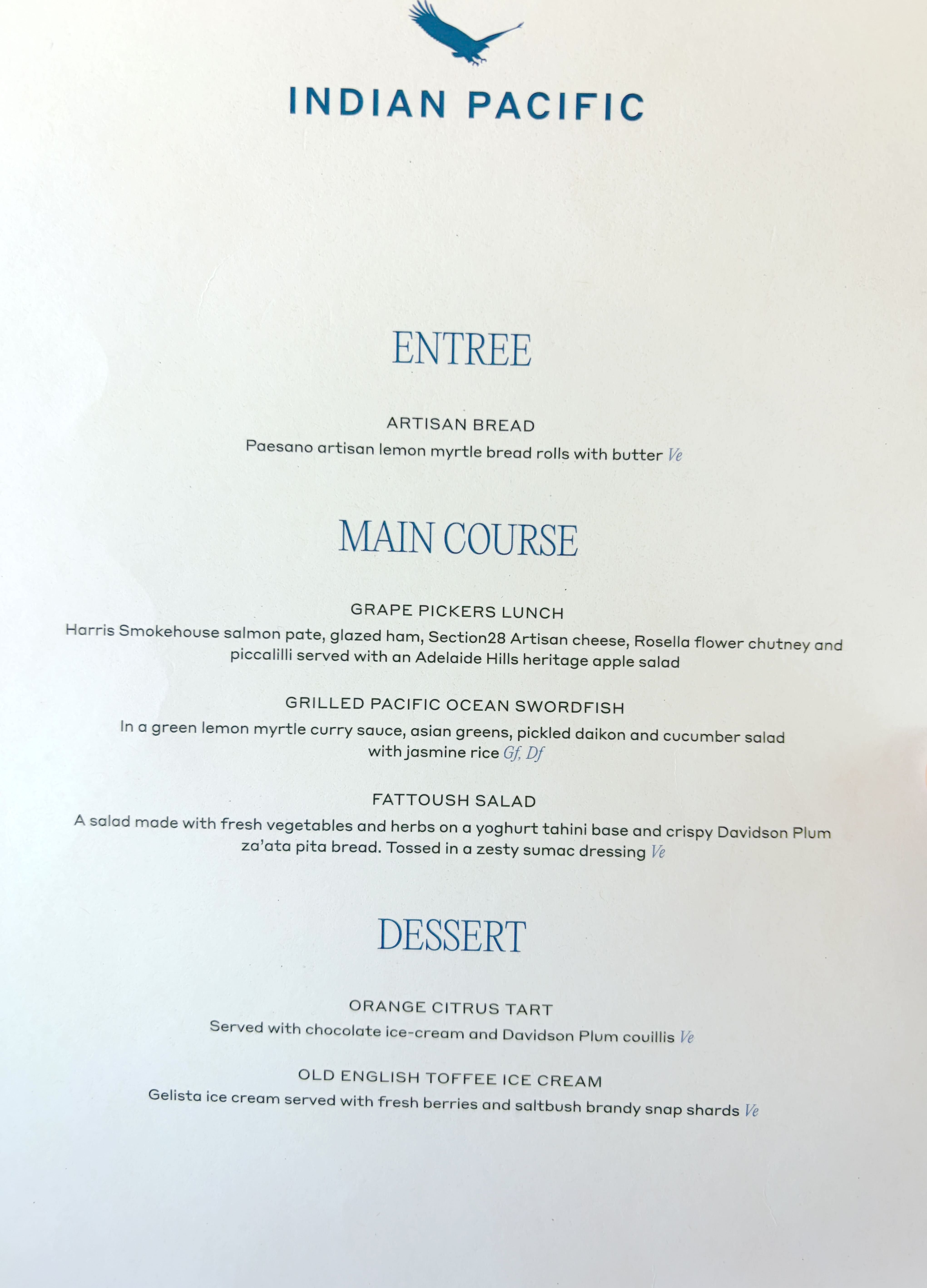
time and were treated to a hearty lunch which began with artisan
bread, followed by three choices for a main course-- a grape
pickers lunch, grilled Pacific Ocean swordfish, or fattoush
salad. An orange citrus tart and and old English toffee ice
cream were the desert offerings. If you are interested, the
ingredients in each of these tasty dishes may be seen by
selecting the menu to the left. And, as always, Australian
and New Zealand wines were on offer. We then settled in to our
last overnight on the Indian Pacific, as the train headed
northeast to the Blue Mountains. In our enjoyment of our last
evening meal on board, we neglected to capture a photo of the
menu!
As
with most of the Indian Pacific "off-train experiences," our
Silverton trip was an early morning one, we suspect due the
heavy traffic on this, the only rail track from Perth to
Adelaide. So, we returned to the Indian Pacific around lunch
time and were treated to a hearty lunch which began with artisan
bread, followed by three choices for a main course-- a grape
pickers lunch, grilled Pacific Ocean swordfish, or fattoush
salad. An orange citrus tart and and old English toffee ice
cream were the desert offerings. If you are interested, the
ingredients in each of these tasty dishes may be seen by
selecting the menu to the left. And, as always, Australian
and New Zealand wines were on offer. We then settled in to our
last overnight on the Indian Pacific, as the train headed
northeast to the Blue Mountains. In our enjoyment of our last
evening meal on board, we neglected to capture a photo of the
menu!