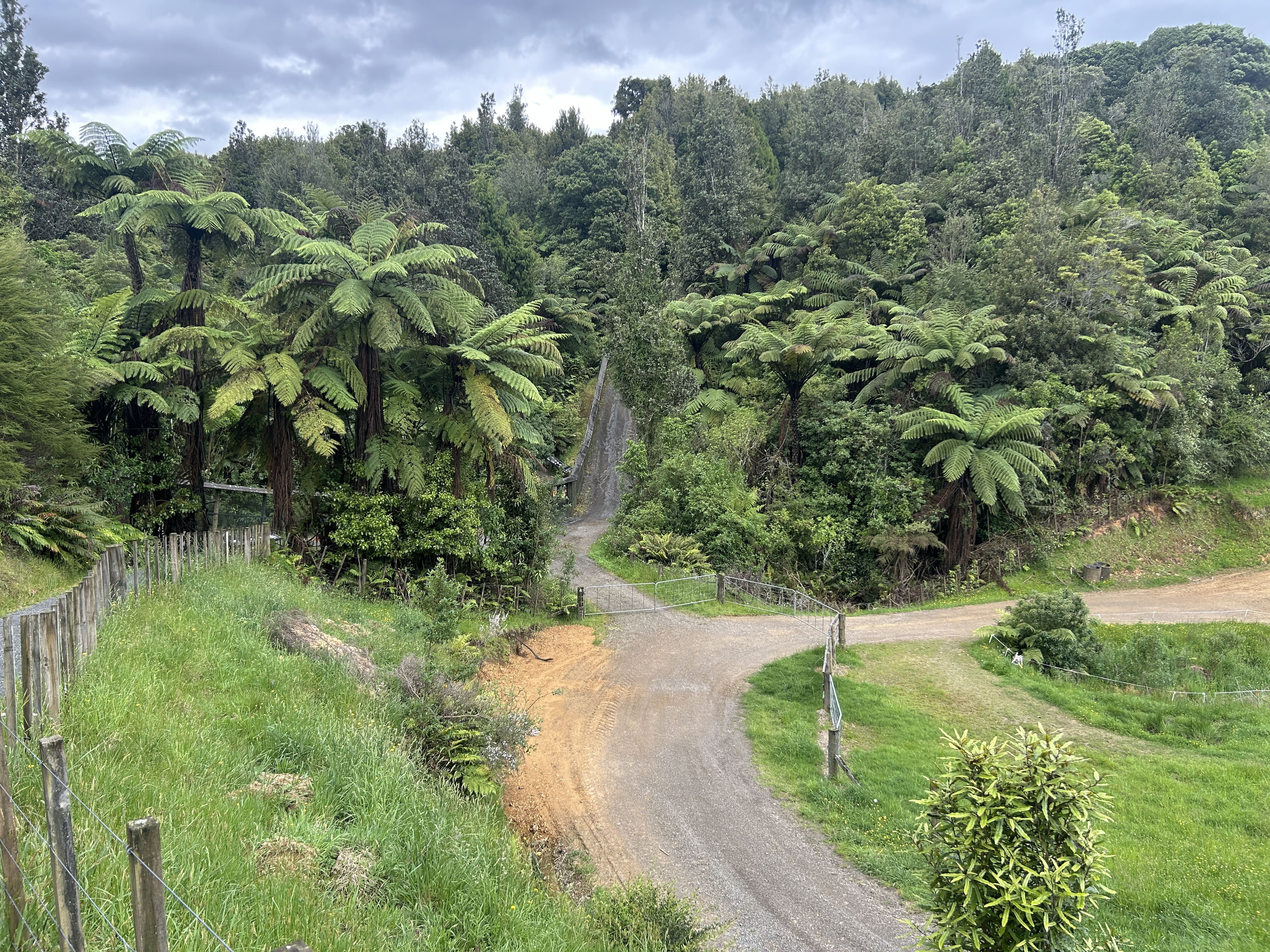
 The second day in Hamilton was
focused on the surrounding natural environs, beginning with the
Mungatautari Sanctuary Mountain. It is an extensive, predator-free
ecological reserve located in the heart of New Zealand's North
Island. Mungatautari Sancturay Mountain covers over 3.400
hectares, encircling an ancient volcanic peak with lush forests
and diverse ecosystems. The sanctuary is surrounded by one of the
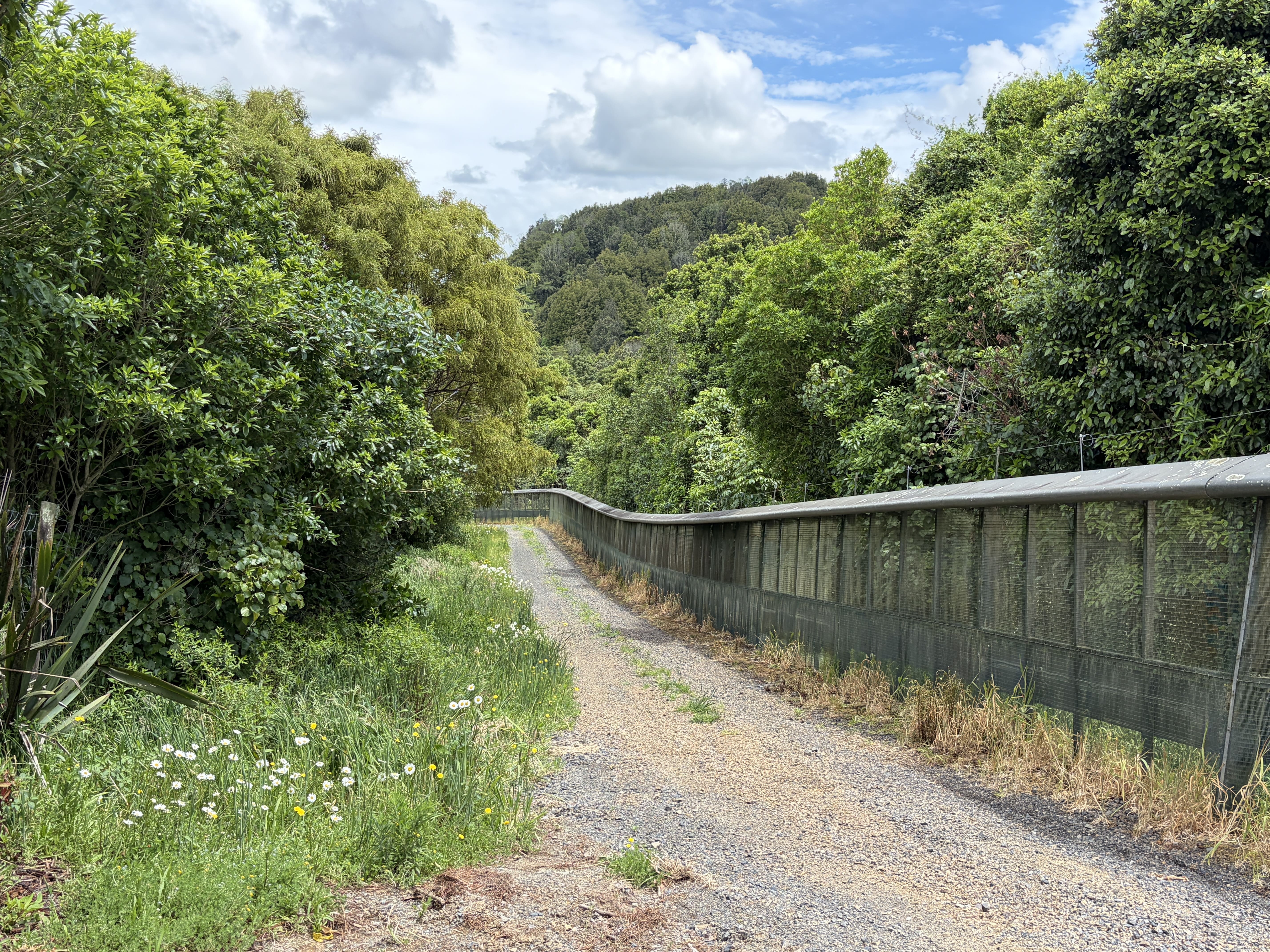
world's longest pest-proof fences, which stretched 47 kilometers
to keep out non-native predators and allow native flora and fauna
to thrive undisturbed. This protected environment fosters a safe
haven for endangered native species such as the kiwi, takahe, and
tuatara. Visitors to Maungatautari Sanctuary can explore
well-maintained trails winding through pristine bush, experiencing
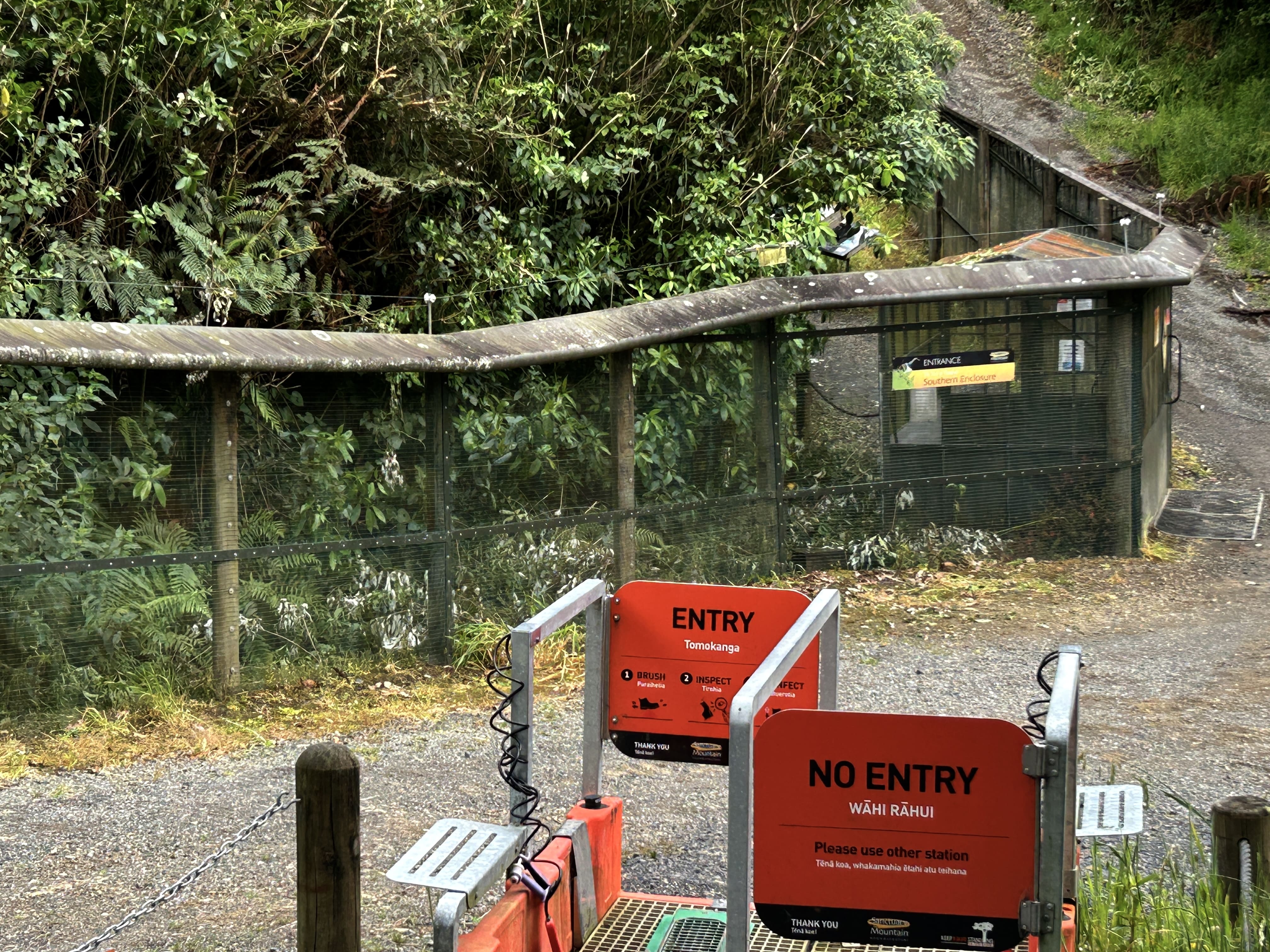
vibrant birdlife and unique wildlife up close. Our tour began at
the visitor's center, and from there we wound down the hillside to
the entrance
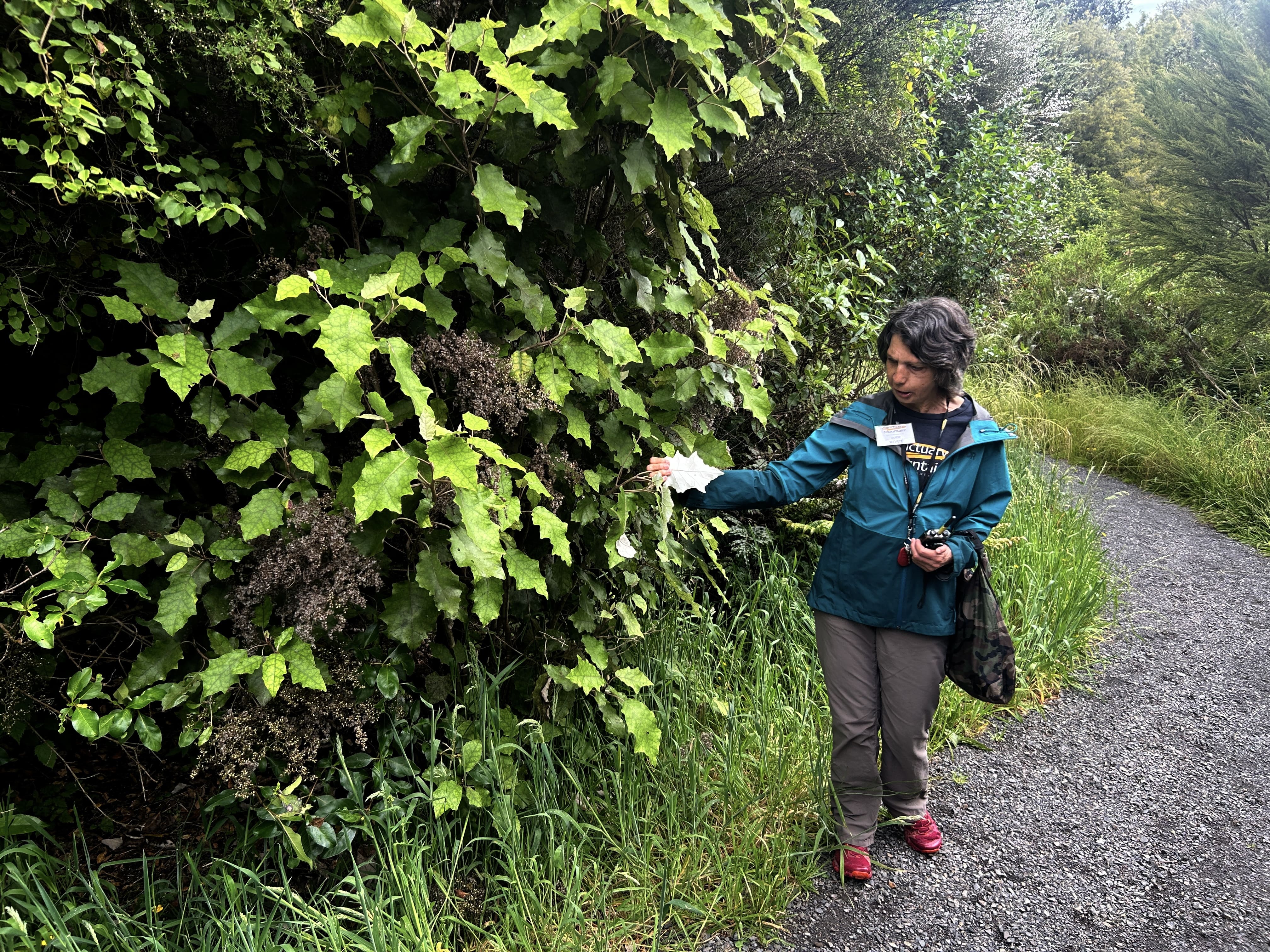
to the southern section of the sanctuary. As we went, our
excellent guide pointed out plants native to New Zealand. Once we
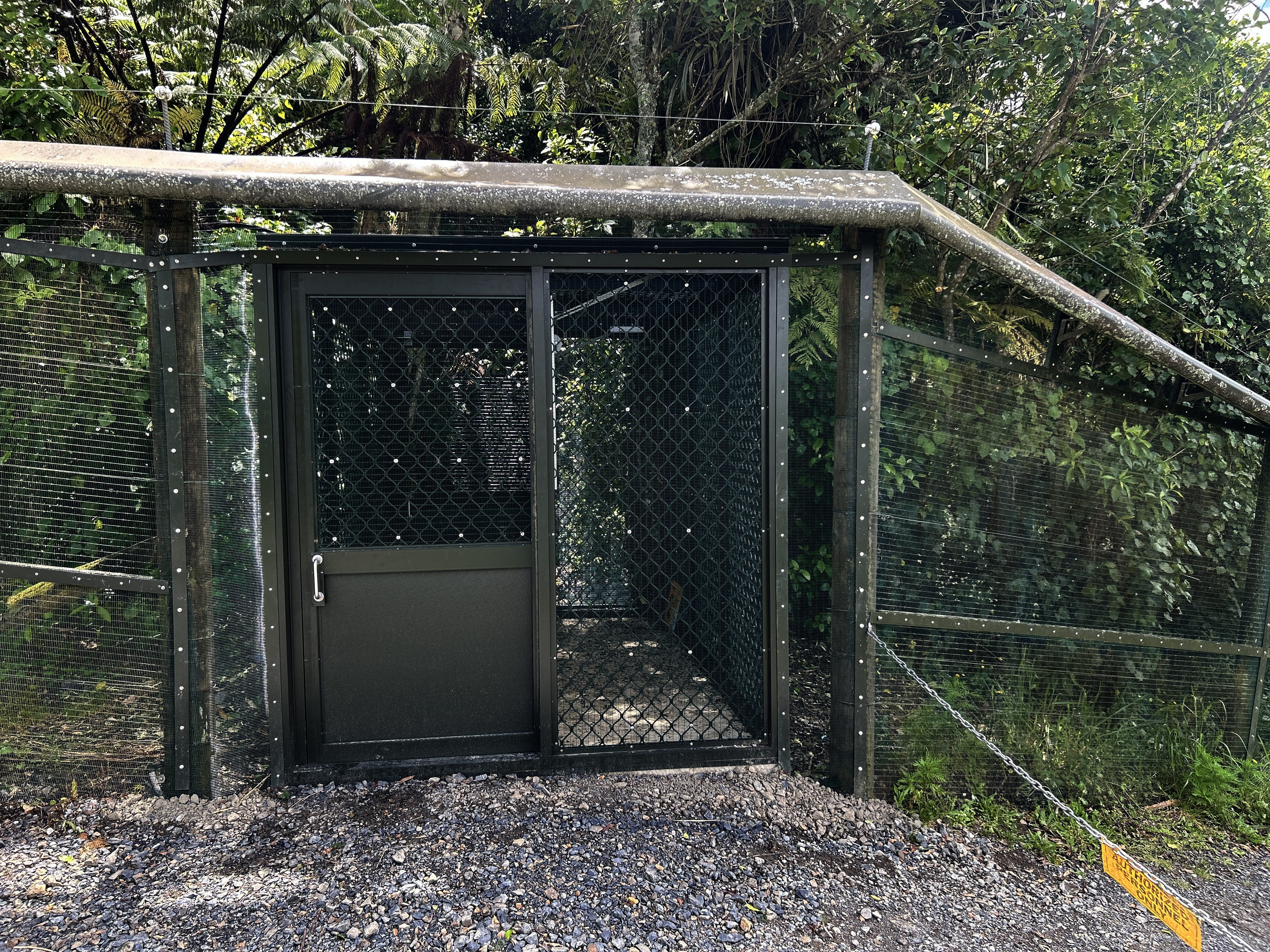
reached the predator fence, we entered through the cage, which
served
The second day in Hamilton was
focused on the surrounding natural environs, beginning with the
Mungatautari Sanctuary Mountain. It is an extensive, predator-free
ecological reserve located in the heart of New Zealand's North
Island. Mungatautari Sancturay Mountain covers over 3.400
hectares, encircling an ancient volcanic peak with lush forests
and diverse ecosystems. The sanctuary is surrounded by one of the
world's longest pest-proof fences, which stretched 47 kilometers
to keep out non-native predators and allow native flora and fauna
to thrive undisturbed. This protected environment fosters a safe
haven for endangered native species such as the kiwi, takahe, and
tuatara. Visitors to Maungatautari Sanctuary can explore
well-maintained trails winding through pristine bush, experiencing
vibrant birdlife and unique wildlife up close. Our tour began at
the visitor's center, and from there we wound down the hillside to
the entrance
to the southern section of the sanctuary. As we went, our
excellent guide pointed out plants native to New Zealand. Once we
reached the predator fence, we entered through the cage, which
served 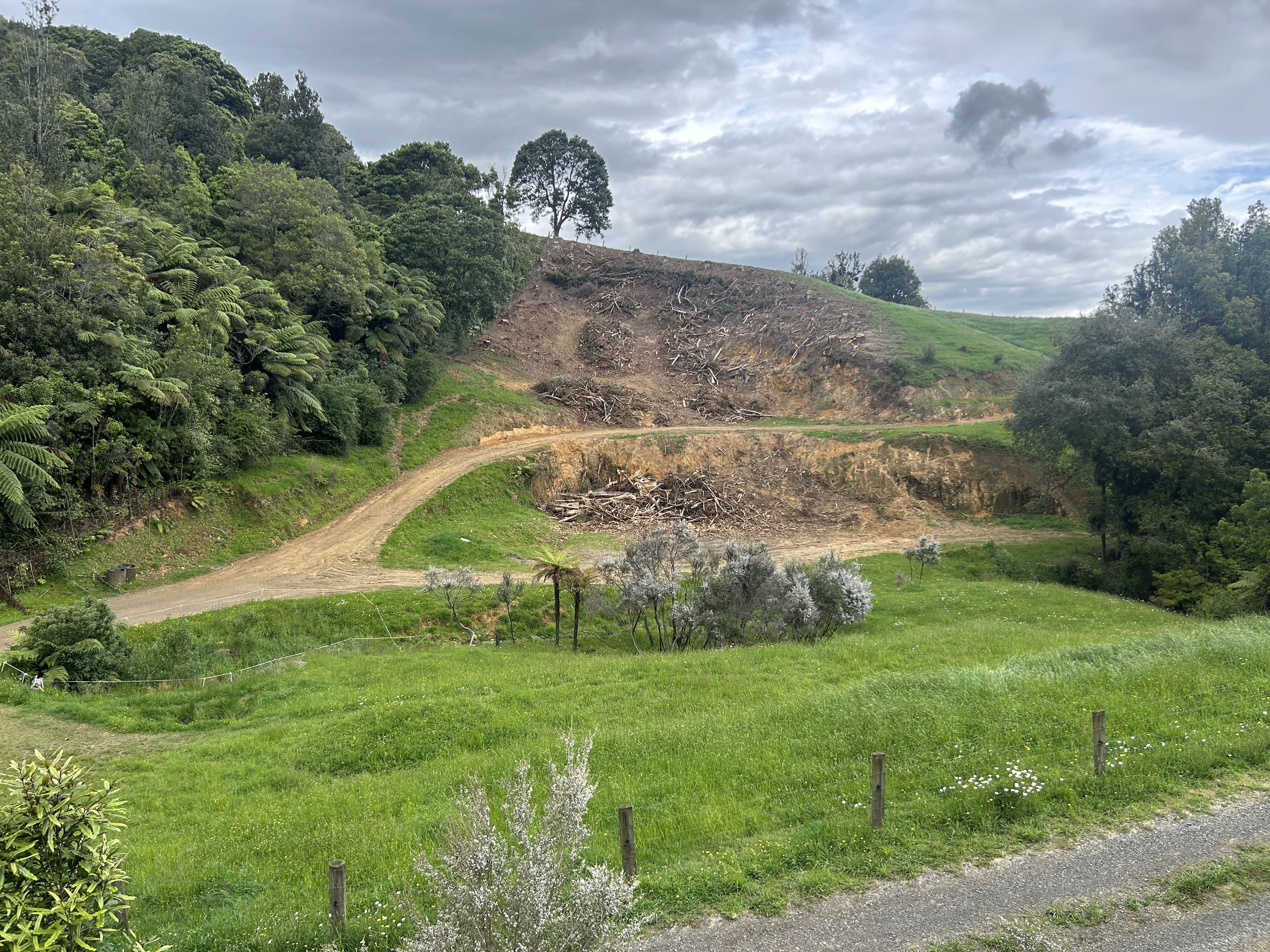
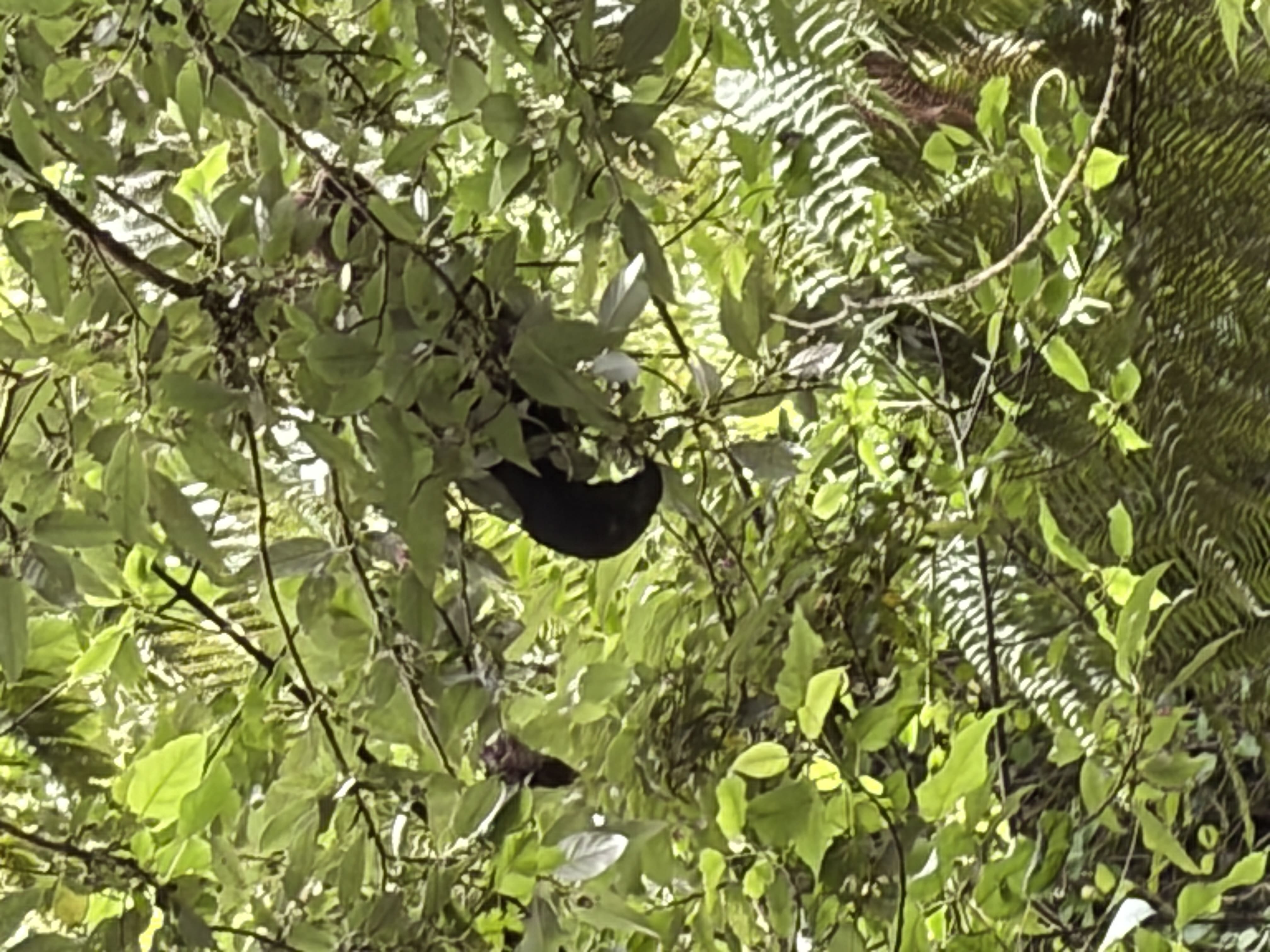 as
a barrier to anything entering the sanctuary. Once inside, the
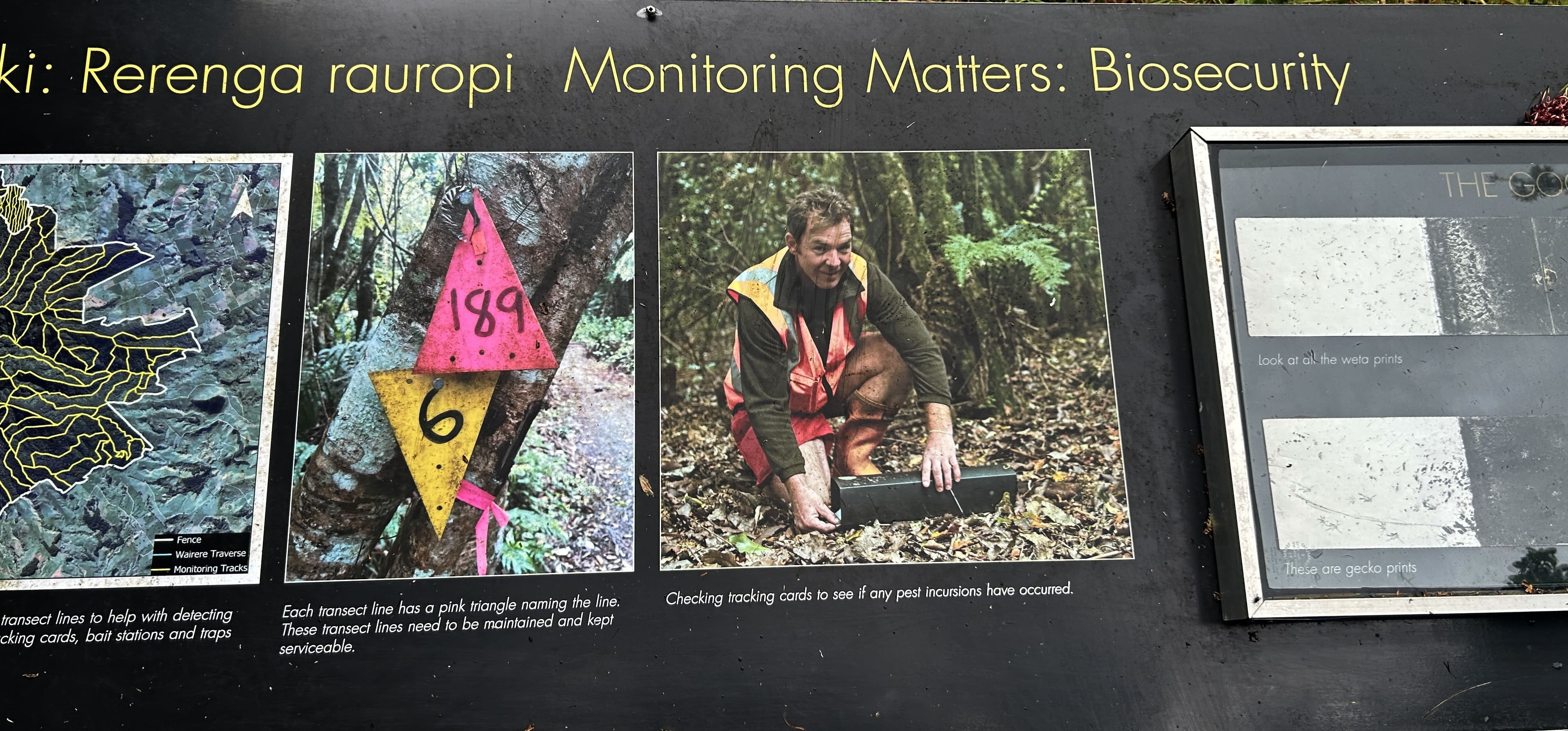
guide called our attention to the predator traps set just inside
the fence line, and explained the very complicated tracking system
used to keep unwanted animals outside. As we walked along the
trail our guide explained efforts to replenish the area with birds
who did not fare well outside. In addition to pointing out native
flora, she also taught us how these trees and plants were used by
the indigenous people of New Zealand. All told, the sanctuary is a
living testament to New Zealand's conservation efforts to preserve
biodiversity. Below is an excellent YouTube video by The Post
Office|Content Creators explaining the sanctuary, and below
that is a photo gallery from our visit
as
a barrier to anything entering the sanctuary. Once inside, the
guide called our attention to the predator traps set just inside
the fence line, and explained the very complicated tracking system
used to keep unwanted animals outside. As we walked along the
trail our guide explained efforts to replenish the area with birds
who did not fare well outside. In addition to pointing out native
flora, she also taught us how these trees and plants were used by
the indigenous people of New Zealand. All told, the sanctuary is a
living testament to New Zealand's conservation efforts to preserve
biodiversity. Below is an excellent YouTube video by The Post
Office|Content Creators explaining the sanctuary, and below
that is a photo gallery from our visit | Maungatautari
Sanctuary Mountain Photo Gallery (click on photo to enlarge) |
|||
 |
 |
 |
 |
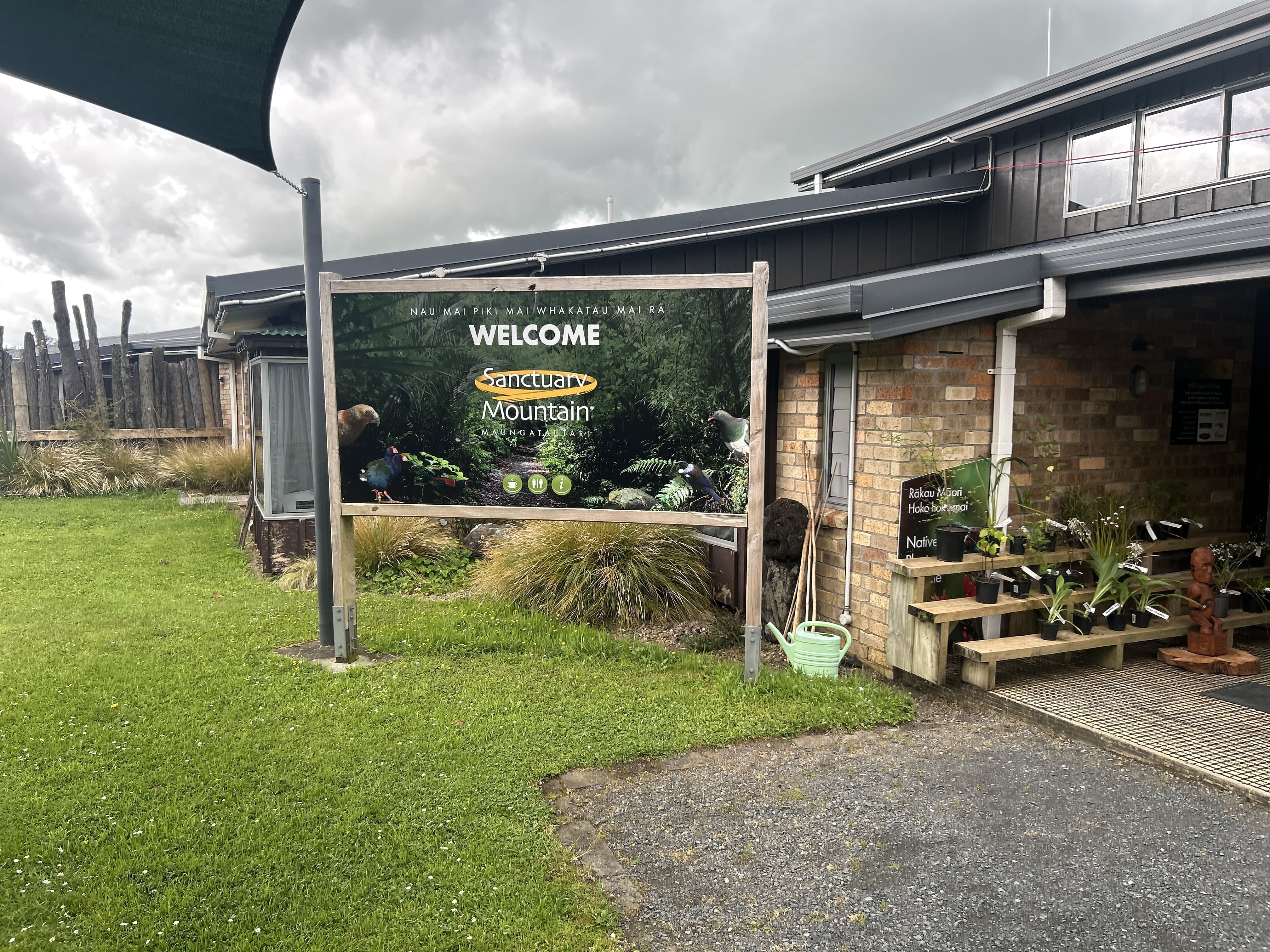
| Sanctuary
Entrance |
Guide
Explaining the Flora |
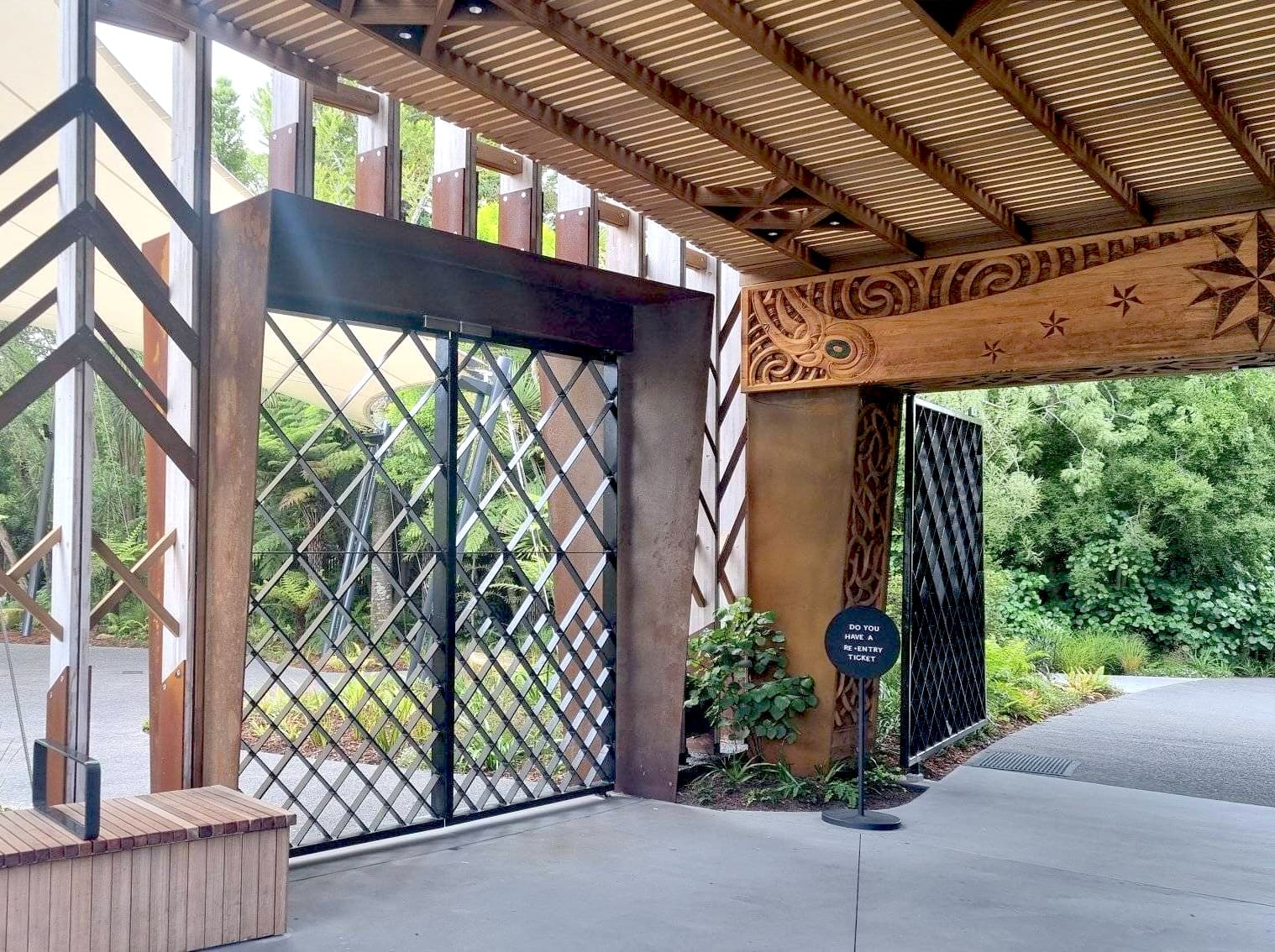
Entrance to
Southern Section |
Entrance Cage |
 |
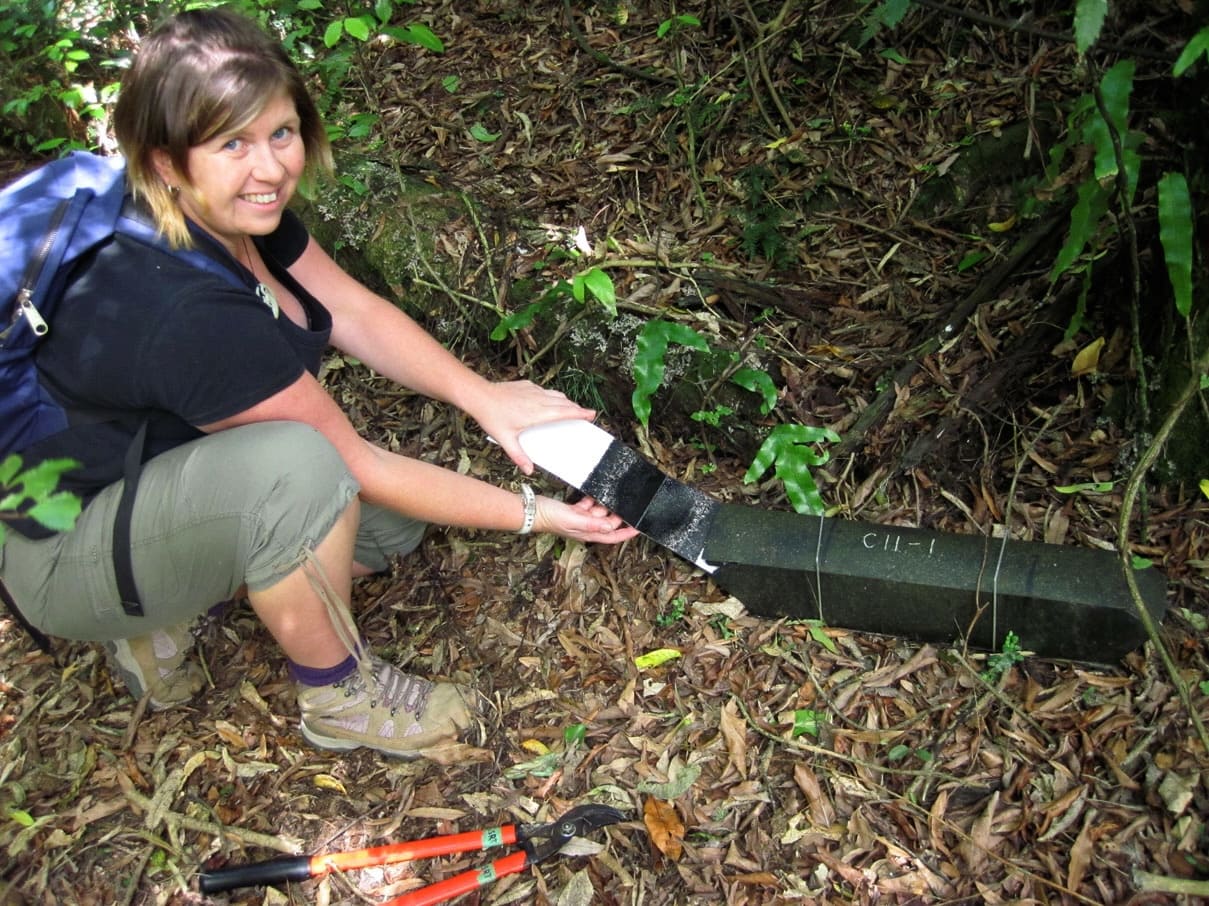 |
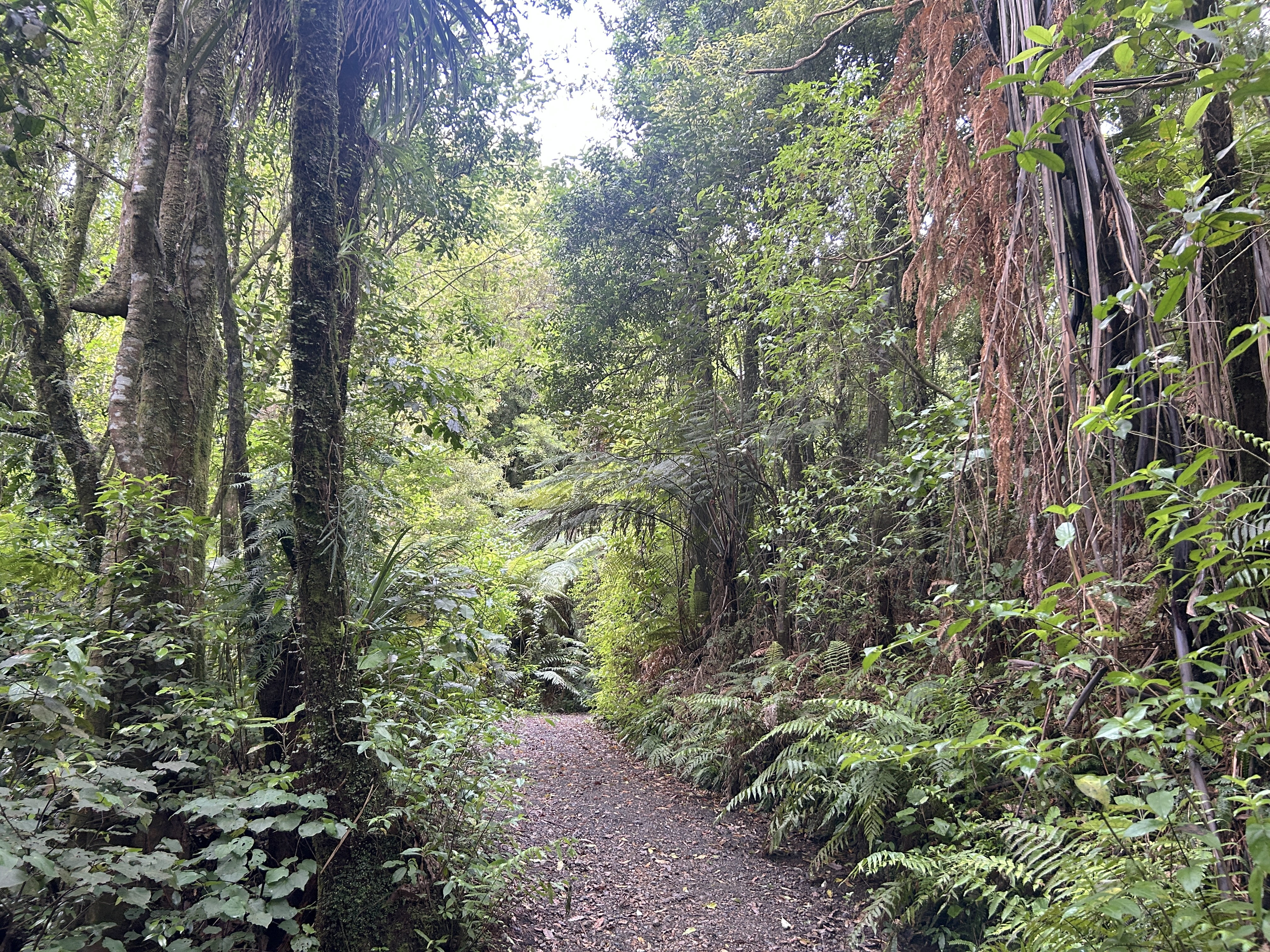 |
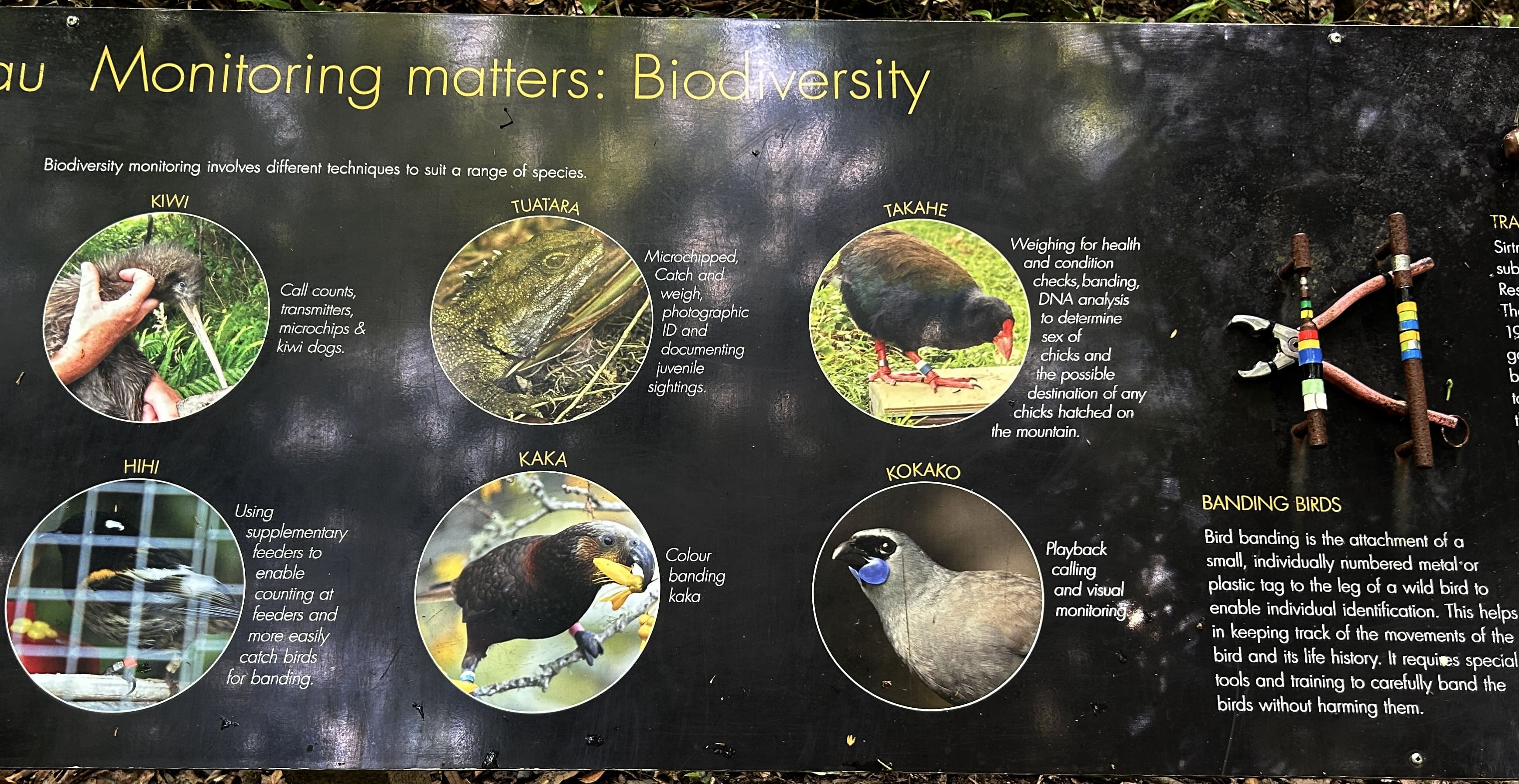 |
| Biosecurity
Marker |
Predator Trap |
Pathway Inside
the Sanctuary |
Restoring
Wildlife |
|
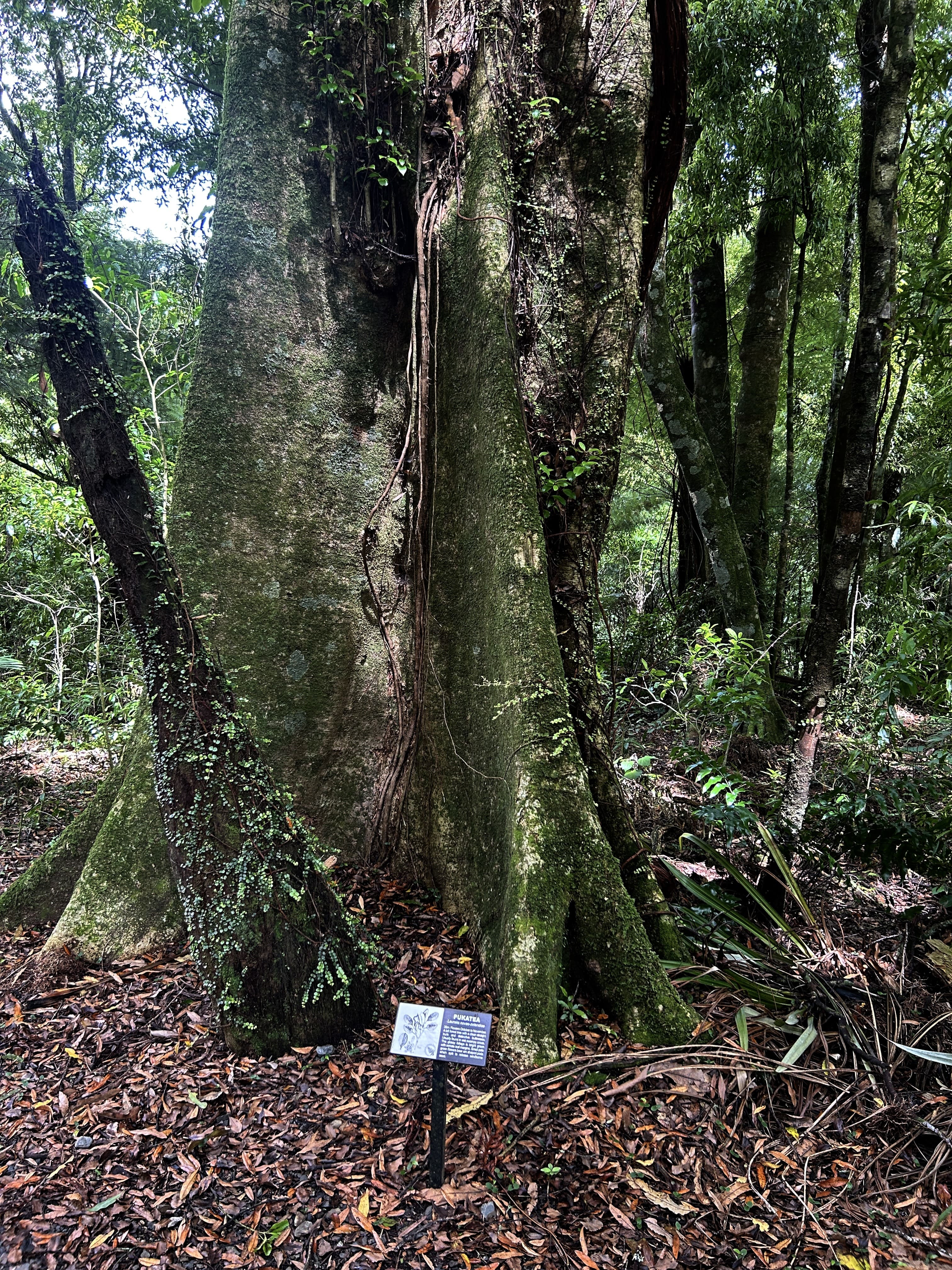 |
 |
 |
| Biodiversity
Marker |
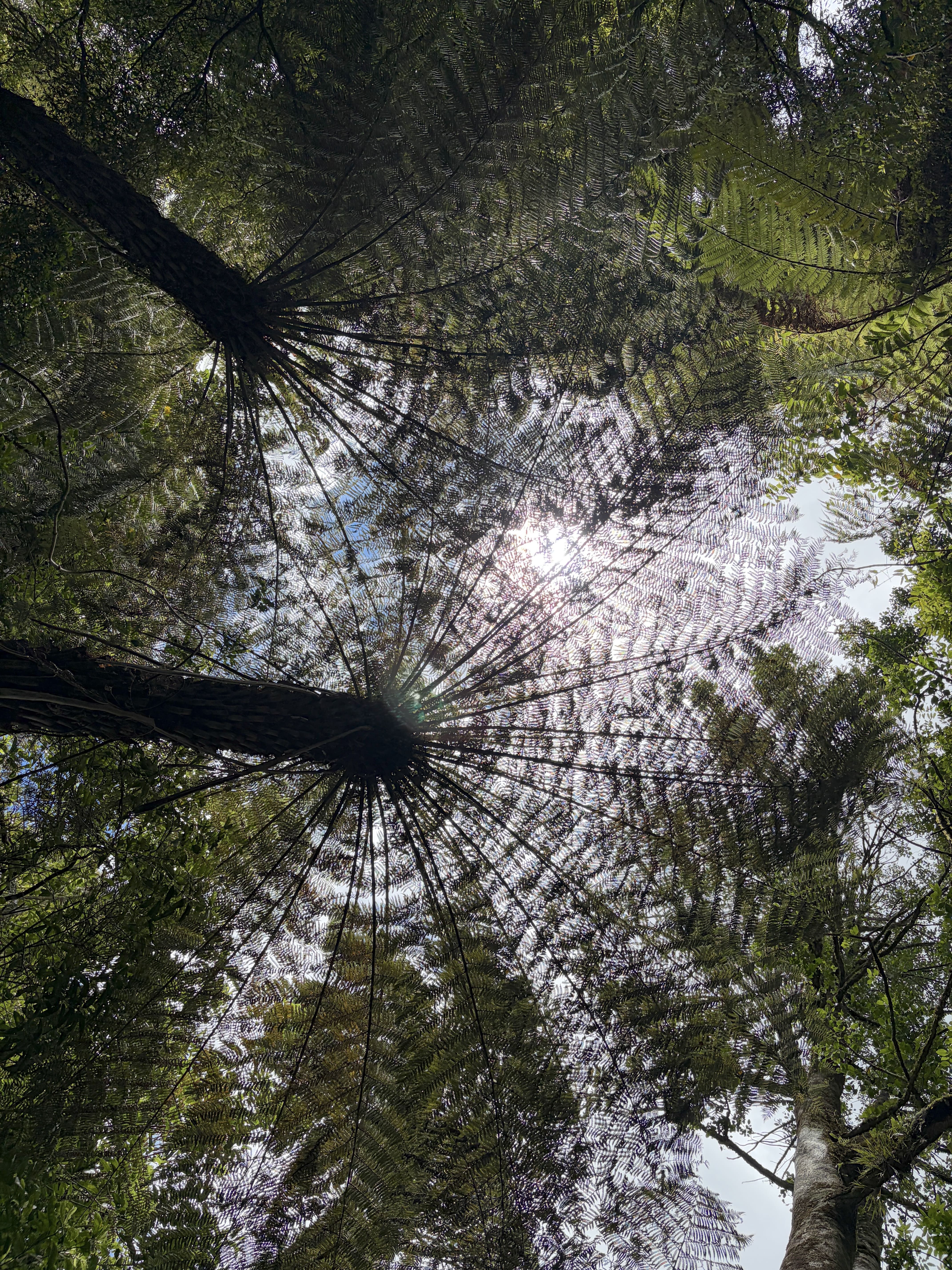
Pukatea Tree |
Pukatea Tree
Canopy |
View of
Predator Proof Fence |
 Ōtorohanga is also a gateway to
the famed Waitomo Caves, a wonderland of glowworms,
limestone formations, and subterranean rivers just a
short drive away. The Waitomo Glowworm Caves in New
Zealand are a mesmerizing natural wonder, renowned for
their otherworldly beauty. Nestled in the lush hills of
the Waikato region, these limestone caves are home to
thousands of tiny glowworms, scientifically known as
*Arachnocampa luminosa*, which emit a bioluminescent
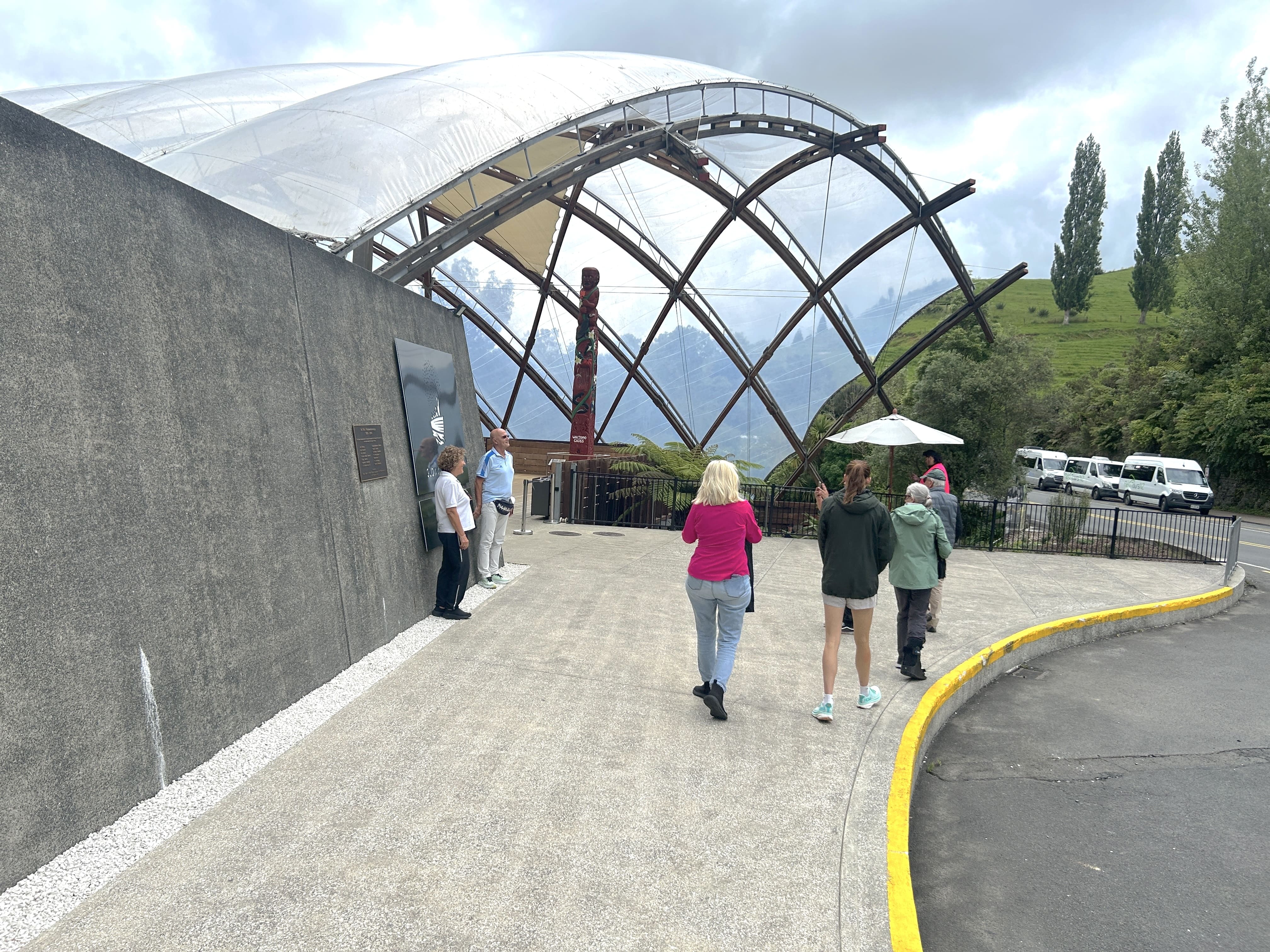
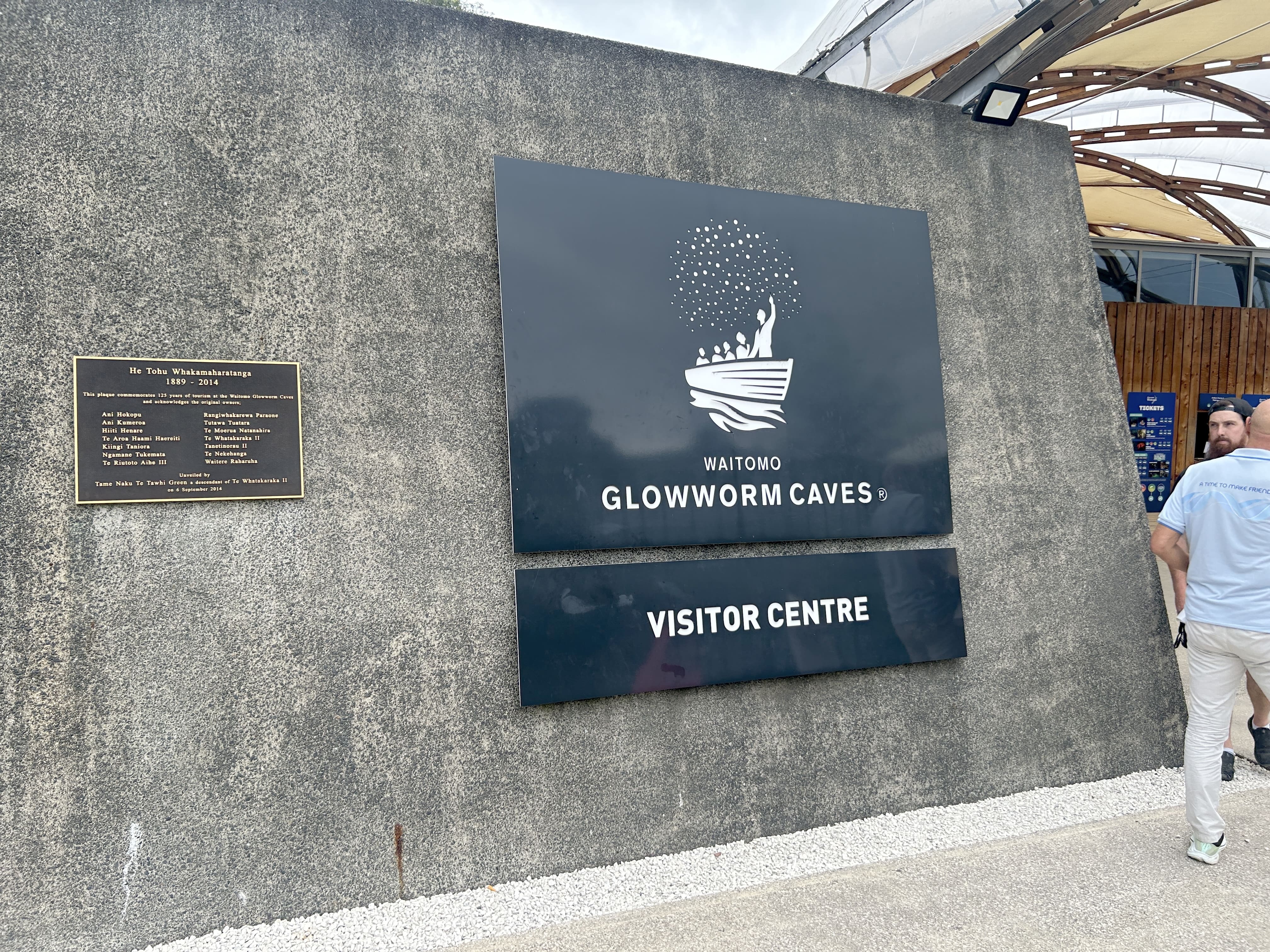
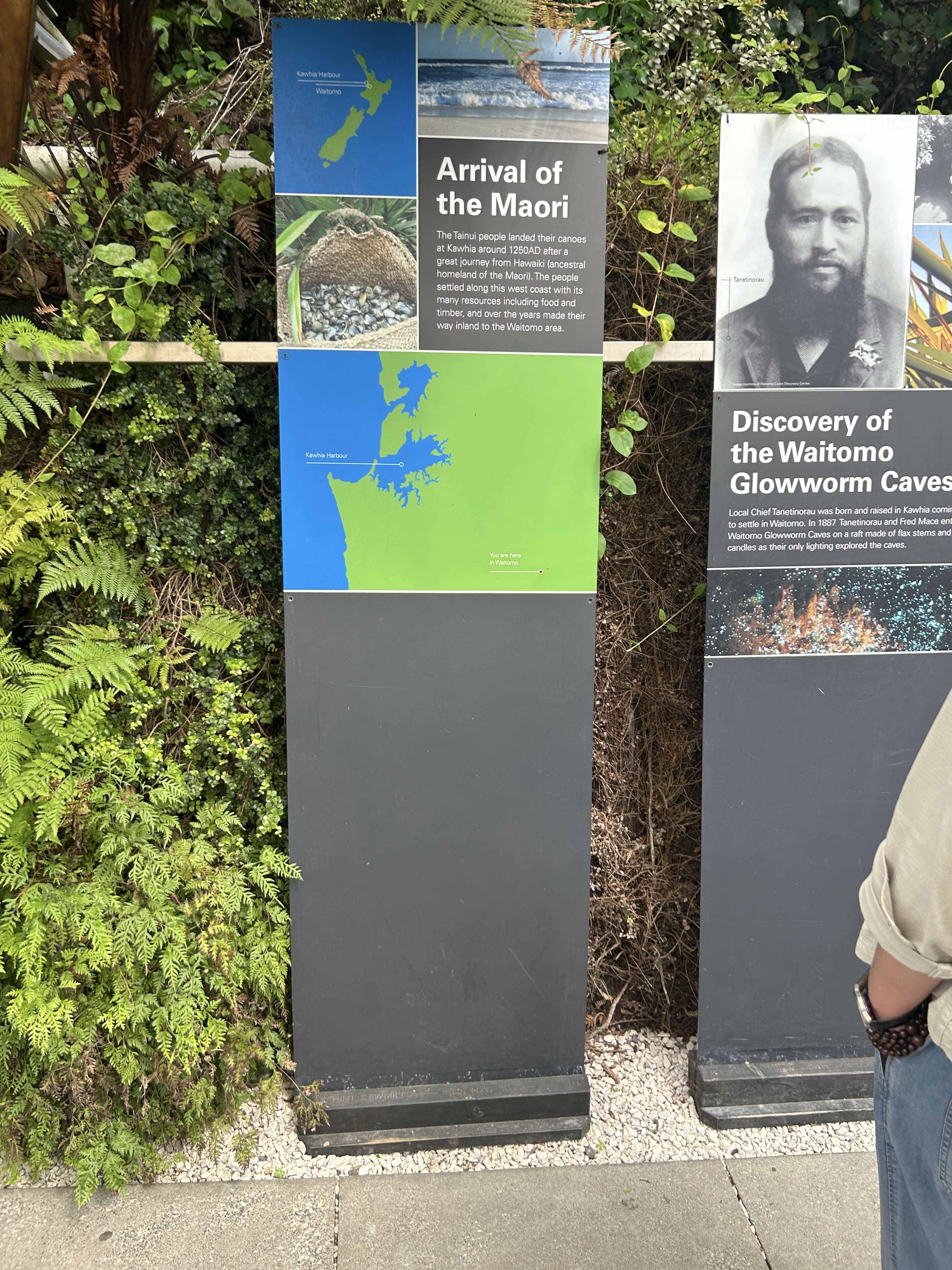
glow. Upon arriving at the site we passed through the
visitor's center and lined up forthe the next tour.
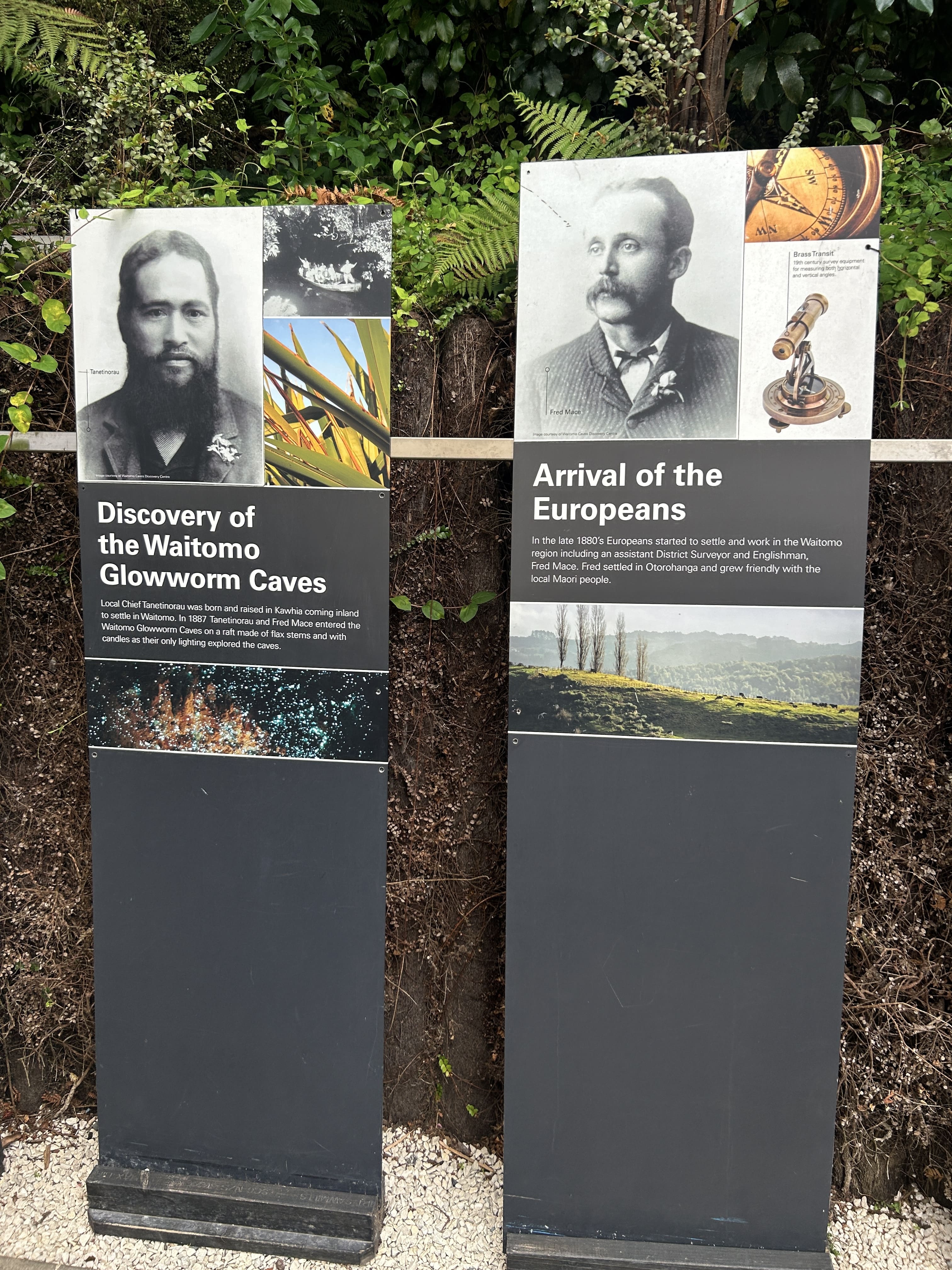
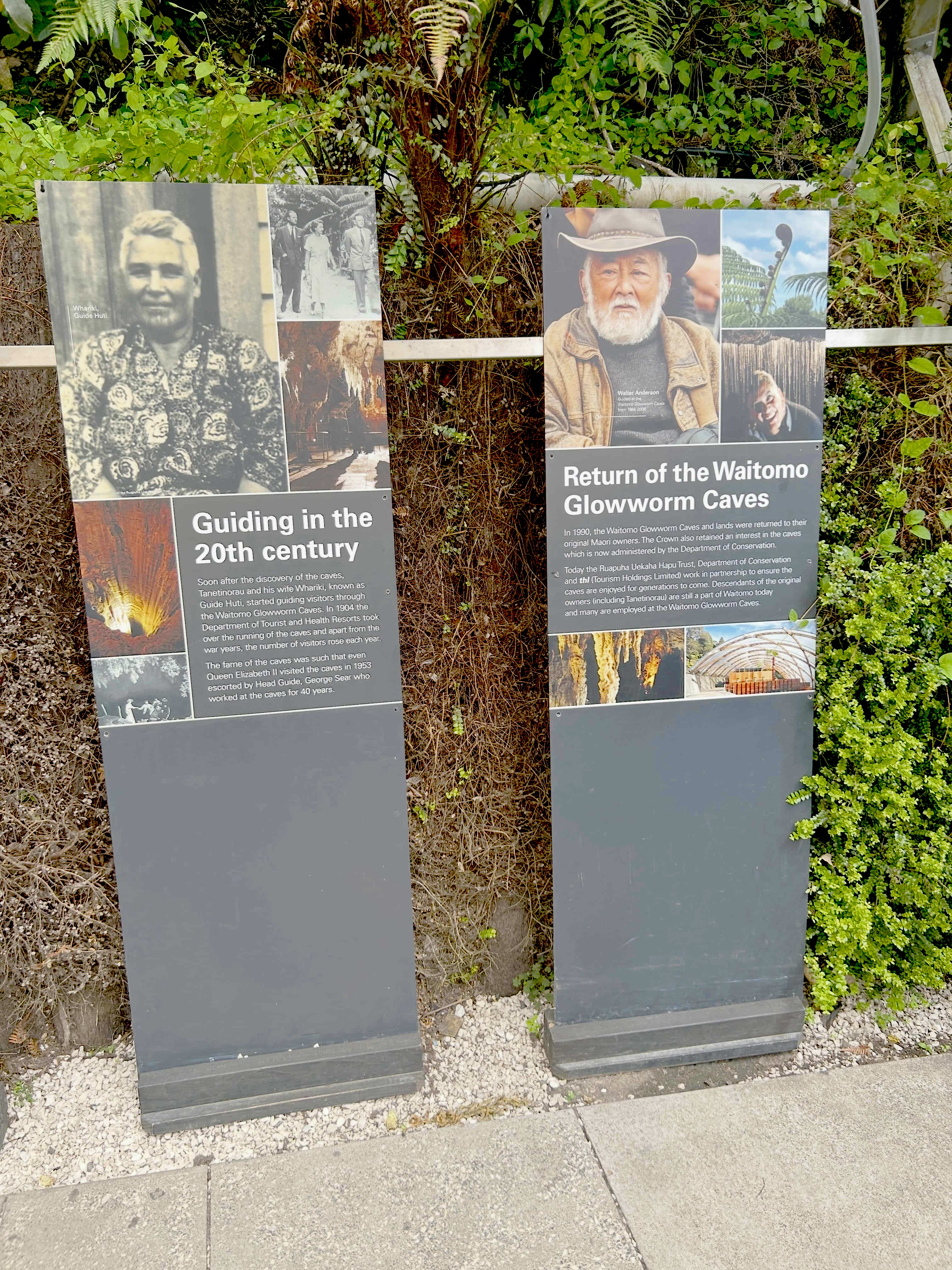
While waiting, there are signs telling the history of
the placc, from the first Maori people to the arrival of
the Europeans to the development of the
Ōtorohanga is also a gateway to
the famed Waitomo Caves, a wonderland of glowworms,
limestone formations, and subterranean rivers just a
short drive away. The Waitomo Glowworm Caves in New
Zealand are a mesmerizing natural wonder, renowned for
their otherworldly beauty. Nestled in the lush hills of
the Waikato region, these limestone caves are home to
thousands of tiny glowworms, scientifically known as
*Arachnocampa luminosa*, which emit a bioluminescent
glow. Upon arriving at the site we passed through the
visitor's center and lined up forthe the next tour.
While waiting, there are signs telling the history of
the placc, from the first Maori people to the arrival of
the Europeans to the development of the  caves
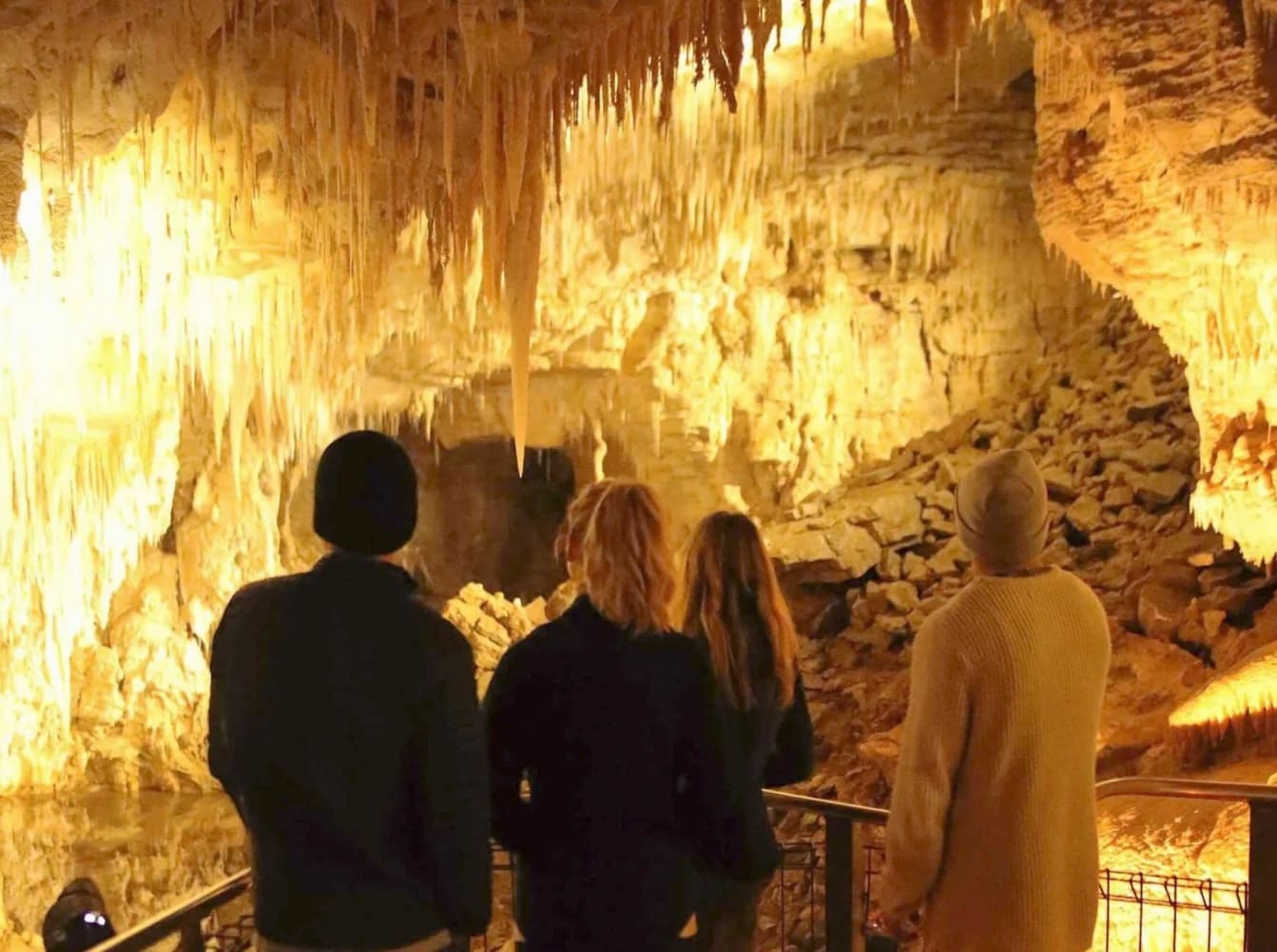
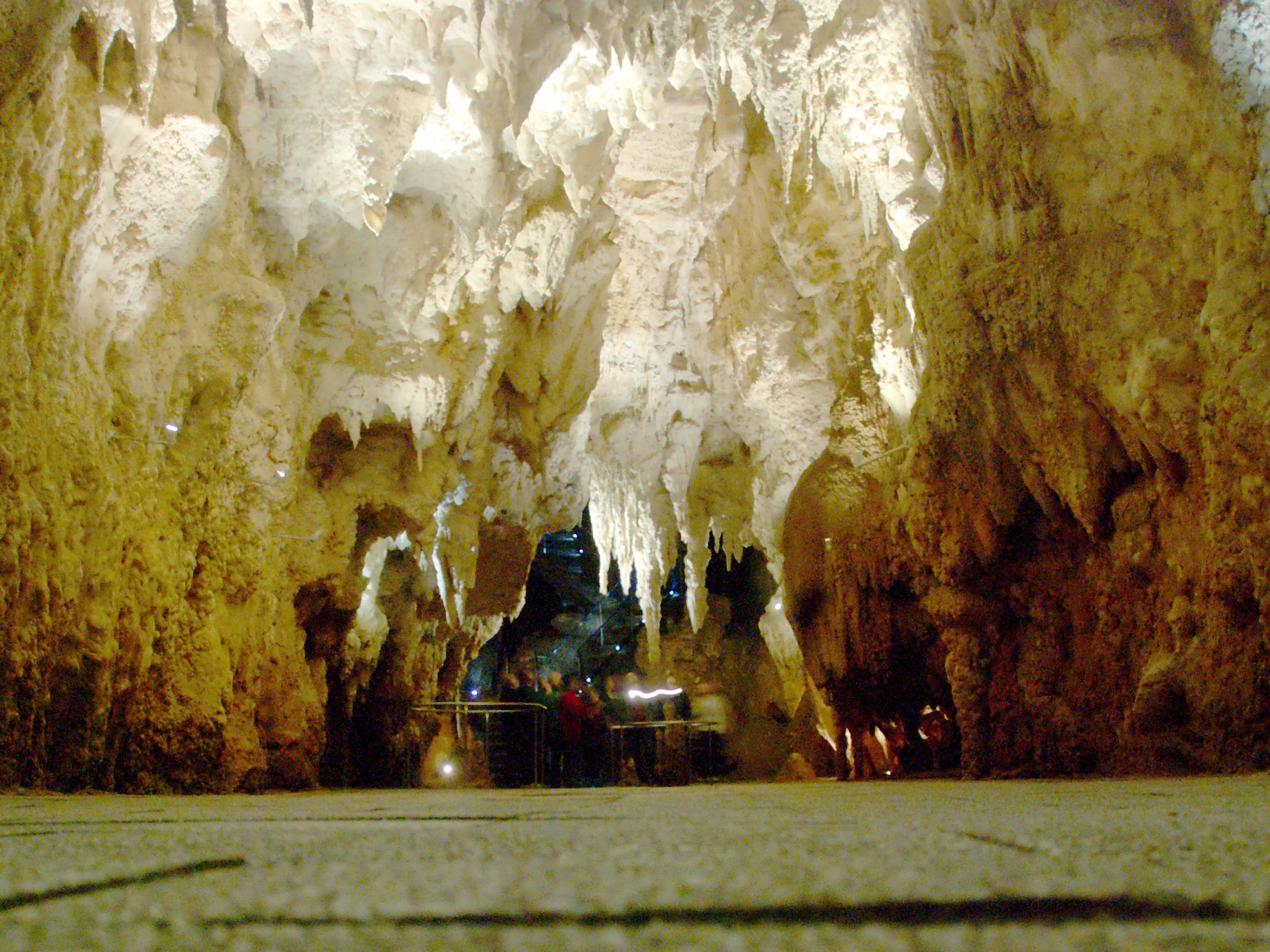
as a tourist attraction in the 20th century. To he tour
began with a tour through a large, well lit cavern and
we then went down stairs to the main cavern, known as
the "cathedral." Possessing excellent acoustics, it is a
popular concert hall. Tracy confirmed this by siging.
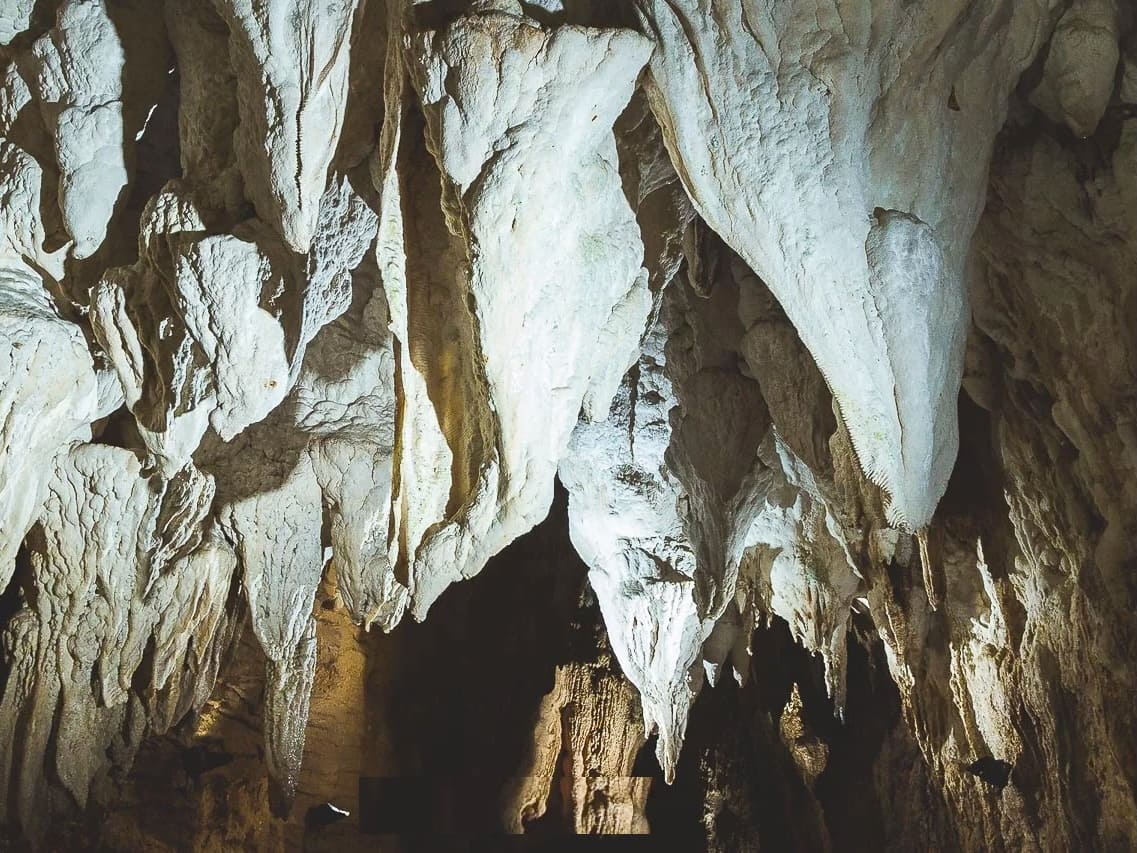
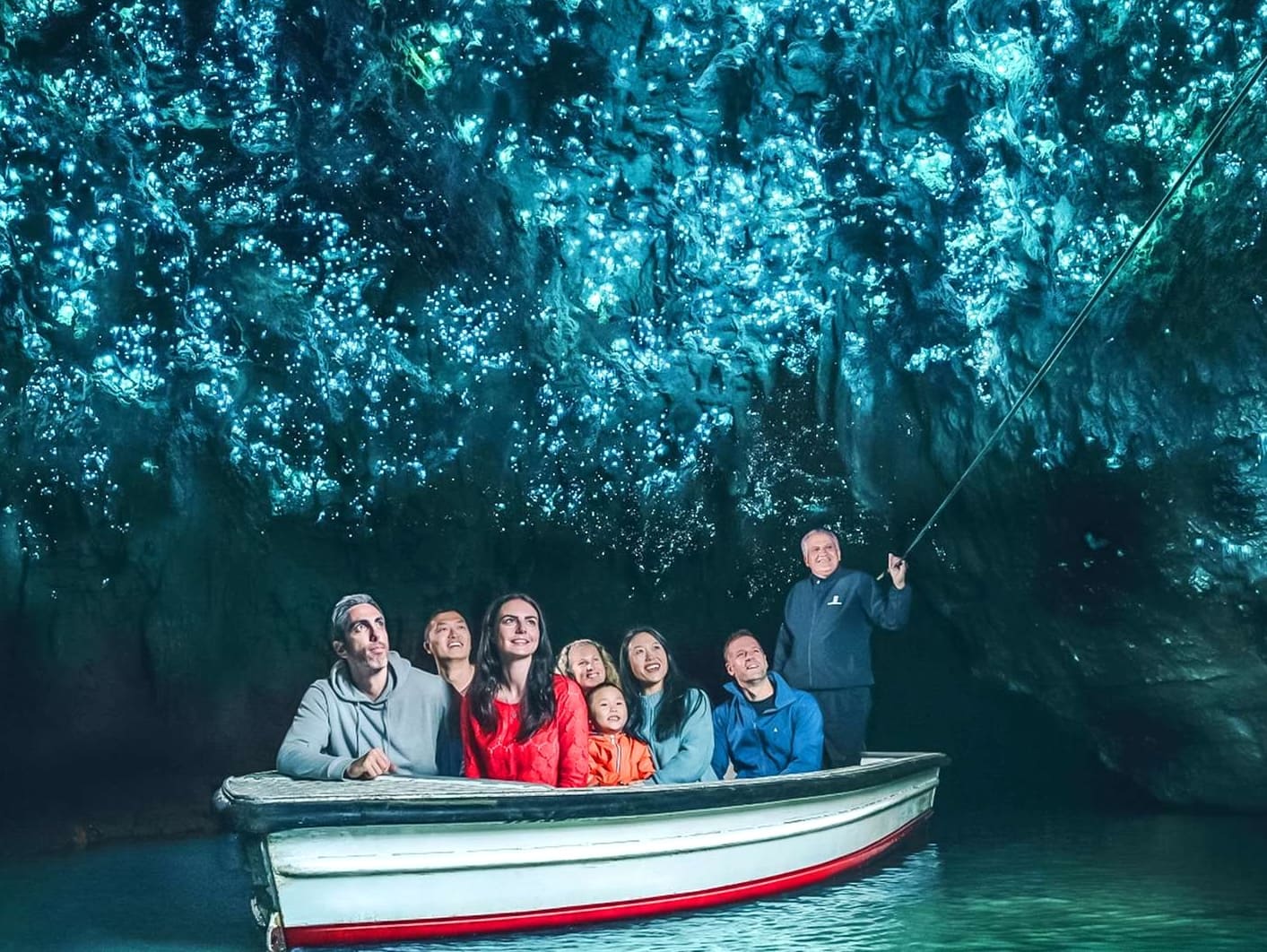
From there it was down to a boat in pitch darkness--the
guide steers that he vessel via a rope line running
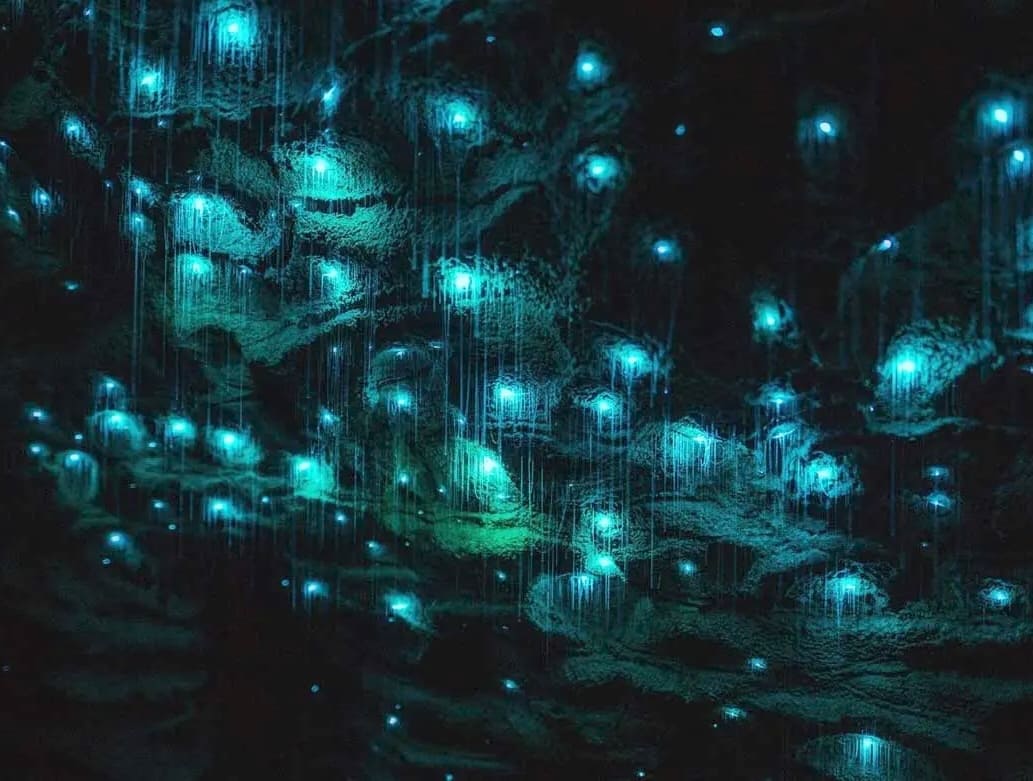
through the cave. It is here in the utter darkness the
glowworms may be seen in all their glory. A video below
by GEOLOGYSCIENCE
offers an explantion of the gloworm cave. Below that is
a photo gallery tracing the route through the Waitomo
Caves.
caves
as a tourist attraction in the 20th century. To he tour
began with a tour through a large, well lit cavern and
we then went down stairs to the main cavern, known as
the "cathedral." Possessing excellent acoustics, it is a
popular concert hall. Tracy confirmed this by siging.
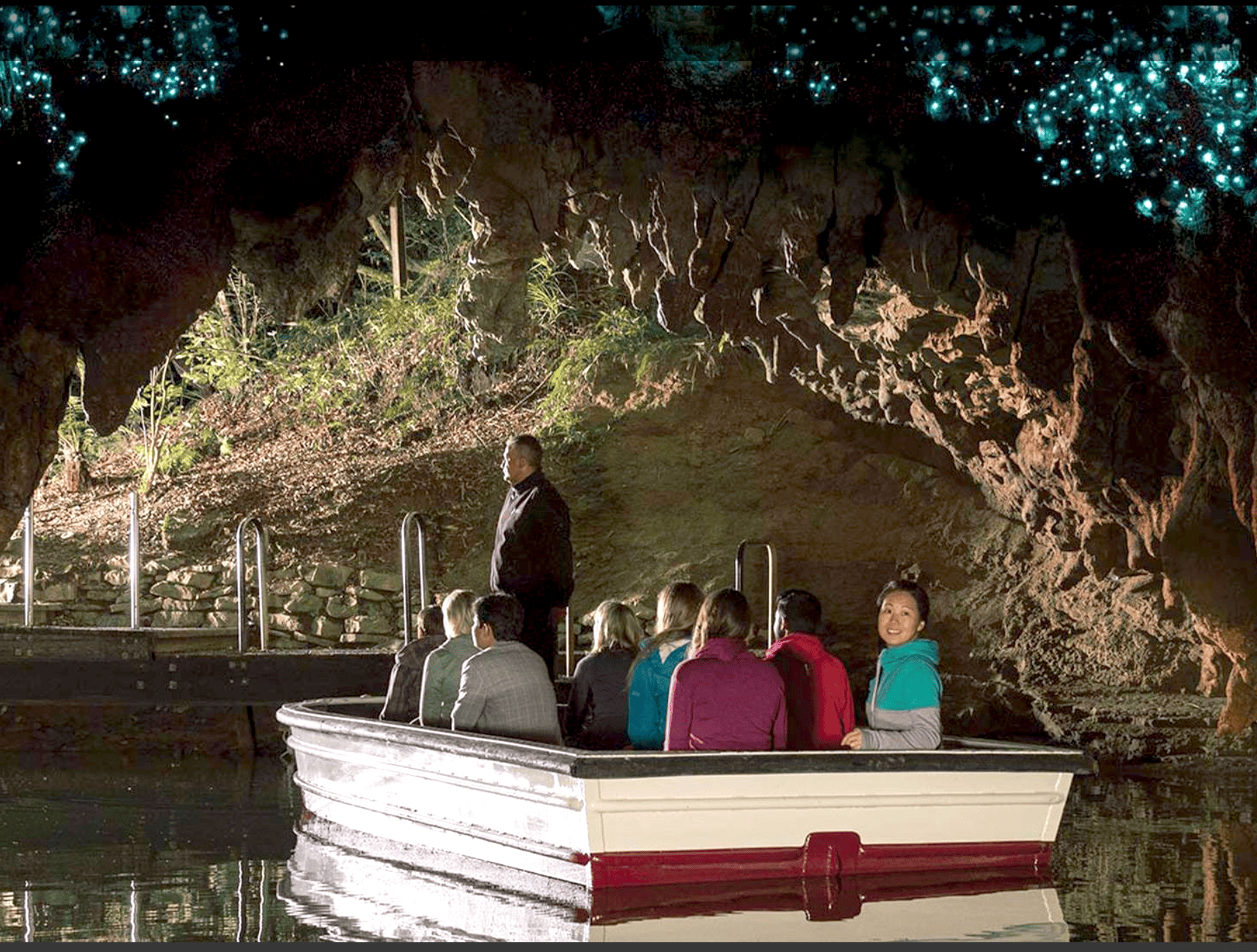
From there it was down to a boat in pitch darkness--the
guide steers that he vessel via a rope line running
through the cave. It is here in the utter darkness the
glowworms may be seen in all their glory. A video below
by GEOLOGYSCIENCE
offers an explantion of the gloworm cave. Below that is
a photo gallery tracing the route through the Waitomo
Caves.| Waitomo Glowworm
Caves |
||
 |
 |
 |
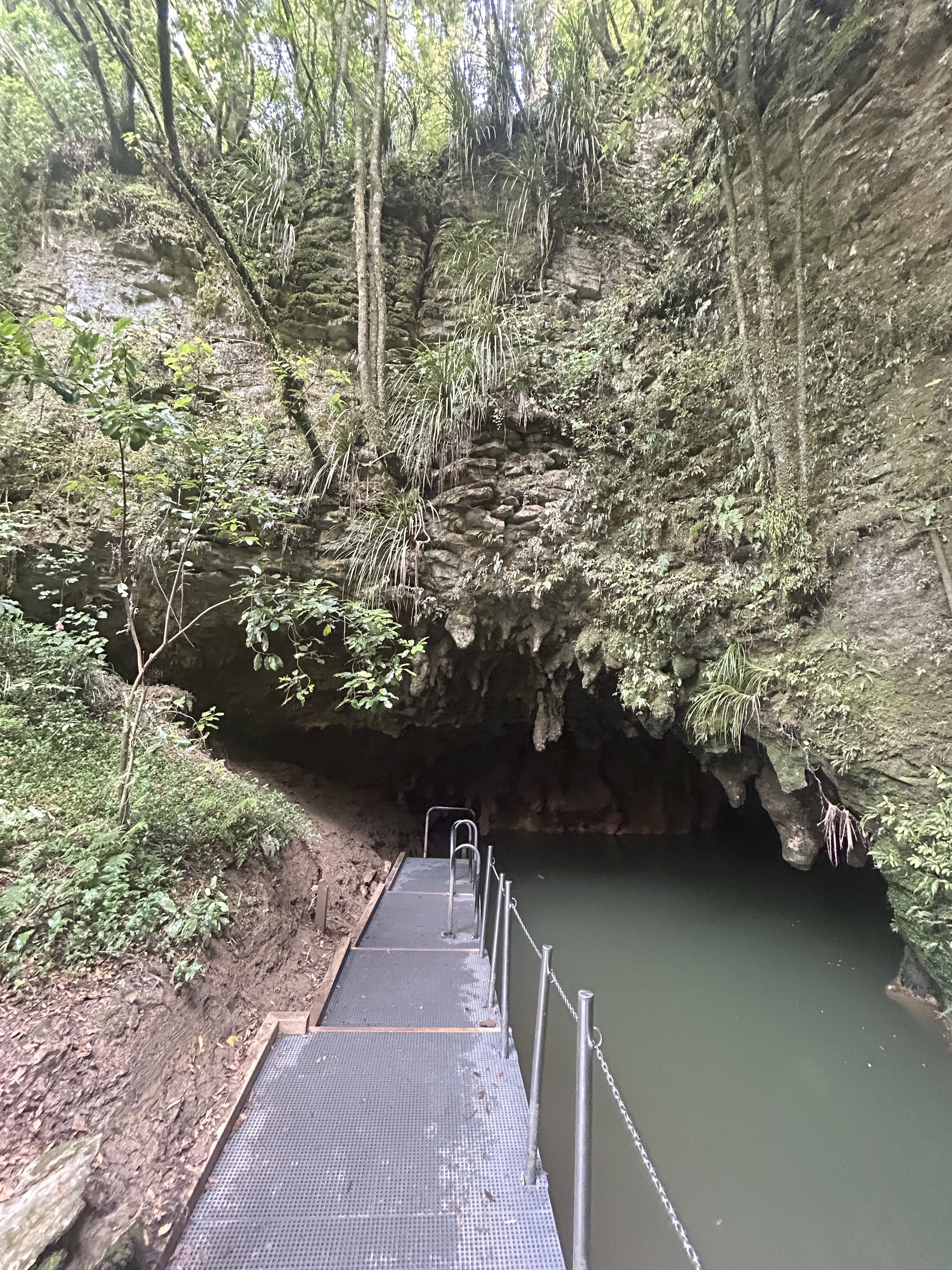
| Entrance to
Caves |
Visitor's
Center |
Maori Arrival |
 |
 |
 |
| Discovery of
the Caves |
Waitomo Guides |
Cavern Entrance |
 |
 |
 |
| Overlooking the
Main Cave |
Waitomo
"Cathedral" |
Boat Trip
Through the Cave |
 |
 |
 |
| Glowworms on
Cave Ceiling |
Emerging from
the Tour |
Exiting the
Caves |

 Following a full day of sightseeing we
returned to the Hamilton Novotel, our home in Hamilton, for
the first two nights of our tour. It was a striking design,
a sleek hotel on pillars, decorated in Maori style on the
side of the building. The interior was equally sleek.
Very much the opposite style from the classic look of the
Fable in Auckland. On the first night we had a meal at the
restaurant, did some laundry, and called it a night. On the
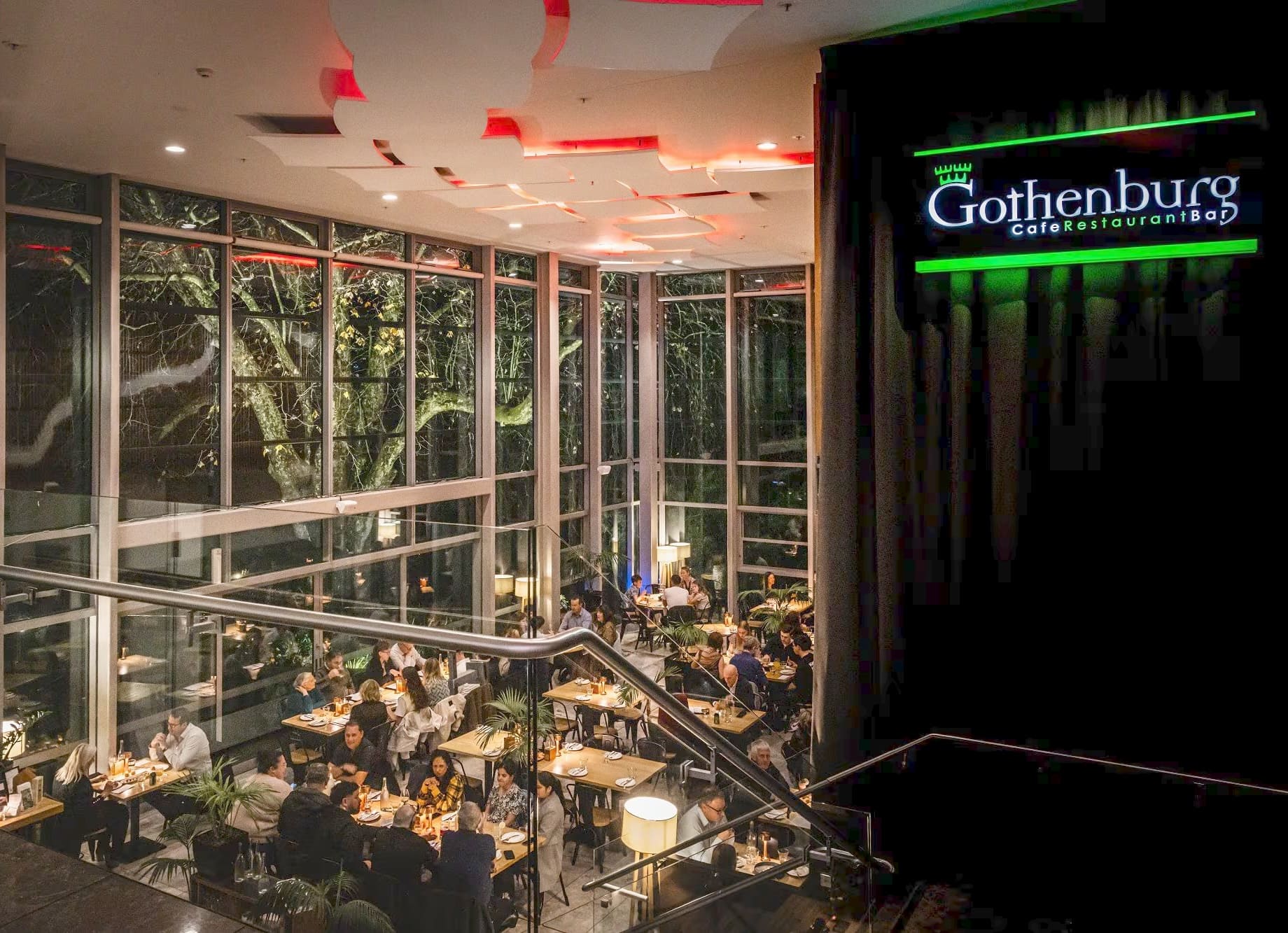
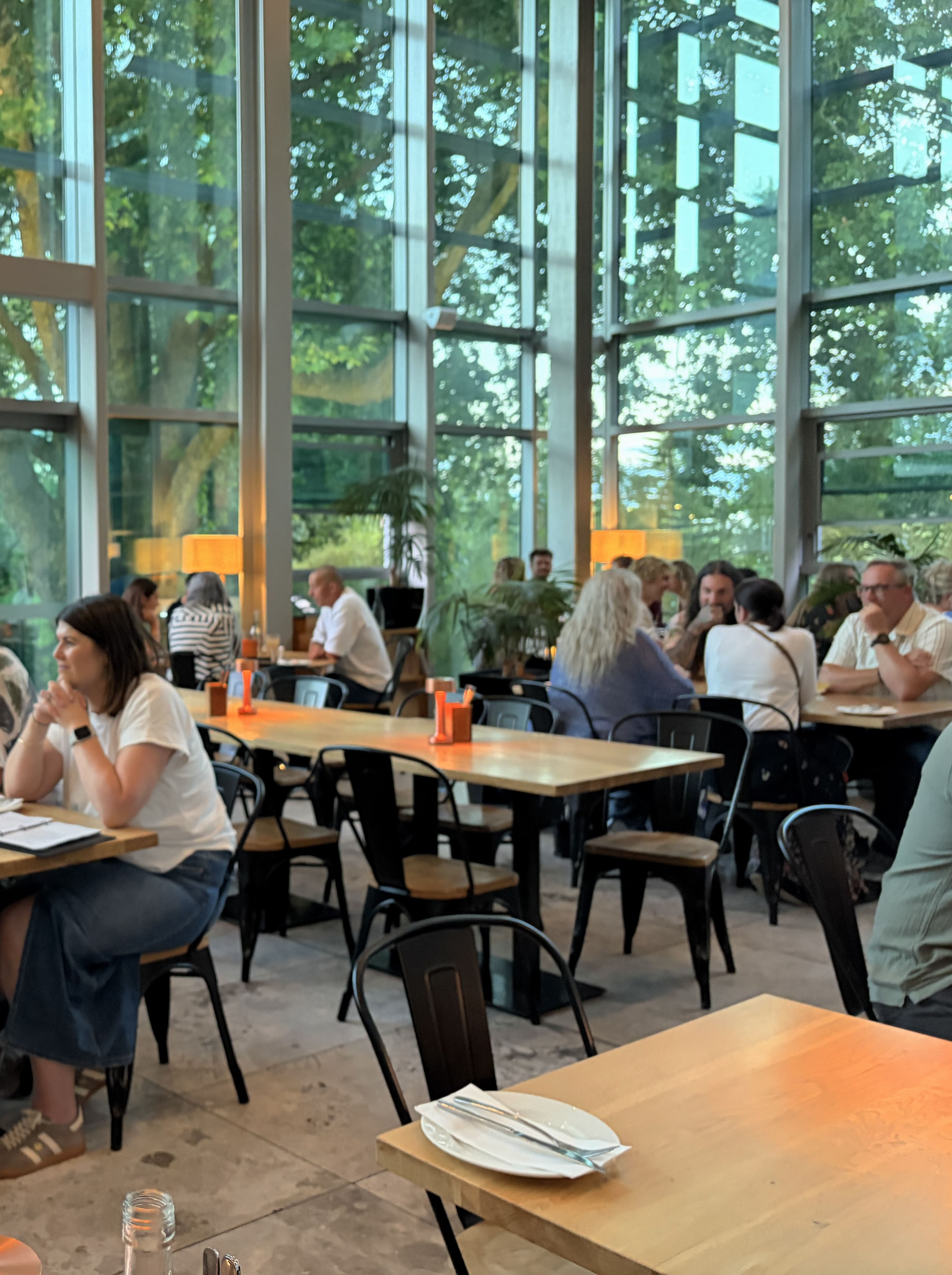
second night we treated ourselves to a great meal at the
Gothenburg Restaurant, about a 10-minute walk from the
Novotel. It has a glass and chrome decor--very much like the
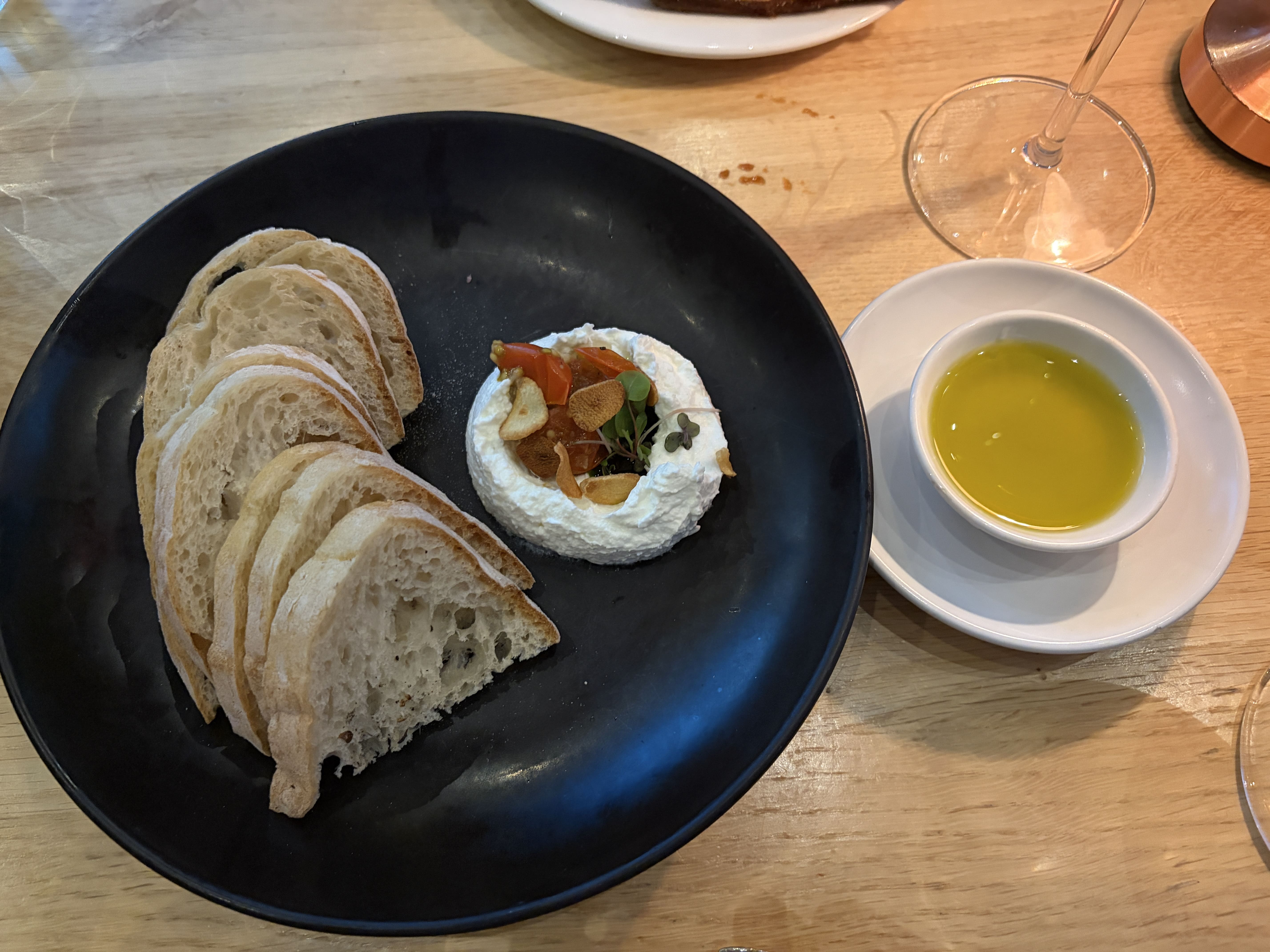
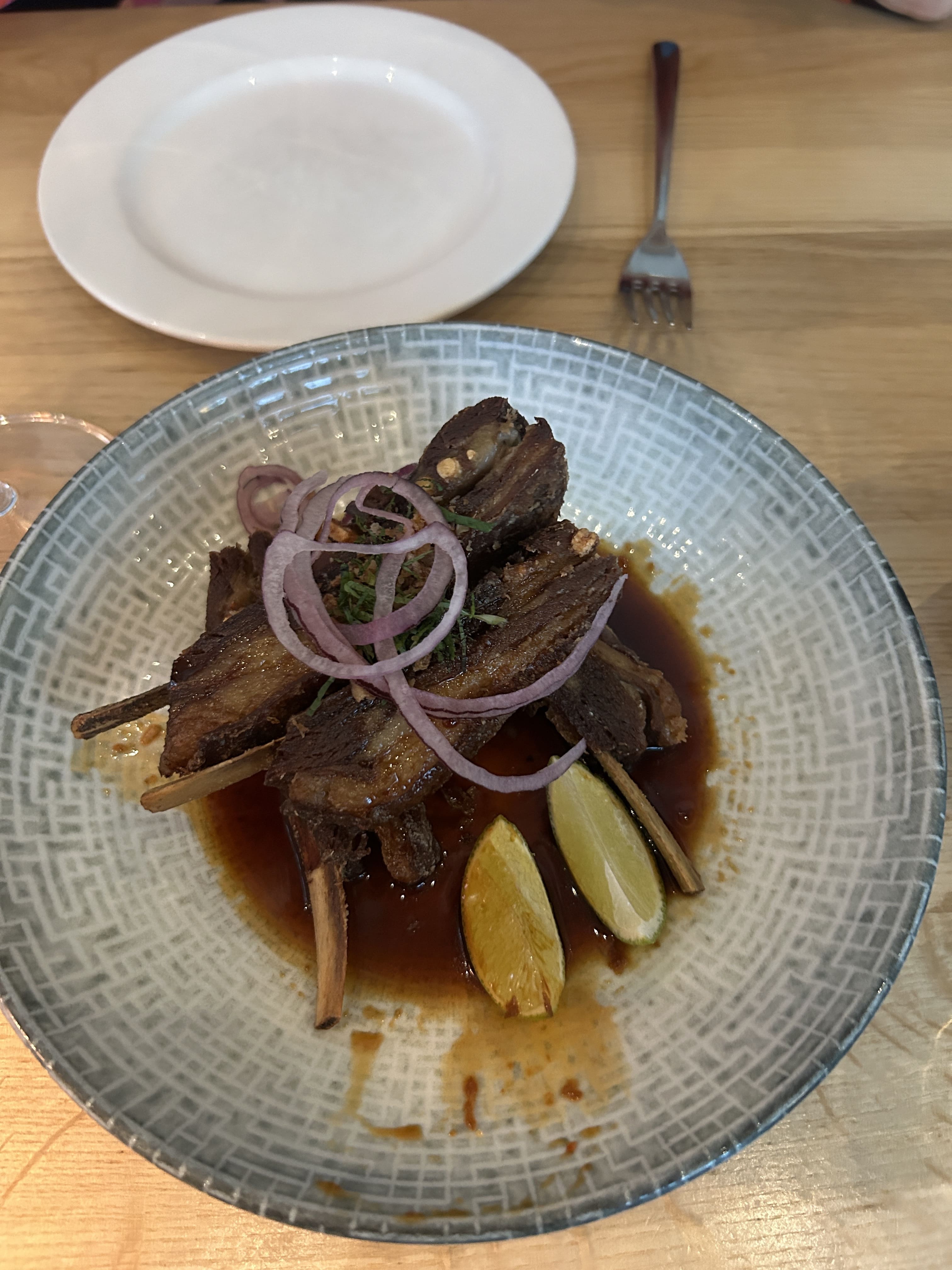
Novotel--and the cuisine consists of tapas. We enjoyed
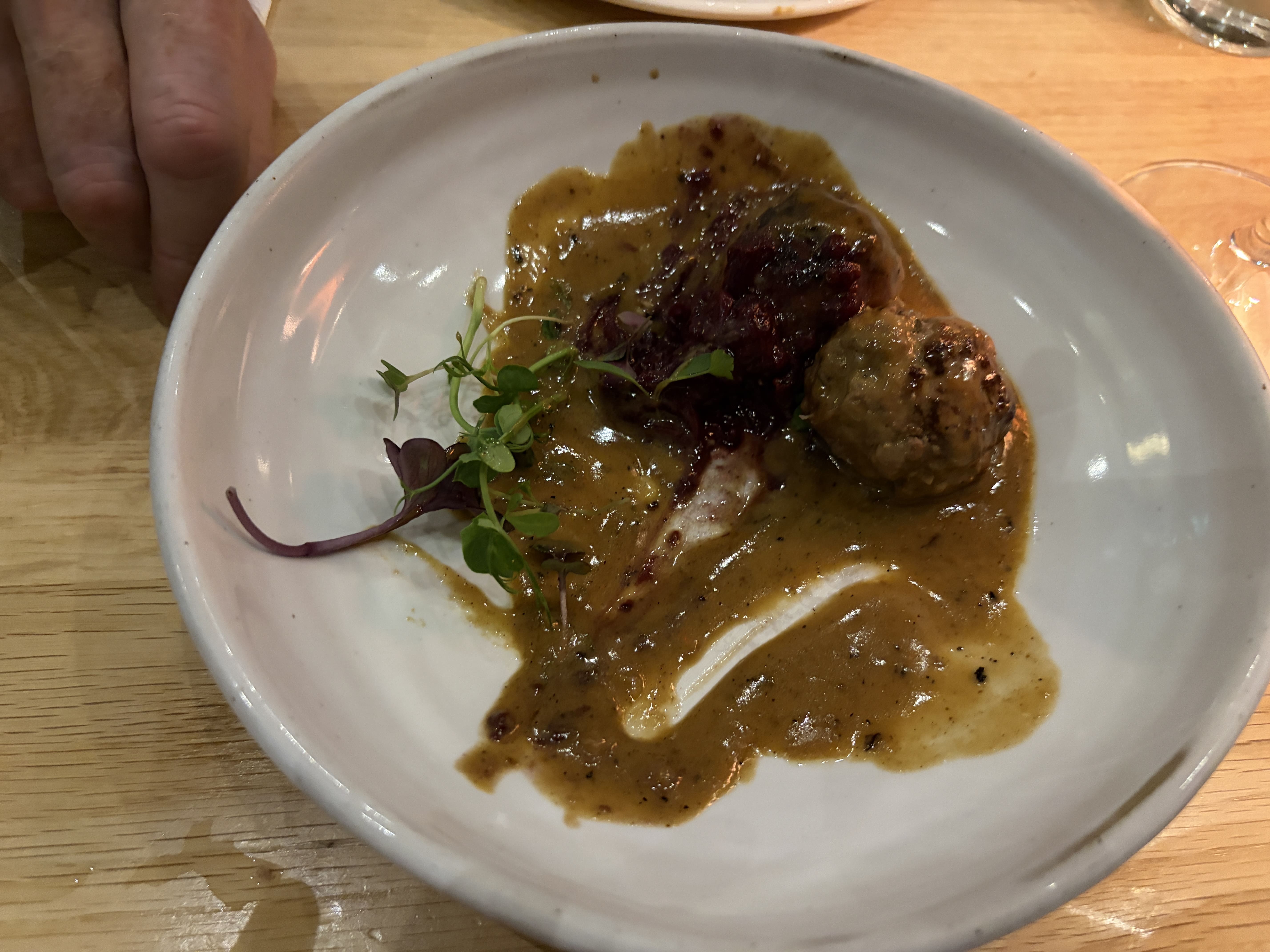
a menu of barrata cheese, spare ribs and swedish meatballs,
each as tasty as the last and complemiented by a crisp rośe.
We returned to the Novotel and prepared for our onward train
journey to Okahune.
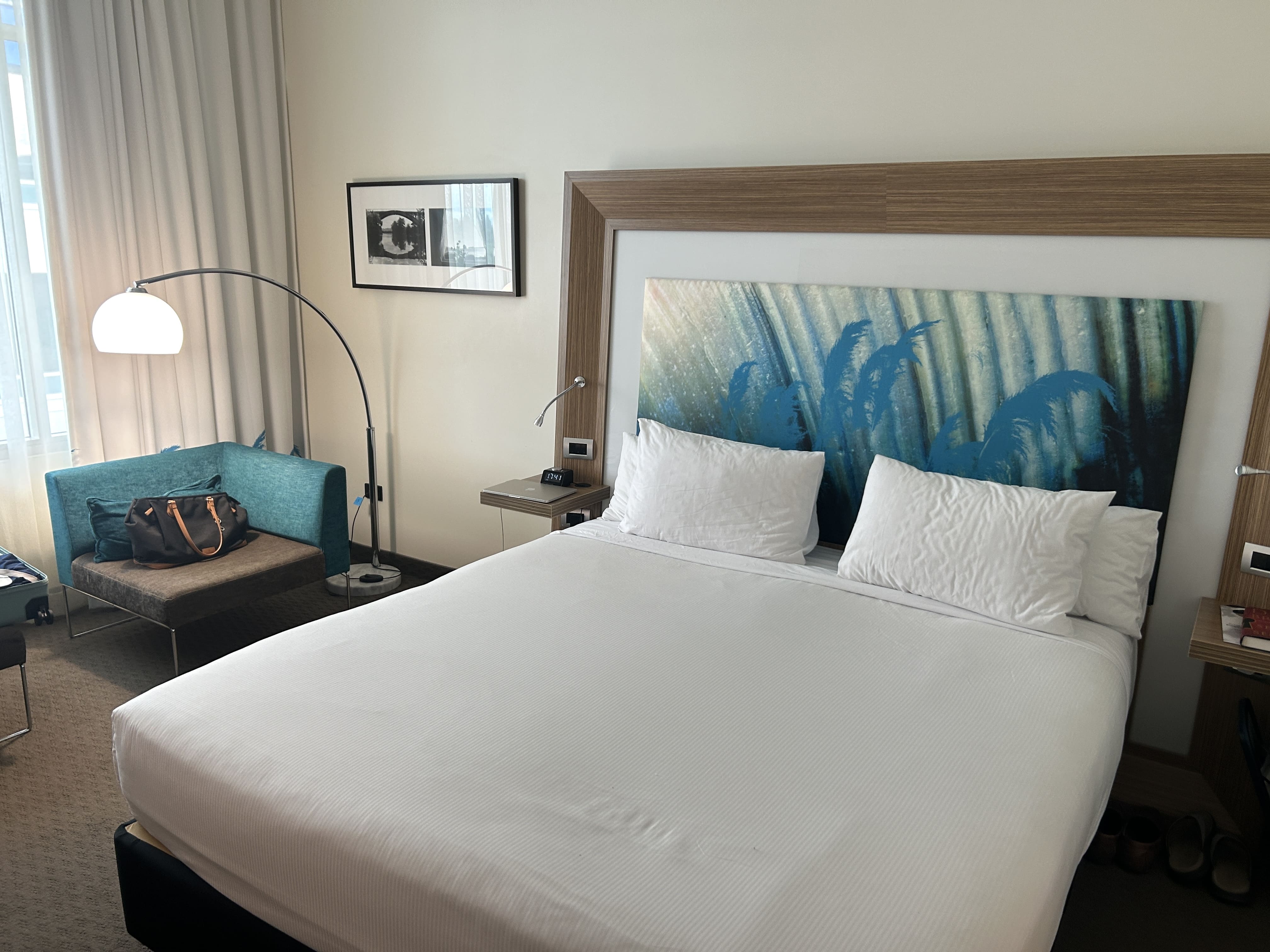
Following a full day of sightseeing we
returned to the Hamilton Novotel, our home in Hamilton, for
the first two nights of our tour. It was a striking design,
a sleek hotel on pillars, decorated in Maori style on the
side of the building. The interior was equally sleek.
Very much the opposite style from the classic look of the
Fable in Auckland. On the first night we had a meal at the
restaurant, did some laundry, and called it a night. On the
second night we treated ourselves to a great meal at the
Gothenburg Restaurant, about a 10-minute walk from the
Novotel. It has a glass and chrome decor--very much like the
Novotel--and the cuisine consists of tapas. We enjoyed
a menu of barrata cheese, spare ribs and swedish meatballs,
each as tasty as the last and complemiented by a crisp rośe.
We returned to the Novotel and prepared for our onward train
journey to Okahune.| Gothenburg
Restaurant |
||
 |
 |
 |
| Entrance |
Tracy Enjoying
Rośe |
Dining Room |
 |
 |
 |
| Burrata Plate |
Spare Ribs
Plate |
Swedish
Meatballs Plate |